Author - Jerry Paxton

AION – A Review of the First Ten Levels

These days any fantasy based MMO is going to be compared to Blizzard’s monolith. It has set the bar to a place few will reach. Now, developers are trying to reach a niche market of WoW subscribers just to make a successful game. AION seems to take it dead on in the eyes. I have a lot of respect for that. The story of AION is a complex one, a necessity to make the player feel as a part of a much larger picture. Playing off of the idea of angels and demons locked in an eternal struggle, this new world we have to play in is certainly an appealing one. A big MMO launch is rife with problems, anything from server outtages to balance-breaking bugs. Because of AION’s time in Korea, NCSoft had only moderate hiccups. Queue times have become expected, and users will allow them for a short period of time. Being only days into their U.S. launch, we can only guess that those problems will be rectified as time goes on. Was their Korean launch and success a way to polish the game for our market? Even if that wasn’t their plan, I believe it worked. I have been a part of no less than twelve MMO launches (joining less than a month after launch) and I can honestly say this was the most smooth I have personally experienced. NCSoft was ready, for the most part.

I have had the chance to play from level 1-10 on both the Asmodians and Elyos (you cannot make different races on the same server). One on the melee side, the other on the casting side. I feel I could give a decent enough review on the starting areas, quests and mechanics of the game. We here at Gaming Shogun believe a real MMO review must be done over time as we experience it. We will continue reviewing the sections of the game as we go on.

Most will immediately go to looking at the graphics. Built from the ground up with the CryEngine, the artists obviously had a lot of toys to play with. I remember thinking the screenshots looked good, but not mind-boggling like the first-person shooters using the same engine. Seeing a game in motion is generally a much better experience of course, and I do believe the graphics are… still good. Although, yes, they are more realistic and complex as other MMO’s on the market I personally feel they were not pushed as far as even an MMO could go using that engine. Having said that, I will now state at how smooth the game runs (not including any server-side lag) on my system with the settings maxed out at 1920×1200 resolution. I have a Core 2 Duo system with a GTX 280 and I experience frame rates in the 60’s in the midst of a city where dozens of players could be running about. The art design is pleasing, and so far I have enjoyed the creatures I have come across. As with all things in AION, it seems like it’s going to get much better as you go.

Sound, for me, is half of the experience. I am an admitted audiophile with high-end surround speakers at my disposal and I tend to let the neighbors know exactly what I’m listening to / watching / playing on a regular day basis. This area AION looses me. The music is boiler-plate fantasy-esque without any real theme or connection. The sounds of combat are repetitive to the point of annoyance. When I say repetitive I mean there is only one sound for a melee strike, for example. Try sitting among some of the many oversized insects or four-legged creatures and let me know if the sound of the footsteps doesn’t drive you nuts. I hope NCSoft works on this aspect of the game over time – I know how difficult it is to pull off. When I hear the game, I feel it was last on the agenda and that makes me sad.

Combat is fun and fast-paced. AION has chain moves that you can build up to more and more powerful combos. You get only a taste of this in the first ten levels, but as I looked through the spells and abilities of my characters I could see just how deep that particular rabbit hole goes. My melee character (a warrior) was a lot of fun, but I experienced downtime unless I consistently used either bandages or potions. That’s fine, however AION has an interesting monetary system – I’ll get to that shortly. My caster (a priest) had significantly less downtime because of the ability to heal and the sheer amount of magic points (MP) I had. A typical fight for my priest had me using very little MP and able to go on for dozens of fights, where the fighter had to rest after every three or four.

The starting areas for both sides are somewhat disappointing. Most of the quests are of the ‘go out and kill x number of y’ or ‘collect x number of y’ variety. I didn’t feel the quest system itself brought anything new to the table. Sure you get cool short cut scenes for the campaign quests (long quest chains or arcs), but I was never enthralled by the story of my character nor the struggle of the people around me. The starting areas will take you direct to level 10 if you do all of the quests. I did not feel any kind of grind to get through the first part of the game, but this is par for course with all MMO’s now. The journey from beginning to ascension takes anywhere from two to three hours of straight through playtime. Although I wasn’t blown away by the first ten levels, they do their job well: teach you the mechanics of the game and your class while introducing this new world to you. I can say, once you have ascended and earned your wings – the game gets much better.

The monetary system of the game is interesting, but it just might work out. There is only one coin which, as far as MMO’s go, makes sense. By the time the end game comes around everyone only trades using the highest denomination due to the inflated currency value. There are a few cool ways to make money. Surprisingly, all the junk you pick up from creatures sells like gangbusters back at the vendors, but the equipment and other player items doesn’t. This helps keep those things in the economy rather than disappearing into the nether. In the first 10 levels, there is no auction house style forum, however once you break out of the starting area you’ll find one nearly right away. If you don’t wish to pay the prices to list your items there, you can always set up shop anywhere you want. It’s very simple to set up your own private shop, when you turn it on your character sits on a chair and beckons people to browse the wares. You can even leave a note so people know what types of things you’re selling. It’s a very cool system, however in high traffic areas it seems you’re tripping over private shops as you go down the road.

Although AION’s opening levels have not enraptured me into a magical world and caused me to lose all non-game relationships and fall into a downward spiral of addiction, I believe it has a lot of things going for it. It’s aiming right for the WoW player that wants a little more complexity and depth out of the game. The levels after 10 are so much better I have high hopes as the games goes on to deliver all of the complexity and group PvPvE gameplay it promises to deliver. I will have another report in approximately a month to let you know how the game is doing.
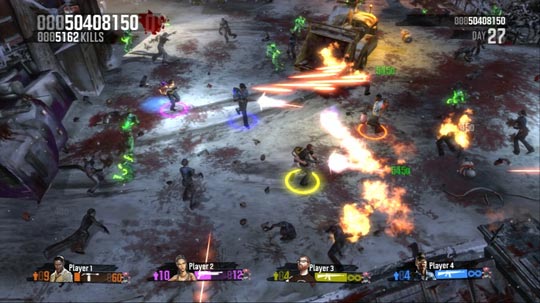

Zombie Apocalypse Comes to Xbox 360 and Playstation 3

Nihilistic Software’s Zombie Apocalypse has shambled on to the Xbox LIVE Arcade and Playstation Network to find unsuspecting victims. For 800 Microsoft Points (or $9.99) you too can team up with three other players in a pure zombie shoot ’em up lasting over 55 days of a zombie apocalypse.

Razer Death Adder Gets Upgraded With New Sensor, Cable


Razer has announced that they will be updating their extremely popular gaming mouse, the Death Adder, with a new 3.5G infrared sensor and braided chord. The newly-upgraded model is available now on the Razer online store and retails for $59.99

Ergonomic right-handed design
o 3500dpi Razer Precision™ 3.5G infrared sensor
o 1000Hz Ultrapolling™ / 1ms response

Technical Specifications
o 3500dpi Razer Precision™ 3.5G infrared sensor
o Ergonomic right-handed design
o 1000Hz Ultrapolling™ / 1ms response
o Five independently programmable Hyperesponse™ buttons
o On-The-Fly Sensitivity™ adjustment
o Always-On™ mode
o Ultra-Large non-slip buttons
o 16-bit ultra-wide data path
o 60–120 inches per second and 15g of acceleration

o Zero-Acoustic Ultraslick™ Teflon® feet
o Gold-Plated USB connector
o Seven-Foot, lightweight, braided fiber cable
o Approx. size in mm: 128(L) x 70(W) x 42.5(H)

Review of Raven Squad from SouthPeak Games

When we first heard about the hybrid RTS/FPS game called Raven Squad we were, needless to say, stoked. The possibilities of a game combining the two genres could have led to an amazing gameplay experience that we do not normally get to see these days. Unfortunately, Atomic Games has really managed to foul the concept up by releasing a very clunky and unappealing experience.

The game follows the story of a mercenary group getting caught up in a South American civil war. The player controls two squads of three men each, and allows at-will switching not only between the squads but also individuals within each unit. One team focuses on assault and the other team focuses on infiltration and other stealthy aims. Seems good so far? Sure. Let’s continue…

Unfortunately, that is where the goodness ends and the experiment in pain begins. When first dropped into the Amazon jungle we were not impressed with the visuals. They look at least a couple years old save for a few modern-day tricks they added in an attempt to ‘freshen’ them up. These effects include a heavy-use of depth of field blurring as well as grainy lens flares. Truth be told, the graphics would be acceptable enough if the rest of the game were not so bad.

The game’s audio is where it will really stick it to you first. For starters, the voice over work is plain awful. There is no excuse for this part – bad inflections, bad accents, bad all over. This bad work not only can be heard in gameplay but also throughout the cutscenes which attempt to weave this mess together. I have heard better voice work in 70’s exploitation flicks. The music is fair, however, but nothing we haven’t heard before in other action titles.

Gameplay just wreaks of clunk. Even moving your characters around has that bad console port feel to it – sluggish and easily tangled up on invisible obstructions which must be jutting up from the jungle floor. Actually, that is funny because if you just went by this game you would think the Amazon was a series of linear trenches in which you walk about in with a series of strategically-placed logs strewn about to hide behind. The level design in Raven Squad is way too linear and scripted to even think about including the RTS element of the game they are trying so hard to hype up.

The RTS element of which I speak occurs when you hit the space bar. The camera actually does this really cool-looking ‘whoosh’ up from your first-person view to one high overhead, looking down on the map. From here you can switch between you two squads and send them to various points on the linear maps. Unfortunately, the RTS element to Raven Squad is not just clunky, but also completely unnecessary. There are no areas in the game where the system is needed, except where they force you to use it, further encouraging your inner geek rage. The game’s difficulty level just does not warrant it. Successfully navigating about the RTS view is difficult as there are no outer-edge markers to tell you the general direction of a target or landmark. Losing sight of your squad, instead of a visual cue as to where they are off-screen you have to press ‘x’ to re-center the camera on them.

Getting back to the difficulty level of the game for a moment, I must say that in my experience of playing Raven Squad that I did not encounter as many ‘dumb’ enemies as some reviewers have reported. Most had the sense to at least shoot at me and many even tried to take cover and retreat to better positions. There were still a few, however, that would just stand there seemingly blind to my incoming hail of bullets. Perhaps they were frozen with fear of my team’s bad voice acting?

The one bright spot to Raven Squad is that it actually had no crash bugs on any of my play sessions with it. The game seemed bug-fixed enough to be very stable – even with my running it at a very wide 3048×1024 resolution spanned across three LCD screens!

Overall, Raven Squad is not worth your valuable time unless you absolutely have nothing else to play and don’t feel like going to the dentist for a cleaning. I had expected and hoped for more but was really letdown by this title.

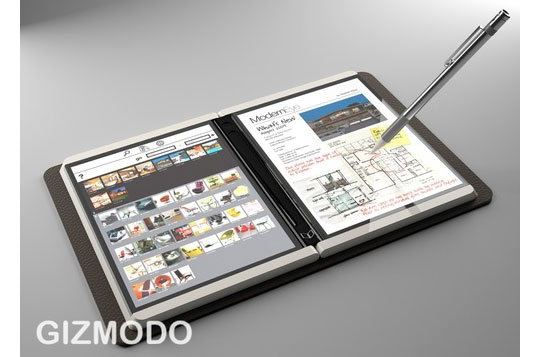
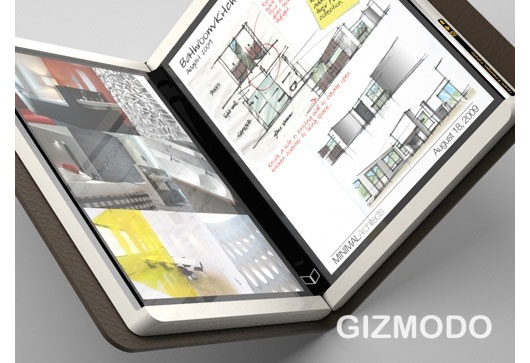
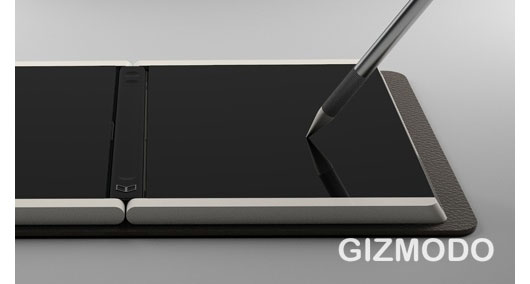
Microsoft’s Courier Tablet Could be Revolutionary

Gizmodo let loose the first details, images, and video from the still-in-prototype stage tablet PC, the Courier. I actually use the term ‘tablet’ loosely because it is actually two 7”-inch, multi-touch screens hinged at the middle to form a book of sorts. This booklet PC (I like the sound of that a lot better) looks like it could revolutionize the tablet PC market. If Microsoft gets this off the ground Apple will have one extremely difficult foe to face off against in the tablet market.

See more images of Courier, After the Break!

Via Gizmodo

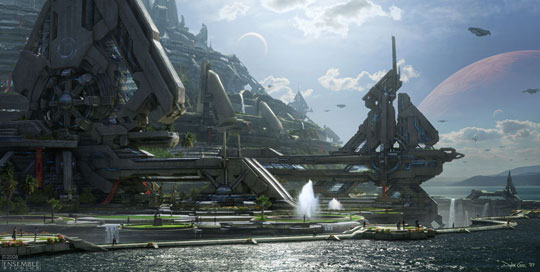
Concept Art from Now-Defunct Ensemble Studios Halo Title

Former Ensemble Studios artist Dylan Cole has released some concept artwork from an unknown Halo project that, at one time, was being developed by the now-defunct studio. The above image is titled ‘Forerunner City’. Being that by time the Halo games happen the Forerunners are long since over as a race, could the game have taken place in their time? I guess we will never know, but speculation is cool.

Check out the galleries here:
Halo Concept 1
Halo Concept 2
Halo Concept 3

Review of the Matrox TripleHead2Go Digital Edition

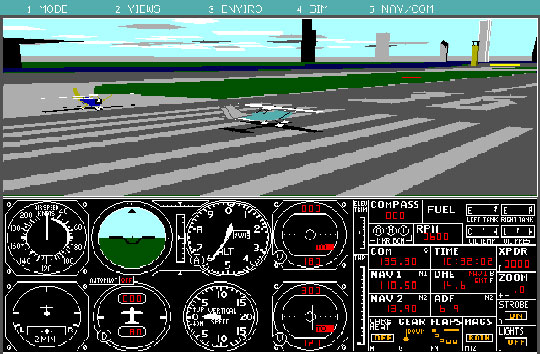
The dream of owning one of those sweet, personal home cockpits has always interested me, ever since I began playing around with flight simulation in the days of Microsoft’s Flight Simulator 4 (yes, that’s really what it looked like kids).

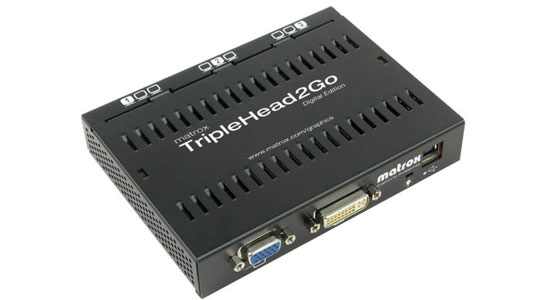
Unfortunately, most of us have to grow up to do things like pay bills, support families, and other expensive tasks that drain away the fun money that we would use, say, to build the aforementioned home flight sim. In today’s modern gaming world, however, there are a number of peripherals and hardware pieces which can get you close however, and a huge step towards this goal comes in the form of the Matrox TripleHead2Go Digital Edition graphics expansion module. A simple black box with some ports on it, this module will allow you to get ‘surround gaming’ the likes of which you have only had dreams about.

It works some serious graphics magical mojo to take your computer graphics output and span it across up to three displays. The basic gist of the unit goes like so…

First, you use the included DVI-DL cable (which is a lot beefier than your standard DVI-I cable) to attach your TripleHead2GO to your PC’s graphics output. Then, you connect your three displays to the output ports on the TripleHead2Go. One nice thing about the Digital Edition of the TripleHead2Go is that it runs off of USB power. So you simply connect it to a powered USB 2.0 port and you are off. Booth up the old PC and revel in the stretched-display goodness. Well, almost…

After connecting all the hardware, be sure to install the included software which contains both the SGU (Surround Gaming Utility) and the Matrox PowerDesk utility. The PowerDesk utility is your main way of controlling how windows will appear on your spanned display, you can even set certain windows to pop up on specific monitors. Take Firefox, for example, if you start the program up in fullscreen mode it will span all three screens, but most websites dont utilize 3048×1024 (our spanned display resolution) so you are left with a lot of empty space. You can set Firefox, in PowerDesk, to only show up on one screen – this way you still have two more screens with which to be productive on.

The Surround Gaming Utility is, if you did not guess by the name, Matrox’s game-launcher. You see, not every game will support the high resolutions and some which do, will appear distorted. Your average shooter can sometimes become a wall-eyed nightmare if you are not careful with such wide resolutions. The SGU attempts to configure the games prior to launching in order to circumvent this effect. For instance, Microsoft’s Flight Simulator X was awful when we started it the first time without running the SGU. The view was so close to the cockpit glass in any plane that you could not see any instrumentation. We ran the SGU on the game first and it setup the pliot’s aspect ratio allowing us to see a lot more of the cockpit, making for a much more immersive experience.

Now, not every game can be configured by the SGU, but Matrox is continually trying to add game’s to its library. This is honestly the major drawback of the TripleHead2Go: Some games just are not compatible with the unit. When the TripleHead2Go encounters a resolution it cannot handle, we experienced a strange, ‘scattered’ graphical effect and complete computer lockup. In order to remedy this we had to forcefully shutdown the PC and then unplug and reinsert the TripleHead2Go’s USB cable. This makes certain titles just unplayable if you have the system.

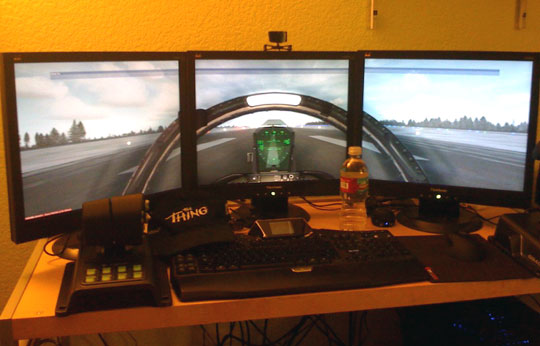
For the games the TripleHead2Go does support, the experience is incredible. The two games I wanted to try out most on the system were Microsoft’s Flight Simulator X and Valve’s Left 4 Dead. The thought of clouds whooshing by me on all three sides and checking corners for zombies simply with my peripheral vision was too enticing to pass up.

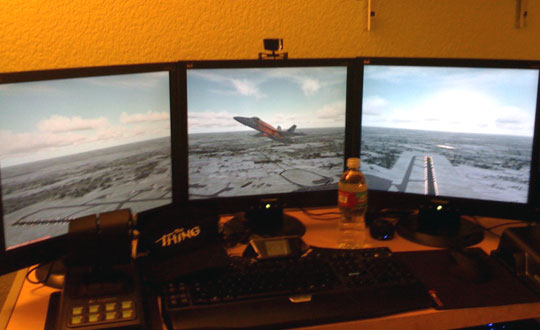
For FSX, the experience (after the previously-mentioned SGU config) was stunning. Seeing the horizon span out in front of my gave the simulator a whole new life and sense of realism. We included a popular head-tracking unit for even more seamless immersion.

What I found most interesting was that we experienced no detectable performance loss running in the wider resolution. Some games, such as Combat Mission Shock Force did see a noticeable performance loss, but not in this case. I am not sure if it is an issue of programming but FSX is one complicated piece of software and it ran fine.

Left 4 Dead was equally-incredible with only minor aspect issues on each of the peripheral screens. The biggest issue with the game was that the user interface elements got pushed to these peripheral screens making checking health a less-fulfilling experience. What was once right in your field of view now takes a more head-turning movement which can lead to a loss of perspective on what is coming at you. There are third-party mods which can fix this, brining the UI elements back to the center screen. Unfortunately, due to a technical issue we could not bring you images of Left 4 Dead in play on the three monitor setup. However, we found some images from Matrox’s Surround Gaming website which will illustrate the effect.

As I mentioned, you can see a bit of stretching on the side monitors but it does not hamper the effect at all. Usually, you are focused on the center screen so that your peripheral vision picks up whats happening on the side screens.

Matrox’s TripleHead2Go graphics expansion module is an incredible upgrade for game’s which support its wider resolutions. While there are definitely some bugs to be worked out with Matrox’s TripleHead2Go graphics expansion module, I can’t think of a better system to top-off your home cockpit. Now alls I need is a motion platform… Hmmm…

The TripleHead2Go Digital Edition retails for roughly $299 and is available through a multitude of online and brick & mortar retailers.

Need for Speed Shift PC Demo Released


PC gamers, take note! The PC demo for Need for Speed Shift is available now at the game’s official website. In the demo, players will be able to drive the following vehicles in two circuit races:

• BMW M3 (E46)
• 2008 Dodge Viper SRT10
• 2006 Lotus Elise 111R
• 2008 Nissan GT-R
• 2006 Pagani Zonda F (unlockable)

The Xbox 360 and PS3 demos will be available early next month.