Archive - 2012

Razer Upgrades DeathAdder Gaming Mouse

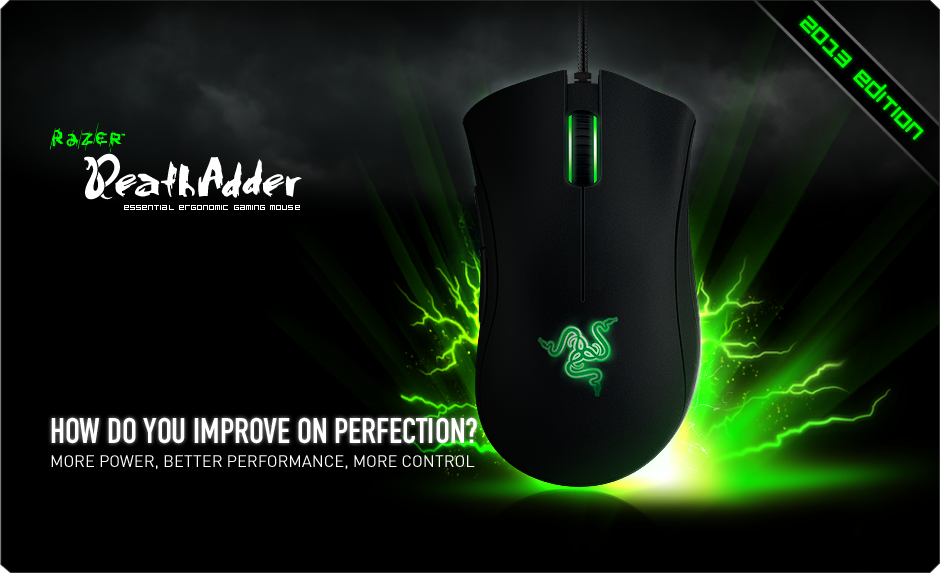
CARLBAD, Calif. –Nov. 20, 2012 – Razer™, the world leader in high-performance gaming hardware, announced that its immensely popular DeathAdder mouse is upgraded and set for launch.

Originally released in 2006, the Razer DeathAdder has become legendary for its combination of ergonomics and precision. It remains the world’s best-selling gaming mouse, used by countless pro gamers in the circuit as their preferred weapon of annihilation.

The new Razer DeathAdder’s optical sensor was upgraded from 3.5G to a cutting-edge 4G infrared sensor with improved performance and precision. It is the world’s most powerful optical sensor, achieving up to 6400 dpi resolution without sacrificing the natural tracking feel of an optical sensor or yielding the robotic sensation of a comparable laser option.

The iconic right-handed ergonomic shape that gamers have come to love in the DeathAdder has been retained; however, it has been further enhanced with built-in textured rubber side grips for better mouse control and grip.

Like its predecessor, the new Razer DeathAdder will feature Synapse 2.0 support for effortless synching of settings and profiles automatically with the cloud. Razer Synapse 2.0 is an innovative proprietary software that intuitively functions as the Razer DeathAdder’s brain – automatically syncing the gaming mouse to a remote server to download driver and firmware updates, as well as save individual game settings.

“We didn’t want to fix anything that wasn’t broken,” said Robert “RazerGuy” Krakoff, president of Razer USA. “We focused instead on enhancing and optimizing the proven merits of the Razer DeathAdder, utilizing next generation technologies and further ergonomics tweaks to make a perfect gaming mouse even better.”

About the New Razer DeathAdder

The Razer DeathAdder was released in 2006 and is still to-date the world’s best-selling gaming mouse, used by countless pro gamers in the circuit as their de facto gaming mouse. The new DeathAdder iteration focuses on improving power, performance and control through hardware tweaks and software upgrades.

AOC Unveils New 23-inch Virtually Borderless IPS Monitor

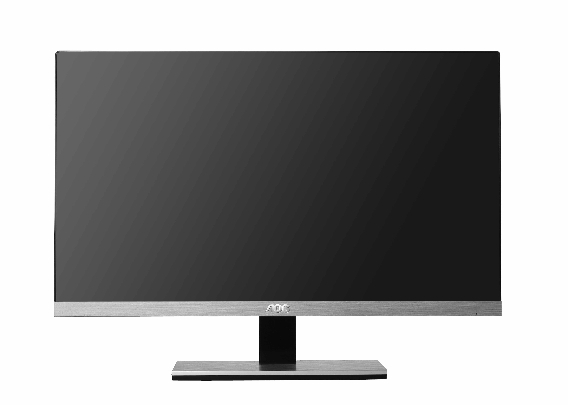
Fremont, Calif. – November 20, 2012 – AOC, worldwide leader in monitor display technology, announces the retail availability of the i2367fh, a virtually borderless 23-inch monitor that is perfect for both workstations and gaming setups. The display’s Advanced High-Performance In-Plane Switching (IPS) technology and 50,000,000:1 dynamic contrast ratio provide enhanced picture quality, higher definition, better color accuracy and greater light transmission. Blu-ray players, game consoles and other devices connect effortlessly through the integrated HDMI port, and the built-in speakers eliminate the need for external audio.

The 23-inch IPS display has a 2mm bezel that gives the monitor a sleek, borderless appearance. The monitor’s artistic design also features a metallic hook-shaped stand that allows for two different setup modes of viewing – as a photo frame style without a base or a standard function stand. The AOC i2367fh is available now for $199 at B & H Photo and Amazon.com.

“The i2367fh, part of our AOC 67 series, combines smart technology with style,” said AOC North America Marketing Manager Chris Brown. “This monitor provides performance, affordability and design like no other display on the market today.”

The ENERGY STAR i2367fh combines impressive display technology with energy-efficiency. The WLED backlit panel consumes 50 percent less energy than CCFL backlit monitors and contains no Mercury. The monitor’s e-Saver feature and off timer function also help to reduce power consumption.

The i2367fh supports Full HD 1920×1080 resolution and can display 16.7 million colors. The monitor also offers ultra-fast performance with a 5ms response time that prevents pixels from blurring, streaking or ghosting. The Windows 7 compatible monitor allows for optimal productivity with its included Screen + Software, which can split the screen in up to four different viewing panes.

Specifications
•    Full HD 1920×1080 resolution
•    50,000,000:1 dynamic contrast ratio
•    5ms response time
•    TFT Active Matrix LCD
•    Hg free WLED Backlight for ultra-low power consumption
•    FRC 8-bit panel that supports 16.7 million colors
•    VGA and HDMI with HDCP digital inputs
•    Two 2-Watt built-in speakers
•    Detachable, multi-purpose stand
•    User friendly OSD menu with 16 languages
•    Microsoft Windows 7 compatible

Evil Dead Movie Poster Released

Click me. I get bigger!

This posted up over at Yahoo! Movies and then GeekTyrant. I am in geek love with the franchise and an avid horror movie fan, so I wanted to make sure you guys didn’t miss this. Here is the new poster for the upcoming Evil Dead film, which is due out on April 12, 2013.

CM Storm Quickfire TK Keyboard Review (Red Switches)

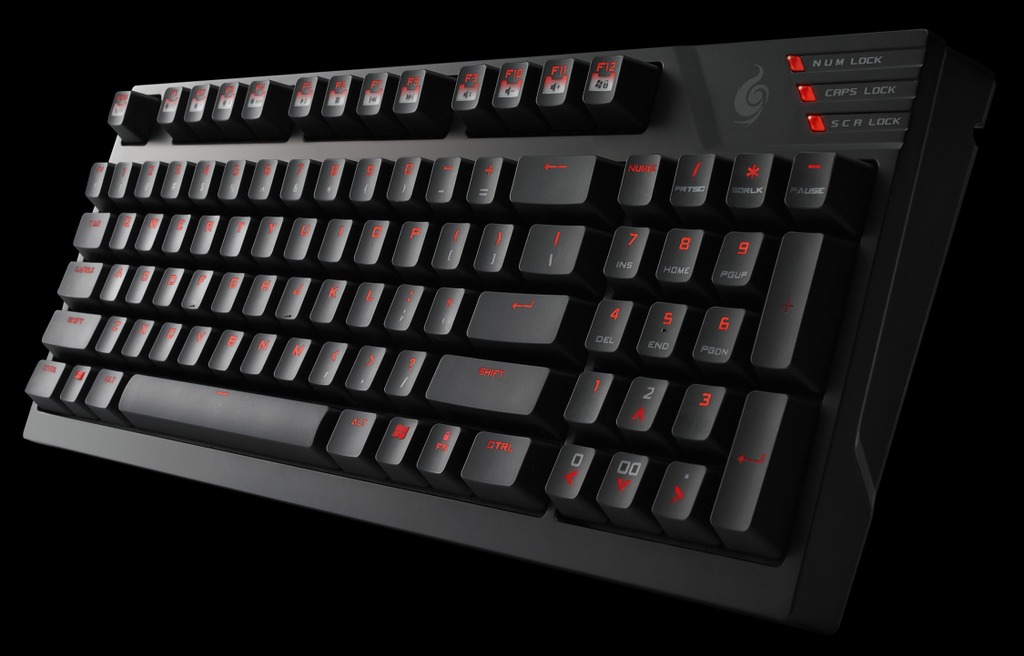
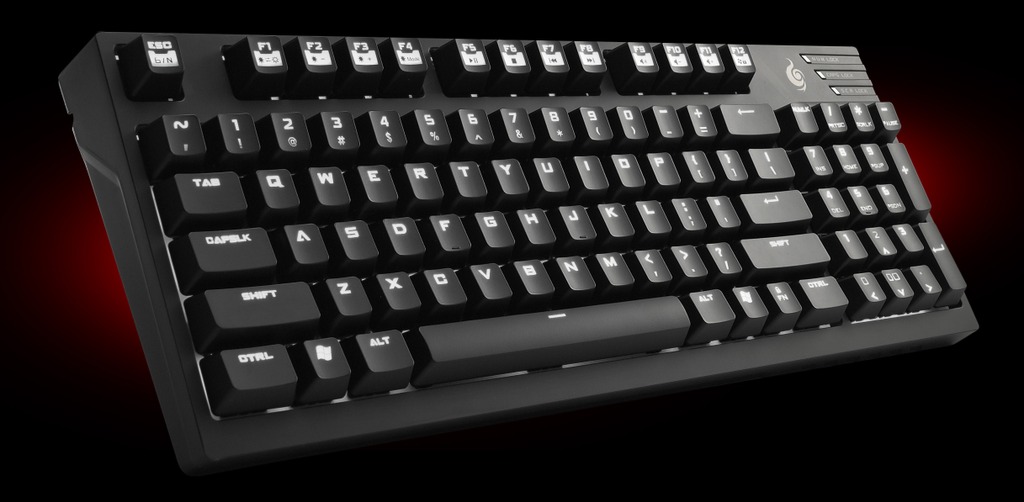
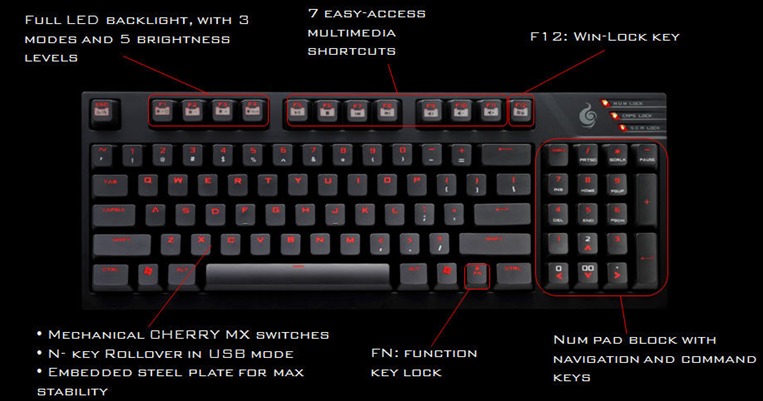
Cooler Master has released a new gaming keyboard, the CM Storm Quickfire TK. Built for gamers needing to take a dependable keyboard with them for tournament play, the Quickfire TK features hard plastic and metal construction and small form factor. To meet this aim and keep it affordable, Cooler Master has made the Quickfire TK a no-frills affair. For example, there is only one red back-light color and it is keyboard controllable via 5 intensity levels and three modes of operation (pulse, steady, and WASD). What the keyboard lacks in “frills”, however, it makes up in dependability. This lack of bells and whistles should not discourage you from checking it out. The CM Storm Quickfire TK is an excellent keyboard that exudes rugged design. Its compact but very hefty and it wont go jumping around your gaming station in the heat of battle. There are no software-based controls for the keyboard, it is all done on the hardware itself by way of a special function key. The numeric keypad shares keys with the extended “home”, “del”, etc keys as well as the arrows. The whole keyboard is

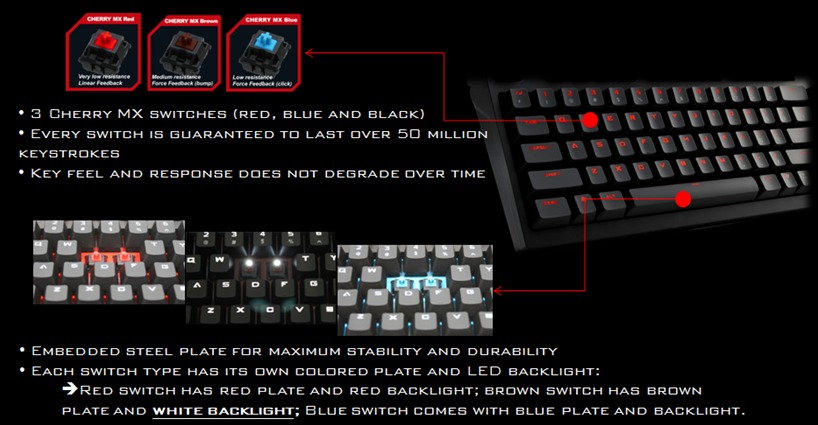
The Cooler Master Storm Quickfire TK keyboard is available in three flavors of Cherry MX switches: Red, Brown, and Blue. Basically, this allows you to get the keyboard that best fits your particular preference. Cherry MX Blue switches tend to be tactile and “clicky”. Red switches are not either but its shorter action makes it a bit more suited to gaming. The Brown switch variant is very tactile, with a noticeable pressing action but is not nearly as noisy as the Blue switches. The choice is yours, however some key types are more readily available in certain markets than others. Shop around until you find a supplier with the one you desire.

I used the CM Storm Quickfire TK in multiple games, from Sword of the Stars to Call of Duty: Black Ops II and even some Company of Heroes. I loved my experience with the keyboard and the only issue I had with it was the occasional pressing of the wrong key due to the small surface area of the keys. While the key bases are a standard size, they taper to a much smaller size on the finger-pressing side. This helps keep the keys from bumping up next to one another. Unfortunately, I am a bit thick-fingers and sometimes am not all that coordinated… 😉

Overall, the Cooler Master Storm Quickfire TK gaming keyboard is a compact, dependable, and rugged keyboard. It accomplishes everything it sets out to do and is available now at Cooler Master’s CM Storm official website. It may not have a 16 million color back-lighting system like some other keyboards out there, but I would like to see someone use those keyboards as a club when the LAN tournament gets heated. I think not. With the Quickfire TK, you can quickly detach the braided cable and start swinging.

[wpcol_1half id=”” class=”” style=””]

Pros

  • Rugged construction
  • Detachable, braided cable
  • Small size but a good weight

[/wpcol_1half] [wpcol_1half_end id=”” class=”” style=””]

Cons

  • Small keys

[/wpcol_1half_end]

Images

Specifications

Model Number SGK-4020-GKCR1(Red switch)
SGK-4020-GKCM1(Brown switch)
SGK-4020-GKCL1(Blue switch)
Key Switch Cherry MX Blue/ Brown/ Red
Keycaps ABS, grip coated, removable
Keycap Puller Yes, ring-puller
Backlight All keys, Red, 5 Levels, 3 Modes
Key Rollover NKRO (windows only)
Polling Rate 1000 Hz /1 ms
Interface USB 2.0 full speed
USB cable 1.8m, braided, gold plated, removable
Dimensions 377.5(L)*138(W)*33(H)mm14.9(L)*5.4(W)*1.3(H)inch
Weight 544 g/1.2 lbs

Natural Selection 2 – Review (PC)

Unknown Worlds Entertainment has finally released their sequel to their Half Life mod, Natural Selection, that was released way back in 2002.  Announced in 2006, Natural Selection has taken six years to get to us, and boy was it worth the wait.  Combining first person shooter game play mechanics with that of real time strategy games, Natural Selection 2 pits a group of marines against an alien race known as the Kharaa.  In a similar vein to Team Fortress 2 or Counter-Strike, Natural Selection 2 has no single player mode, just online multiplayer, making it perfect for those of you that want to test your mettle against live opponents, but not ideal at all for those that do not have a good internet connection or hate mulitplayer games.  Natural Selection 2 stands out as a very solid aliens versus marines game, that adds in very interesting game play mechanics.

Story:

Well, let’s be honest, the entire story line for Natural Selection 2 is seen through game play mechanics and through whatever the player assumes through looking at his or her surroundings.  Unknown Worlds Entertainment stayed away from any type of constructed story line for this game, aside from setting up two opposing forces within a small confined space.  Essentially, Natural Selection 2 is set in the future of the human race, where we are fighting for survival against an alien species named the Kharaa.  Everything else in regards to the story is left up to the player.  For me, as a fan of good writing in video games, this always seems to be a risk for developers.  However, when one of the most popular video games in history has absolutely no narrative driving it, I’m looking at you Counter-Strike, then we can understand that a game can be good without giving the player a constructed story line to follow.  Simply put, don’t expect an epic story line, just hours and hours of marine versus alien combat.

Before I move onto the game play for Natural Selection, let’s address the large elephant in the room in regards to Natural Selection 2.  Yes, Natural Selection 2 resembles Aliens in more ways then I can count.  Unknown Worlds was obviously trying to replicate the feel of the second movie, even right down to how the weapons feel as you fire them.  Most of the time, I would be a more then a little upset with someone taking liberties with a franchise that I so love, however, Unknown Worlds does it right.  This game is a better Aliens game then any other game out there, even the ones that were marketed as Aliens games.  The upcoming Colonial Marines game better be at least this good, or the Aliens franchise better move on over to Unknown Worlds for further development.

Game Play:

Without any narrative to make the game shine, Natural Selection 2 solely relies on its game play, and it is well done.  As I said earlier, Natural Selection 2 combines first person shooter elements with those of a real time strategy game.  Players start off in a lobby, where they get to select their side; either Marine or Alien.  Once in game, one player from each side will be allowed to take the role of leader.  This leader sees the battlefield differently then the rest of the troops, because it is the leader that will issue orders, place destination markers, research upgrades, or drop in equipment.  The leader’s game play for Natural Selection 2 plays like a real time strategy game then a first person shooter.  It is your job to command your troops or aliens to capture strong points and to make sure that they are well supplied.

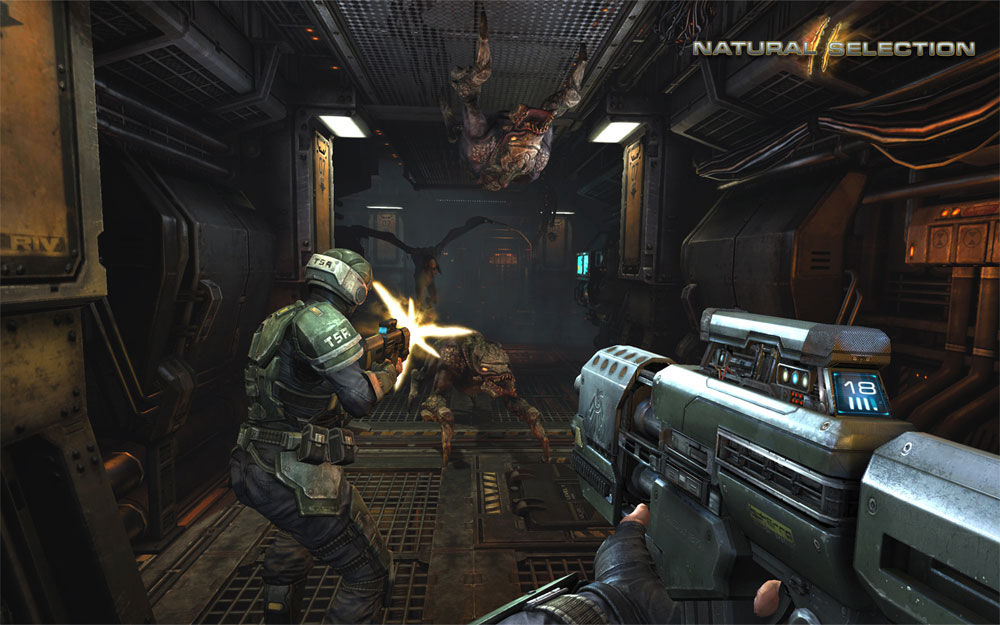
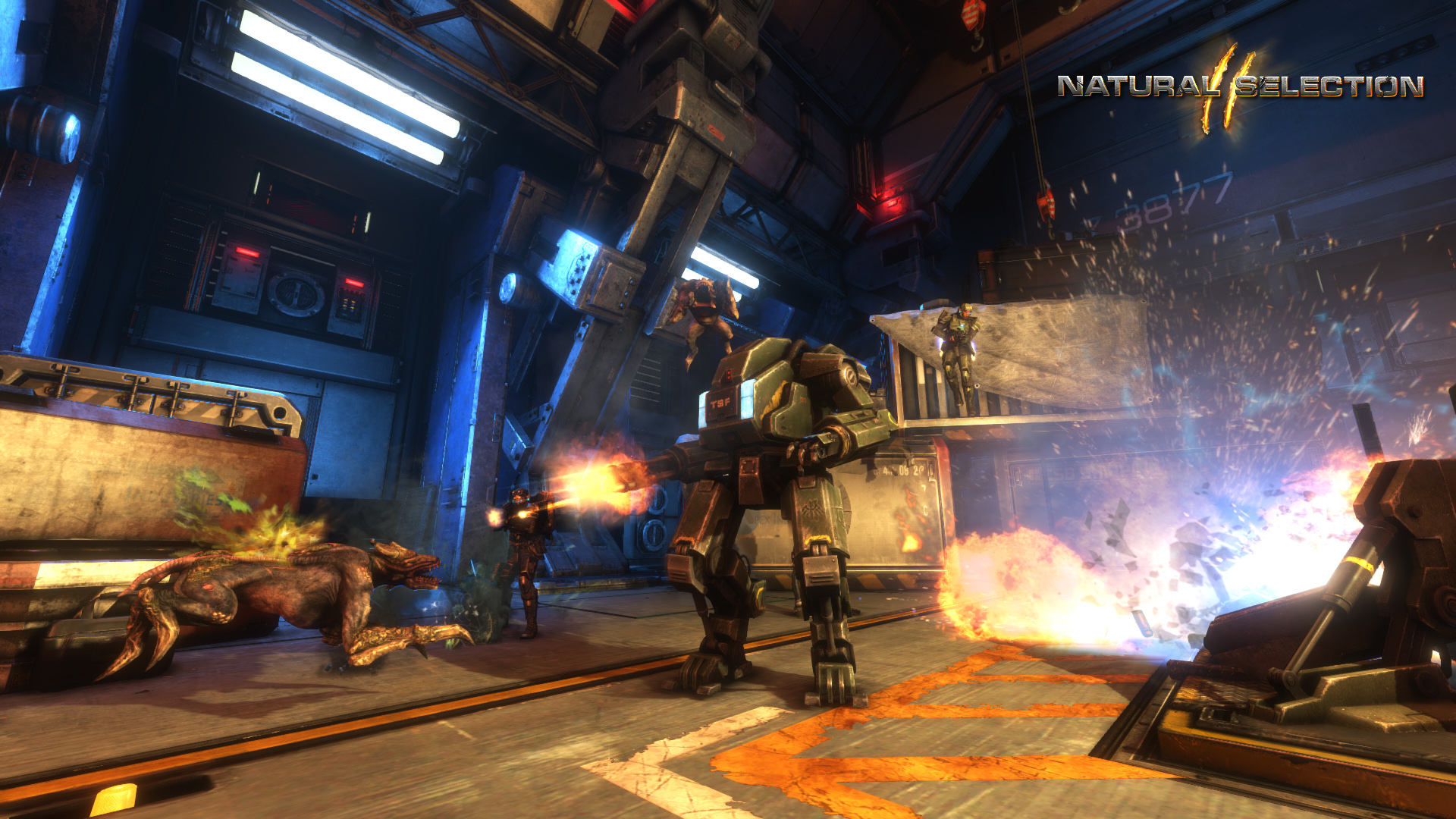
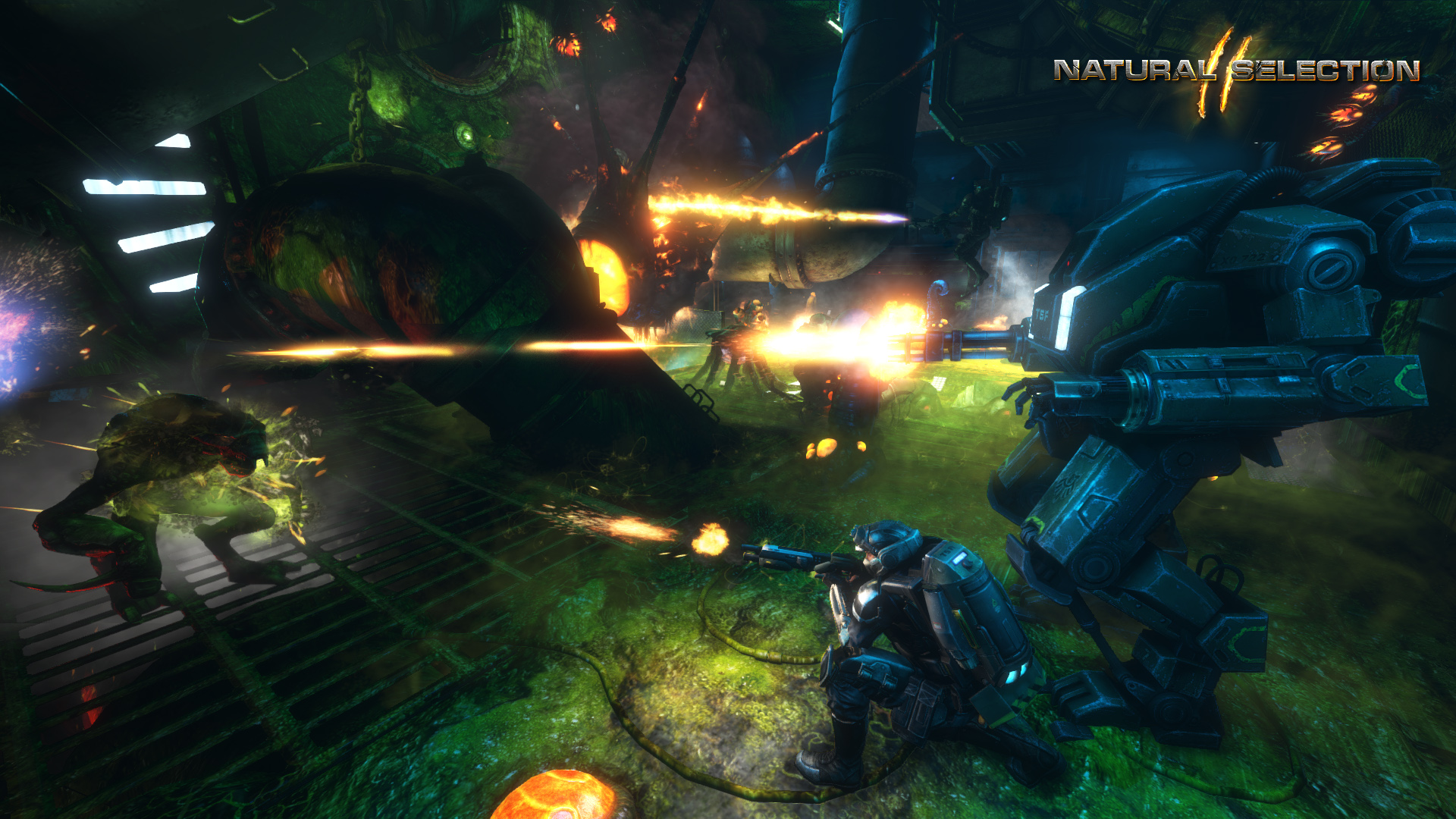
For the rest of the team, game play differs greatly depending on which side you are playing.  For the Marines, you start the game with some basic equipment, like a pulse rifle and a flash light.  As the game progresses, you can receive other equipment from your leader, like shot guns, sentry turrets, or battle suits with twin machine guns.  Your job is to maintain the power to the areas you have under your control, while trying to expand your territory into the alien’s controlled zones.  This sets up some interesting game play mechanics, as you have to play as both defender and attacker in order to win.  The aliens will target your power supply, which will knock out the lights, and any automated defenses you have in that area.  This means that you have to switch over to your flash light, just to see the aliens.  I absolutely loved this!  It set up some really intense gunfights in the dark, with just your flashlight and the muzzle flash from your rifle to light up your enemies.

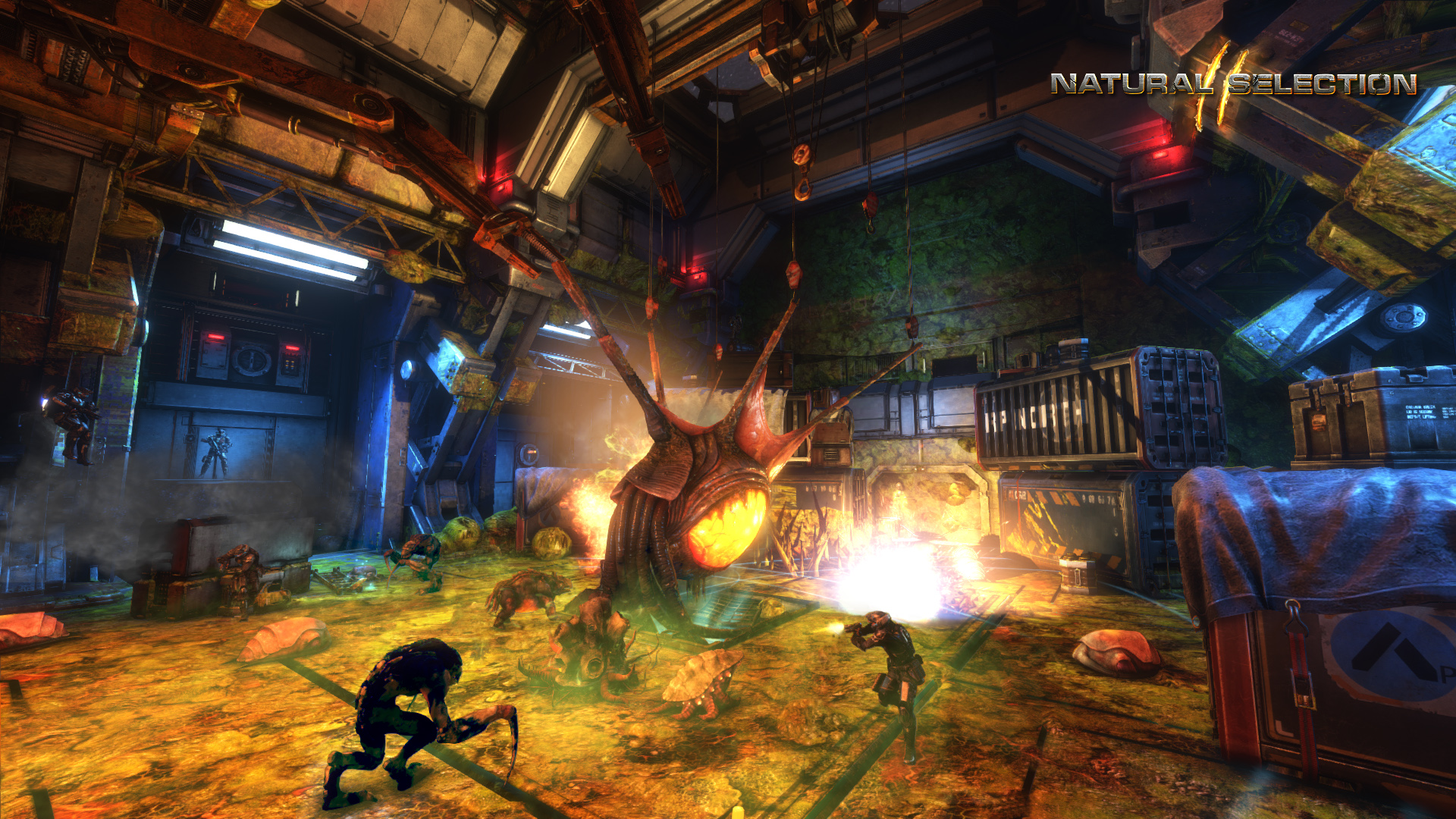
The Kharaa core game play mechanic is the same as the marines, you simultaneously attack and defend in order to spread your alien influence over the entire map.  However, the aliens can evolve into different types during the game, each with different abilities.  The base form attacks with jaws and is quite agile, while others have stronger attacks, can fly, or even run on the ceiling.  The agility of the alien species really makes it hard for the marines to target them, especially if they come at you in a group of two or three.  Just like the marines, you have your own automated defenses and upgrades that can be dropped to you from the leader, and you have to be able to defend and attack on the fly.

Natural Selection 2 feels completely balanced to me.  I never once felt that I had either an advantage or disadvantage over my enemy that was based on an unbalanced mechanic.  Sure, if you are saving up to run in 3 large battle suits, and have marines willing to use welders to heal them, then the aliens are going to get completely over run, but that can happen in any game.  I had some issues with stability in the beginning during game play, with crashes that would shut down the entire game, but these were few and far between.  I have yet to determine whether these crashes were due to my hardware, or Unknown Worlds, but just beware that you may or may not experience this in your game play.

Aesthetics:

The look of Natural Selection 2 is fantastic!  From darkened corridors to alien infested caves, everything in the game just adds to the ambiance and experience for the player.  I love the way the developers added in little touches to make the experience that much more fun, like having the lights go out in a section when the aliens cut the power.  This causes the emergency lighting to come on or, in some cases, completely sends you into utter darkness.  This really added to the tension that you already feel by playing a close combat first person shooter.  The overall look of the game fits its design and is looks good as you are playing.  The sound of Natural Selection 2 also fits the design well.  The sound of the pulse rifle is reminiscent of Aliens, without infringing on copyright issues.  The soundtrack is absolutely forgettable, though most of you won’t play this game for the music.

Final Thoughts:

Natural Selection 2 is good, very good.  The game play is varied and well executed, without ever feeling out of balance.  Combining both first person shooter and real time strategy elements scared me at first, but Unknown Worlds did a fantastic job in meshing these two elements, giving players the sense that they are involved in something larger.  With the leader giving orders to capture objectives or to build resource gatherers, the other players can either following along, or do there own thing.  This can cause some frustration, especially for the player in the leader role, but in most games  the sides played together well and worked together to obtain their goals.  Natural Selection 2 is the best Aliens game out there, without actually being an Aliens game.  Unknown Worlds understood what made Aliens a great movie, and delivered to us a game that replicates that experience, without the actual copyrighted material.  Natural Selection isn’t without it’s flaws, with just six maps at launch and a step learning curve for those that are new to the game, but if you are willing to put up with these you will have a fantastic gaming experience ahead of you.

Screenshots

Omerta: City Of Gangsters Preview (XBLA/PC/Steam)

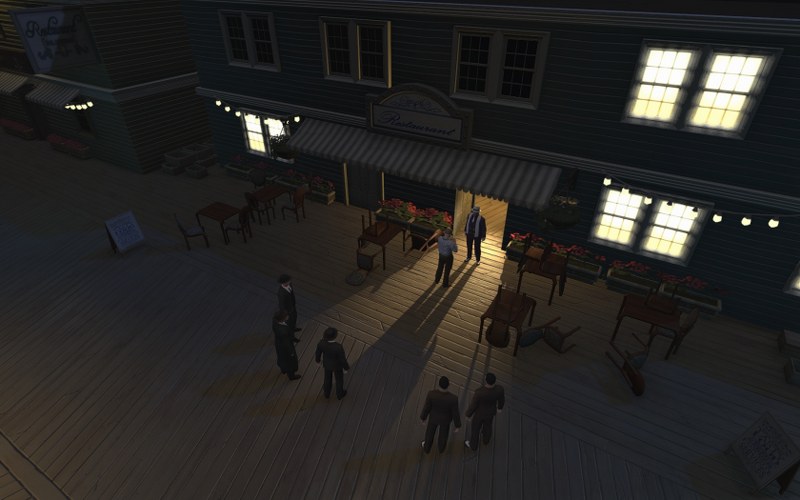
Growing up I wasn’t a huge Cowboys and Indians kind of kid.  I was a fan of the gangster era, whether it be the crooks or the G-men who chased them I always wanted to be playing Cops and Robbers with every toy gun becoming a Tommy Chicago Typewriter and every bank job becoming a blood bath.  I grew up, and when it came time to put down children’s toys another man with the same passion did something from which I think I have never recovered from.  Brian De Palma made The Untouchables and I realized my love of the era wasn’t a childish thing but a fascination of many.  I took it a little far, traveling around with my friends in ties, fedoras and trench coats (pre-Trench Coat Mafia days) and we would hit the town dressed in the height of fashion – for Prohibition.  There was a style to the genre and as I reluctantly put my coat and fedora aside I remembered this feel as I added my own sound effects to games over the years. Sometimes ad libbing movie dialogue as I played and every time a game came along like Omerta: City Of Gangsters with a speakeasy door and words like “copper” or “payola” thrown around I got my hands on it and got transported back to the days of squirt gun Tommies and the palookas I called pals.

Storyline:

Taking the role of a fresh-from-the-boat immigrant, with dreams of the big life, the player will work his way up the criminal hierarchy of 1920’s Atlantic City.  Starting with small jobs, his character recruits a gang and expands his empire by taking territory from other gangsters. Eventually he establishes his own crime syndicate and becomes the de facto ruler of Atlantic City.
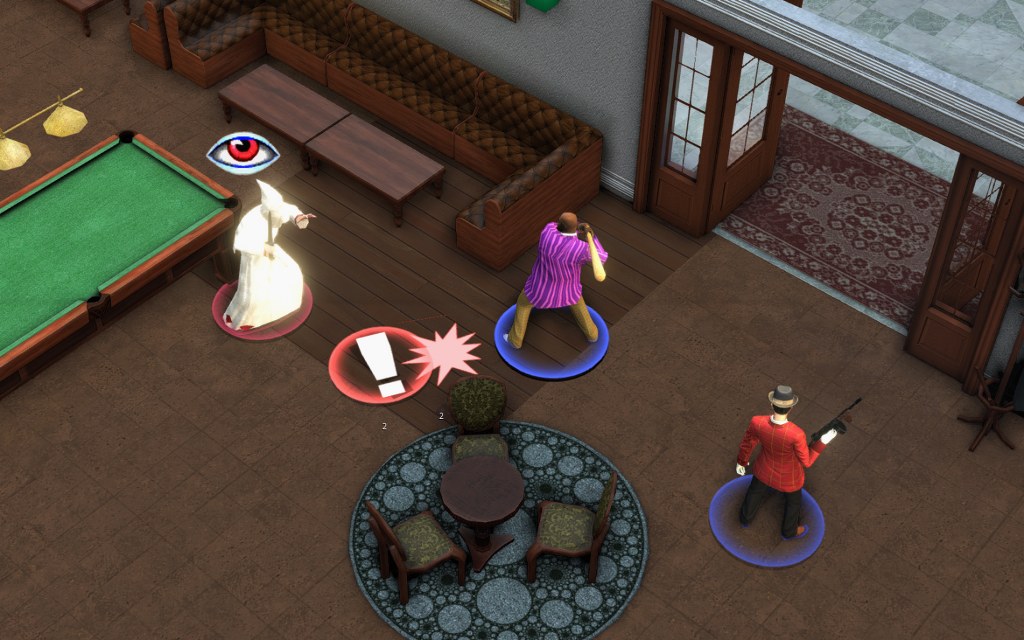
The storyline is fairly straight forward in this aspect but this really doesn’t do it justice as it also plays heavily on the injustices of the era and tries to have fun as well as accuracy with the missions and characters.  You get to fight the KKK at one point in the storyline, ‘nough said.

Features:

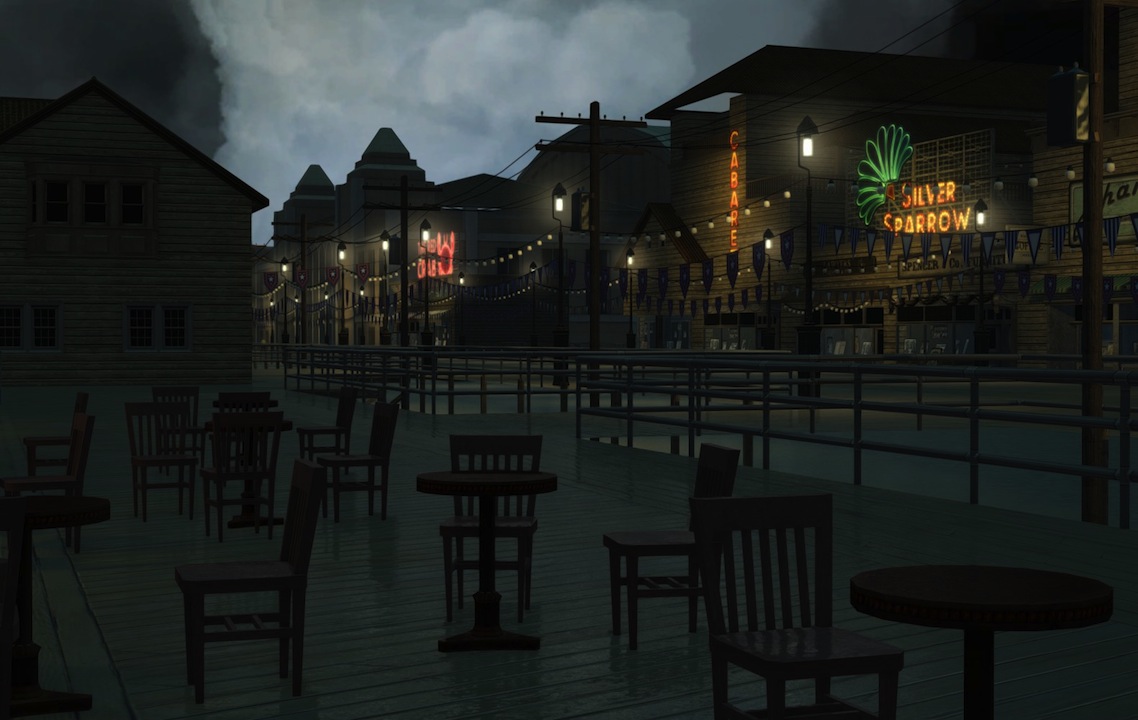
  • Historically accurate representation of Atlantic City and its landmarks
  • Strategic gameplay allows city overview, planning, expansion and gathering of intel
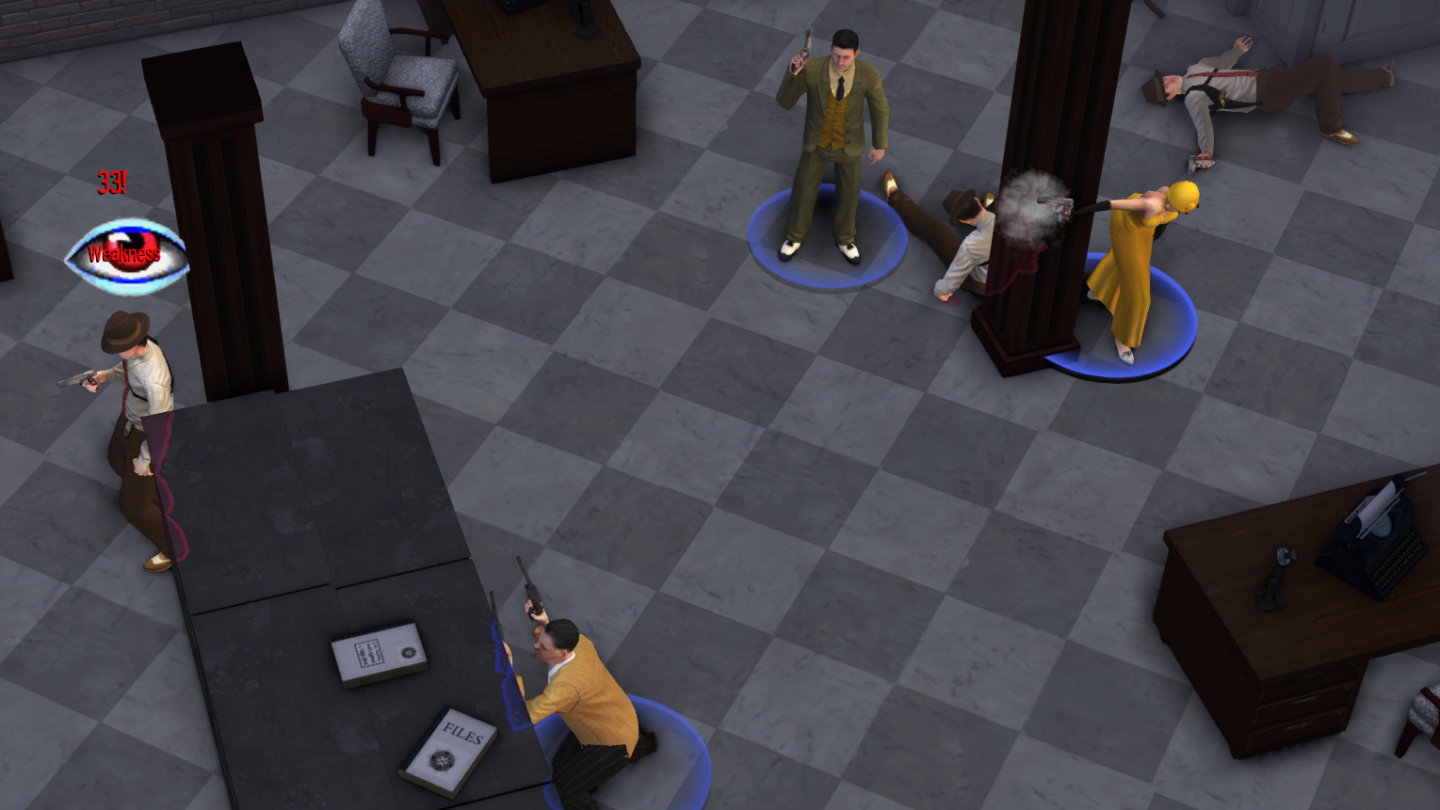
  • Turn-based tactical combat with a cover system and stealth action
  • 15 unique player controlled characters each with unique personalities and backgrounds
  • A RPG system for development of player characters and managing their equipment
  • Competitive and cooperative multiplayer mode with persistent gangs
  • 15+ hours of gameplay in a single play-through
  • 20 unique maps visualizing the various districts of Atlantic City

Gameplay (Hands On):

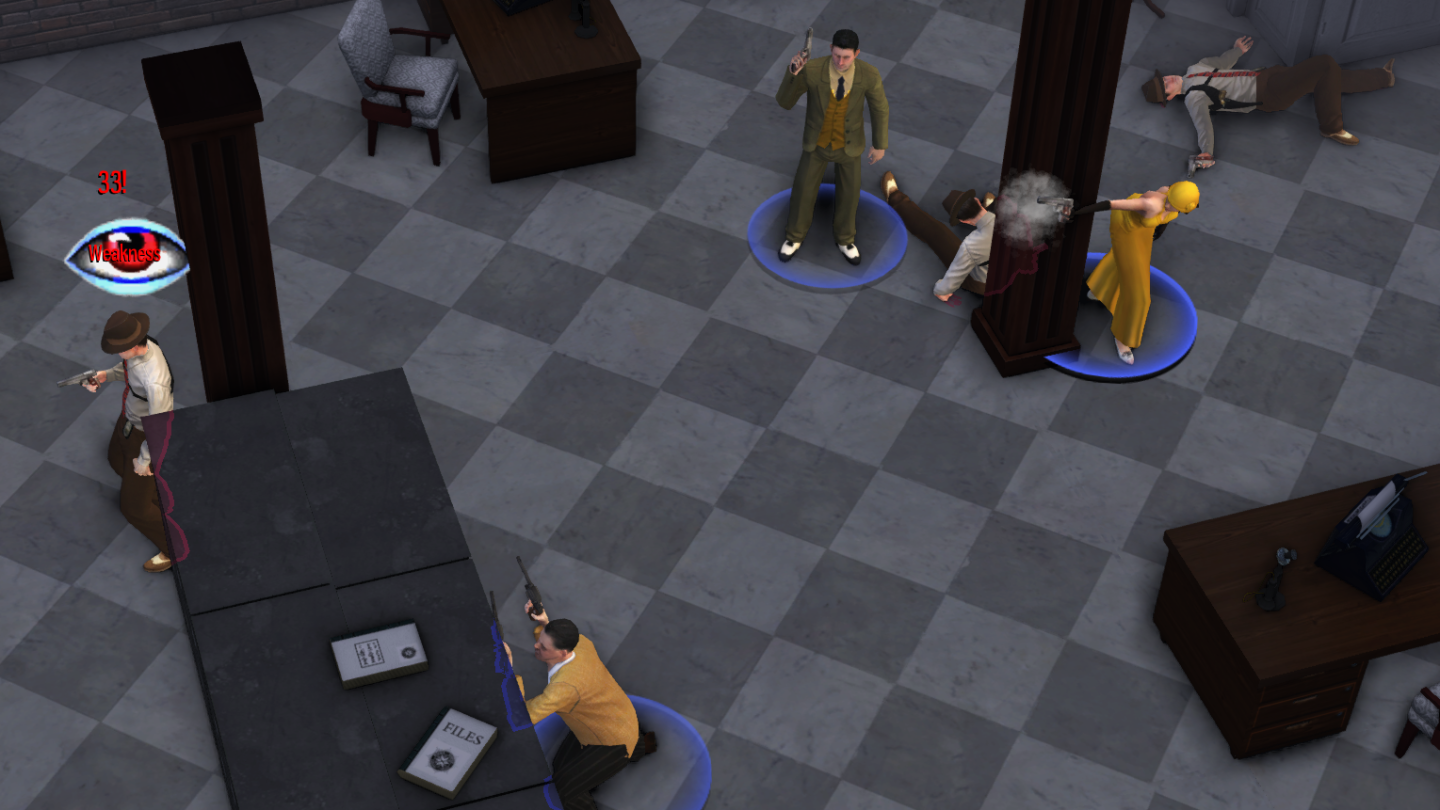
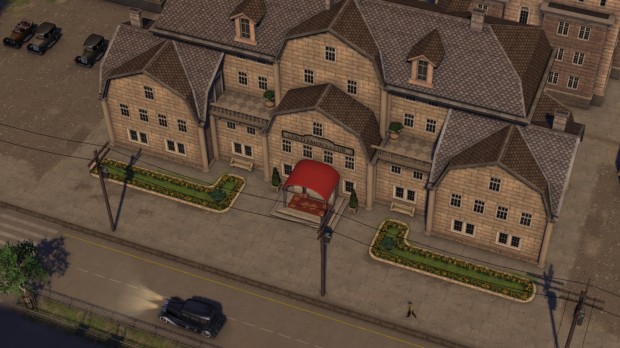
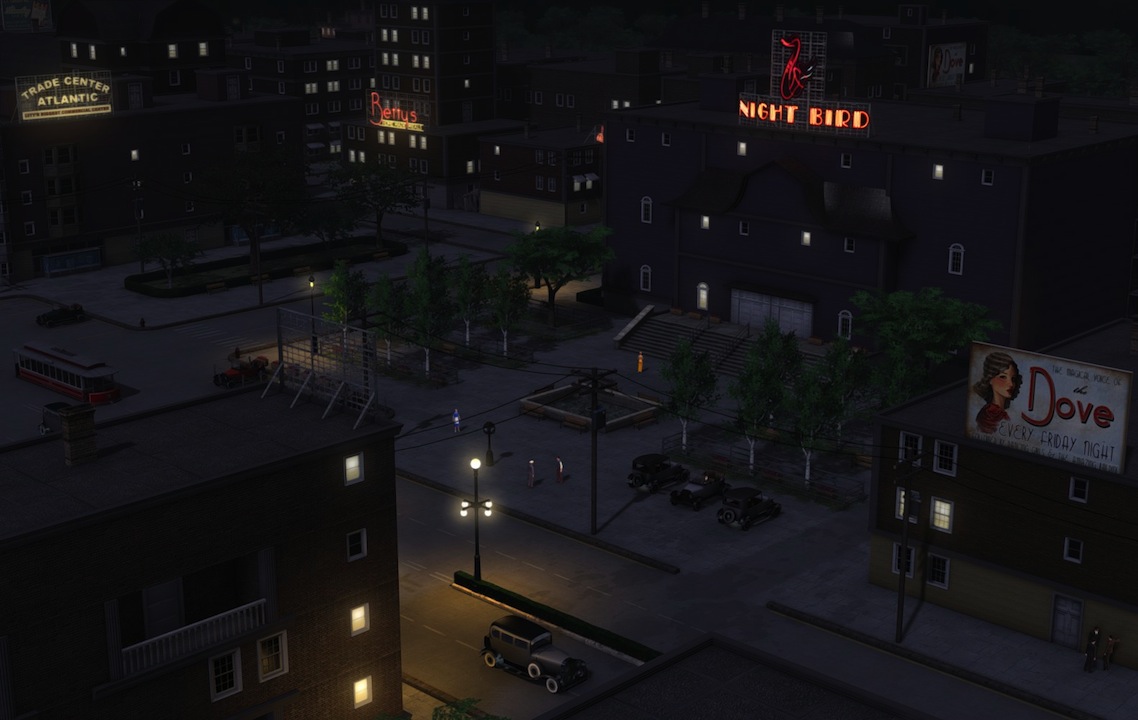
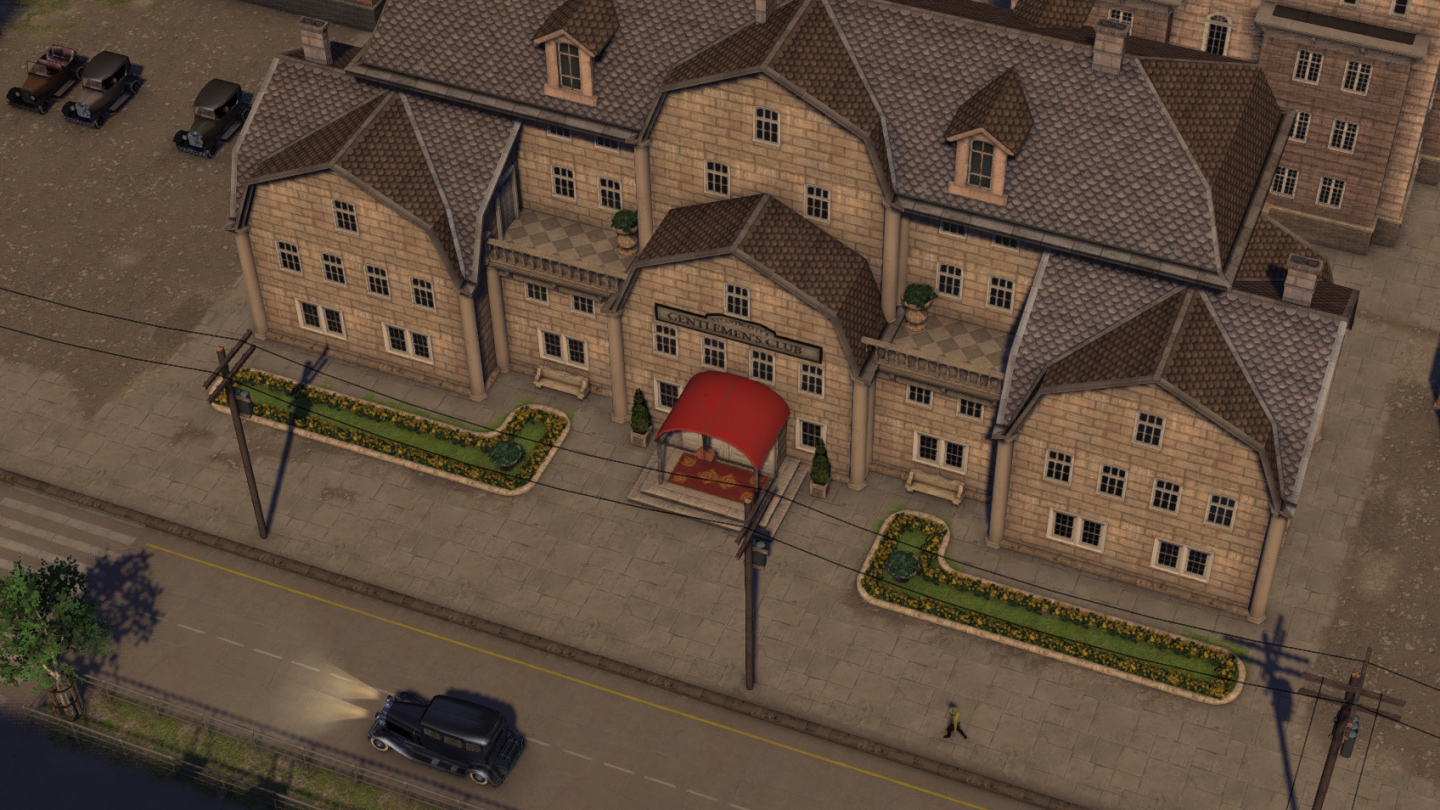
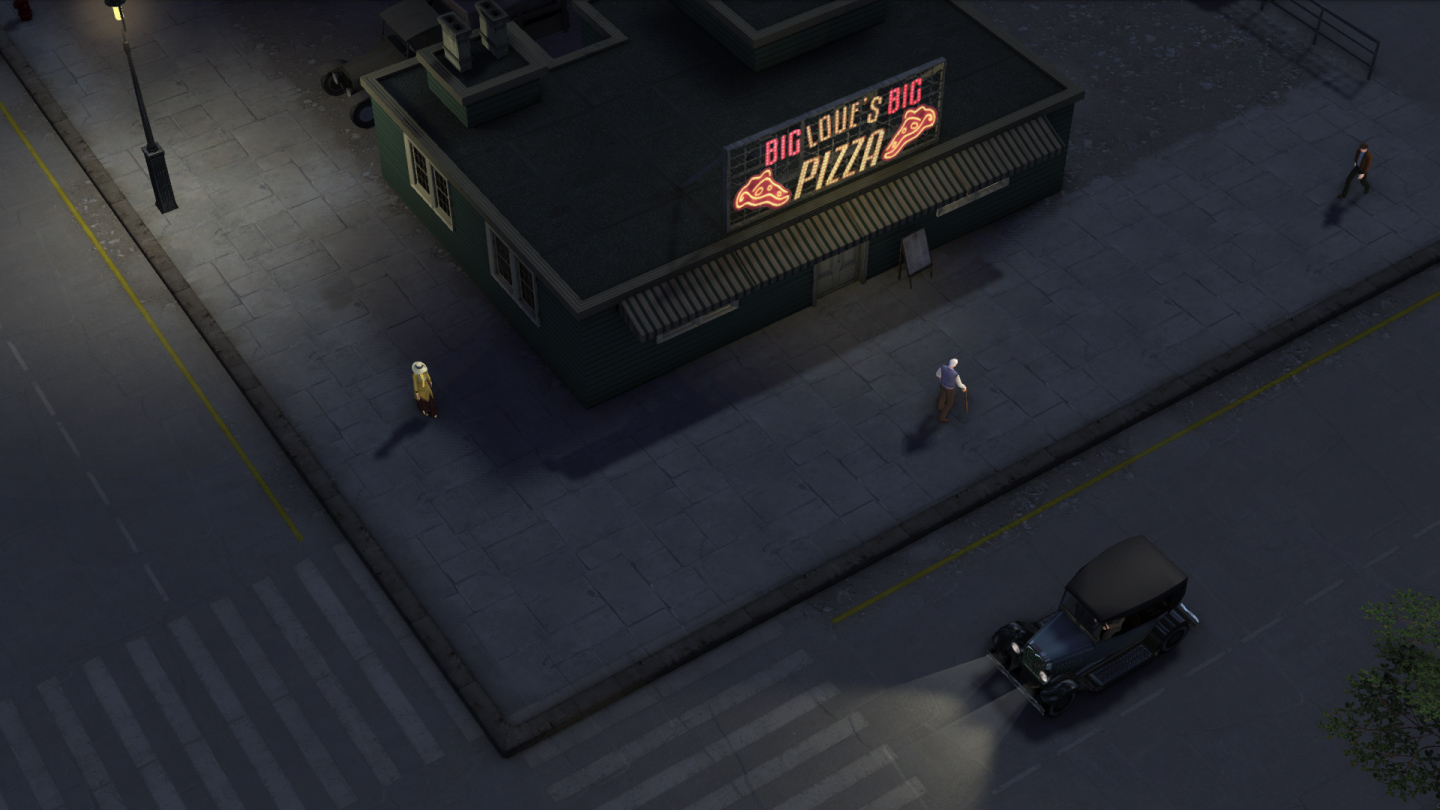
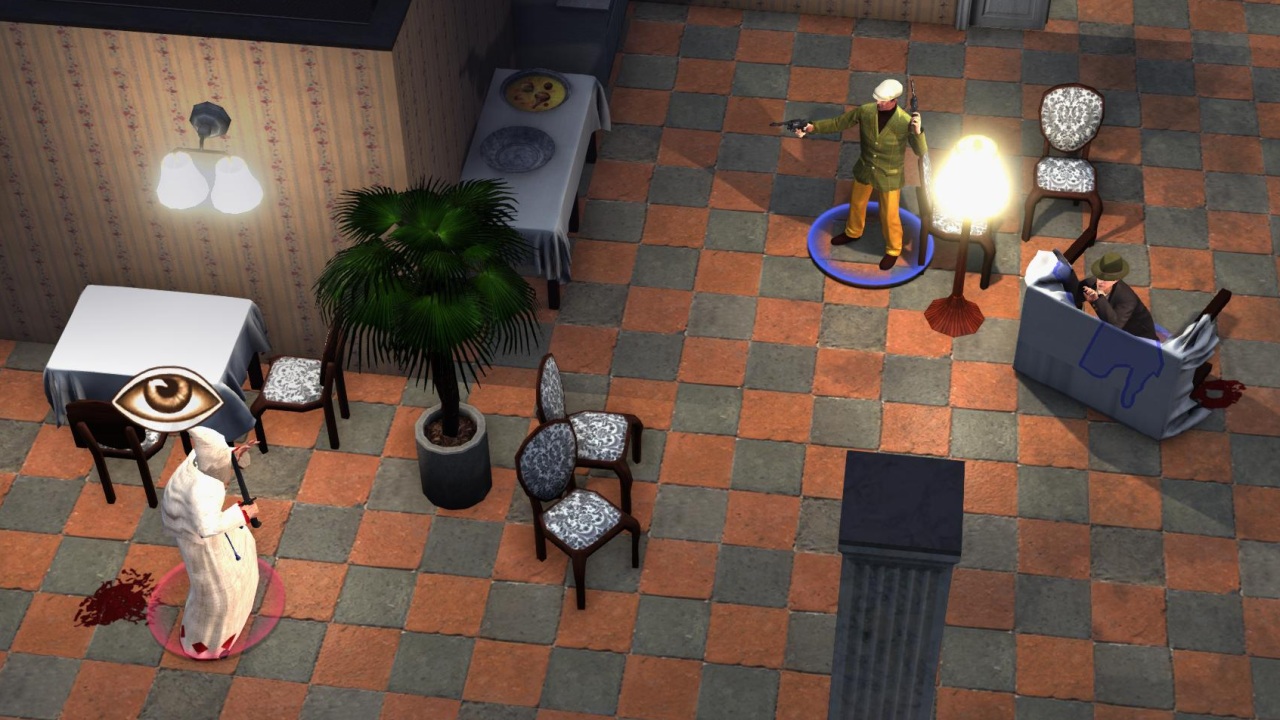
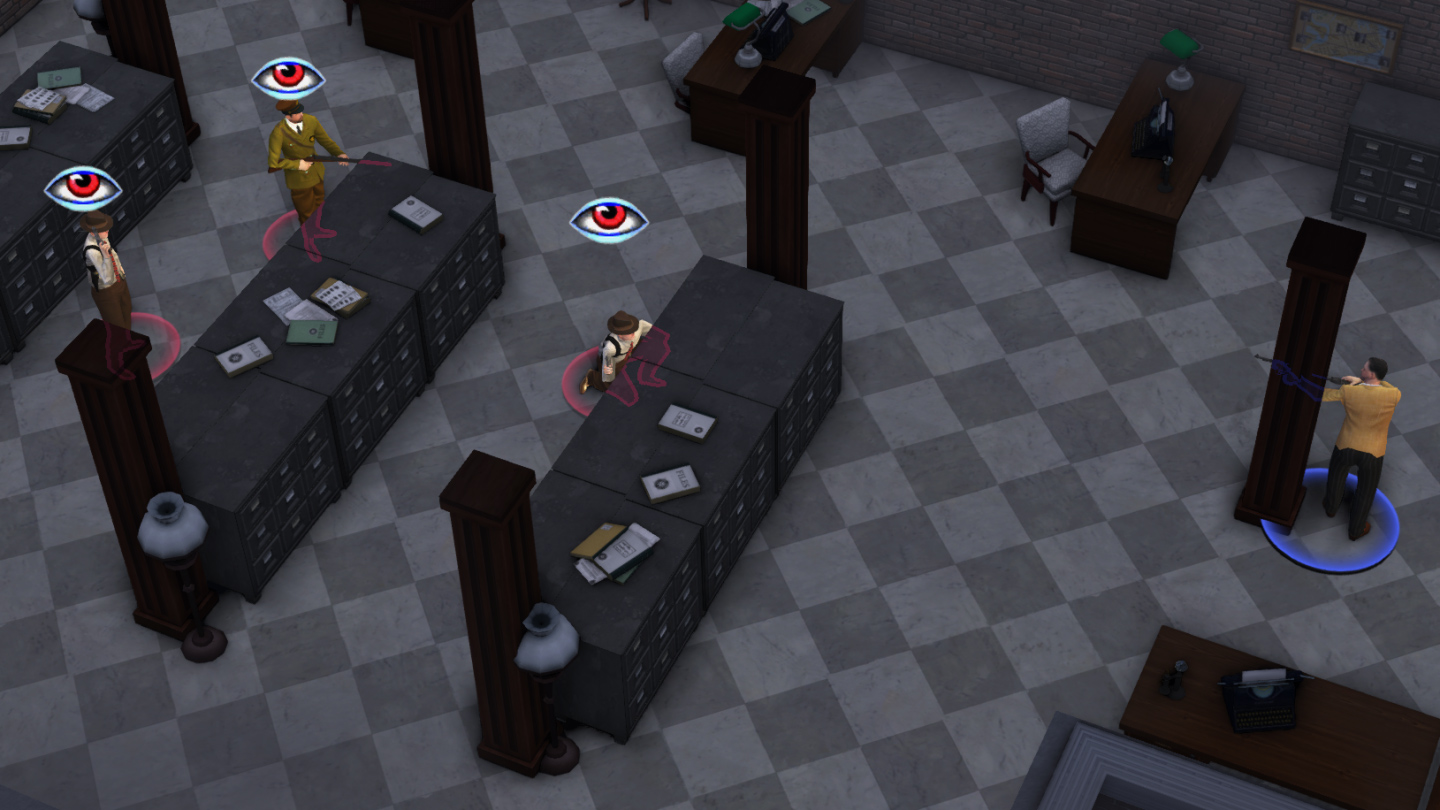
It is for the most part top down gameplay on the general map in a standard city simulation setup with close quarters mini maps at mission sites.  The games attempt at impressiveness is very apparent when you look at all the detail on the main city map, it is a historical looking map of the time period with little cars and people bustling around with density dependent on the areas population.  So in the warehouse district near the docks where most of the shadier, less reputable business’ operate there is very little pedestrian traffic and after dark the streets are almost deserted except for those up to no good.  Whereas the influential neighborhoods have people walking on the streets and regular police patrols, all visible from a God’s eye view.  The detail holds up when you zoom in tight on the maps to the point that if you send one of “your boys” on a mission you see them leave the safehouse, head over to the location of the job and do the work.  This is particularly fun and thrilling when you send someone for a driveby and you watch not knowing which is your car as one suddenly has muzzle flashes coming from the side of it and pedestrians start dropping.  You can zoom in close to see the detail of this or stay wide on the map watching the happenings all over town.

When you are choosing your gang you not only get a name with strengths and weaknesses but you get a mugshot that looks like it was taken right off an old police blotter and often a greeting that shows some of the personality you can expect from this member.  This personality isn’t just limited to the conversations either, their fighting styles and techniques are direct representatives of the character.  For example a favorite at the game demonstrations was a character named Doc, the persona of a Drunk Irishman out to not just commit crimes but to have fun in the process.  His character traits include “Dance for me laddy!” which involves him shooting at someone’s feet drunkenly to scare them causing a fear buff.  On the mini maps during missions his movements are more limited because he doesn’t walk anywhere he staggers.  And may “The Blessed Mother Mary and Joseph” be with any fellow gang member in front of him when he starts firing blindly with his two pistols, there is a percentage for them being hit as well.

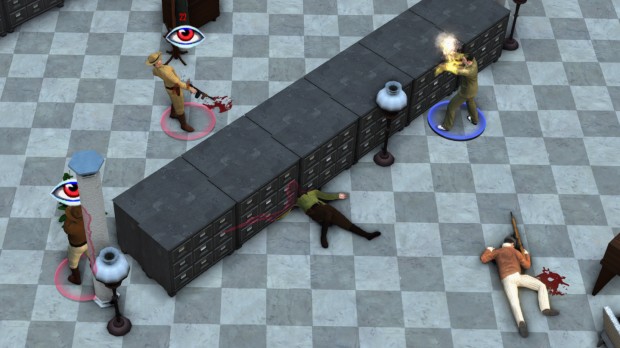
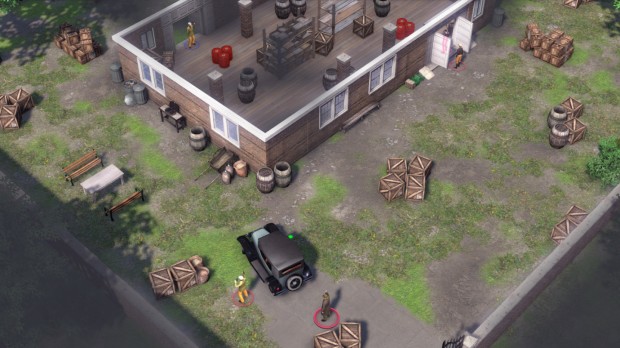
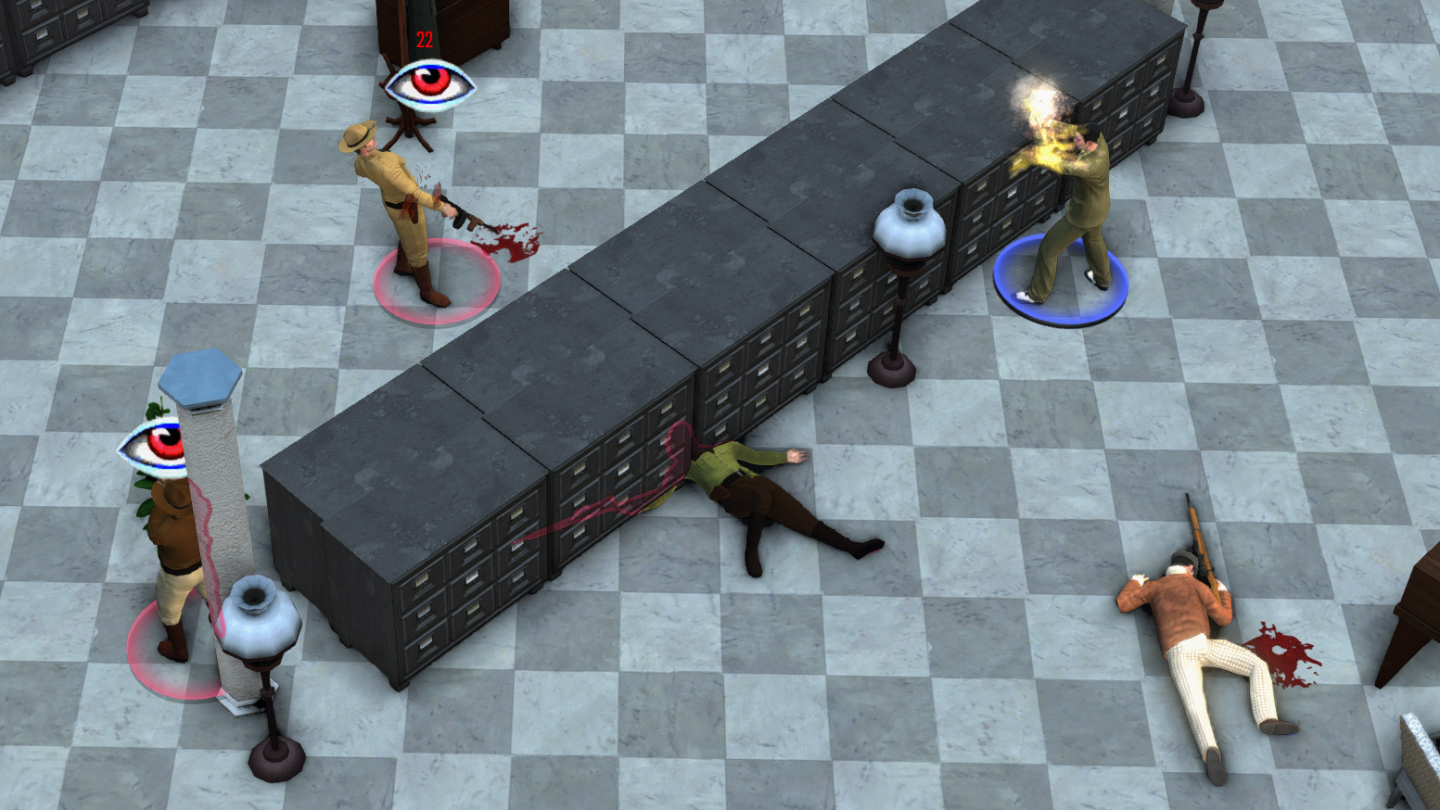
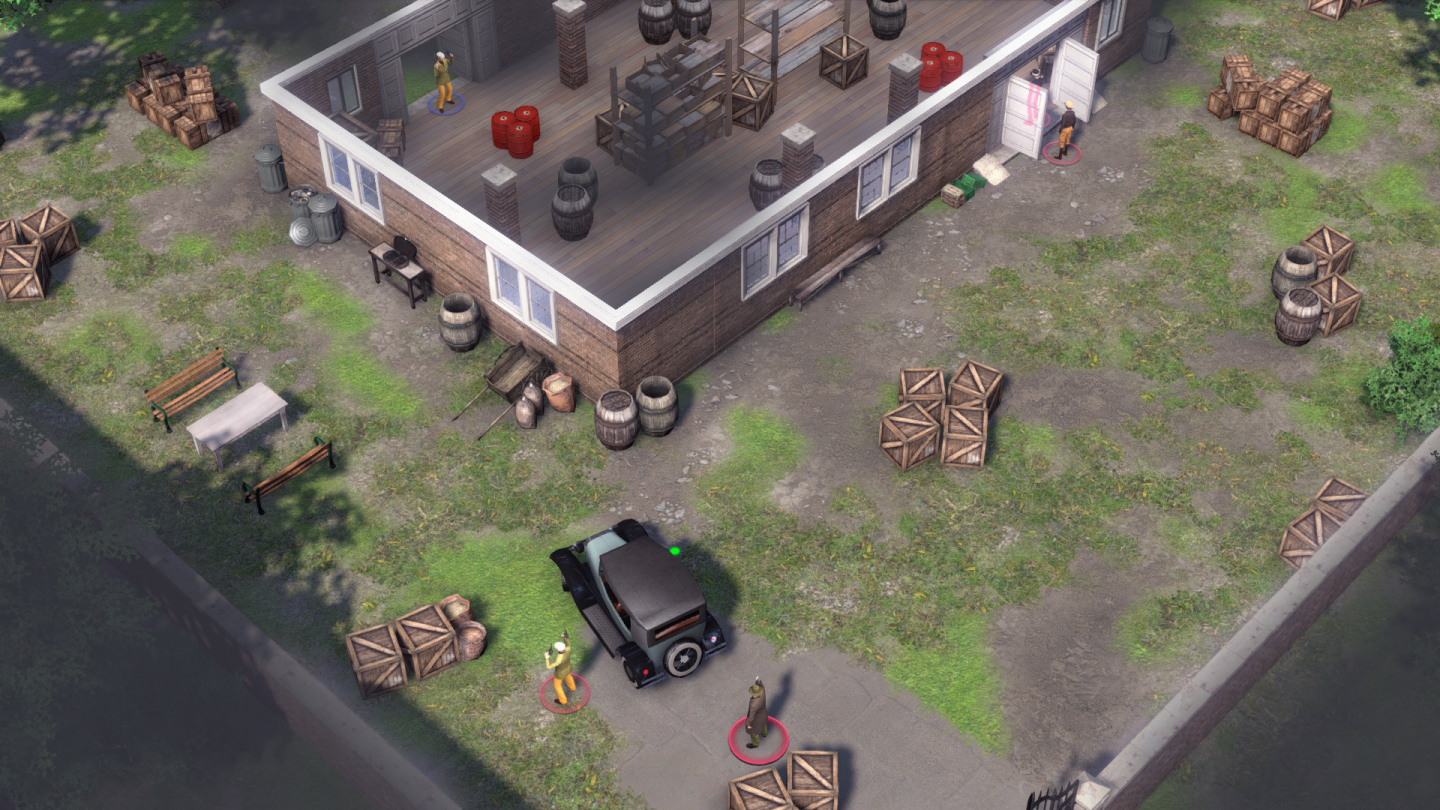
This happens in close combat missions where you go to mini maps with each character having a certain number of action points to effect moves and attacks in with a turn-based gameplay.  Anyone who has ever played a Jagged Alliance game has a pretty good idea of how this system works and will find the gameplay intuitive.  If you haven’t had this kind of gameplay your map is broken up into squares or hexagons and each character depending on attributes can move a certain distance and perform a certain attack with each of these actions using up action points.  When the action points are out the turn is over for that character, when they are all used up on all your characters or you are done moving them your turn is over and it is your opponent’s turn, in the case of campaign that is the AI.  In these kind of games the intelligence of the AI can be a deal breaker: too good and they are almost impossible to beat, too easy and the game gets boring.  With Omerta I could tell they had already found an excellent balance between the two so it will simply be a matter of not shooting themselves in the foot to make it good for market.

The thing about committing crime is it eventually draws the attention of the coppers.  The boys in blue are a bit slower to pop you in the clink if you are just shooting up other thugs but when you start trouble in respectable, upstanding citizens’ neighborhoods, well then something needs to be done about it!  This is all measured much like the GTA series with five stars of heat, when you hit five stars the police launch an investigation against you which if you don’t nip in the bud will land you in the pokee permanently.  You can buy off the cops (which costs more each time you do that), give them a patsy (doesn’t make you any friends) or… well maybe there are more ways to keep the party goin’ as well as appearing to keep your nose clean in the first place.

The better you do the more experience you get which translates directly into leveling and new skills as well as cash for better weapons and vehicles.  There are different skill trees set up to cater to different play styles and part of the fun is putting a new talent to use.  In this way Omerta plays a lot like an RPG, because you choose how you get through situations and you are often given lots of options on how to do that and skills to suit your fancy.  It is in the depth and detail that Omerta really sets itself apart from other sims, it is part RPG, part action shooter and part city simulator all rolled into one.
Multiplayer:

Let’s face it when you played cops and robbers as a kid part of the fun was having your pals with you.  Besides the campaign play you can also play Omerta at the mini map mission level as Versus or Co-Op.  Versus is pretty straight forward, you are given a map and pick your teams and shoot it out with each other in different maps.  The Co-Op which was a personal favorite you and your friend pick your gang and try to complete an objective like rob a bank and get away fighting against the AI using the action point system.  This all takes place on Kalypso provided servers so you can play your friend across the room or across the country and with Steam in the works for this the players available should open up even more.

Last Call:

I have played a lot of mob games over the years in just about every form and I don’t think I have been as excited about one as I am about this one.  Don’t get me wrong, there has been some great gangster games lately but it has been a while since a great mobster city simulator has come along yet alone one with so much massive detail and style crossover.  Expected out in February of 2013 this is one to keep an eye out for and might make the difference between you feeling like a boss or a chump.

Trailer:

Gallery:

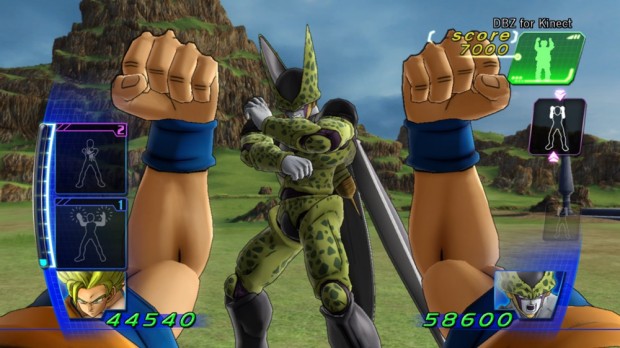
Dragon Ball Z For Kinect Review (XBox 360)

I want to love the Kinect.  I really, really do.  It’s red eye seems to beg for attention every time I fire up one of my XBox 360s, I have an old school one with an upgraded hard drive when Kinect was an addition and I have the beautiful Star Wars one, a white console with a white Kinect daring dust and grubby hands to touch it.  When I get on with my controller and start playing a game Kinect always gives me the opportunity to wave at it if I want and say hi, but most times if I do I find a game that will soon be relegated to a shelf until the day I either discover a place that gives me a good price for a near mint near-miss game or I have a garage sale and pass disappointment on to someone else’s household.  Don’t get me wrong there, have been a couple of decent ones out there, I really recommend the Yoostar series even if they never fixed the clipping issues (if you guys do I will be one happy ham handed pseudo movie star) because being clipped into a movie, tv show or music video badly is still a hell of a lot of fun, especially at a party.  But others leave me frustrated and cursing like old school comic strip characters with #@$% over my head, unable to get the Kinect to read the proper gestures causing me to give it inappropriate gestures (hence why I stopped playing the Kinect games at store displays in front of children).  So when I got a copy of Dragon Ball Z For Kinect I put it aside until I was in the mood to really mess with lighting, distance and probably frustration.  I try to go in objective, I really, really do, but hope has become a limited resource with Kinect for anything but chatting and Netflix.


Storyline:

This isn’t so much a storyline as the chance to fight famous foes complete with cutscenes then unlock them to use in a different mode.  It does tell a loose story and the special feature actually tells some great Dragon Ball Z lore but when it comes down to it it is really about fans of the series getting to fight the characters they love to hate.


Graphics and Sound:

This is pretty vital to a game of this type because the goal usually needs to be to make the graphics nothing like the cartoon series it is based after or identical to them, mixed equals muddled.  Luckily this is like playing episodes of the show from a first hand perspective with third person cutscenes with animation identical to the cartoons.  The voices are great (American style, not the original Asian voice style, deeper pitch) and match the sounds and music all fit nicely together to make a great experience for fans of all ages.

Gameplay:

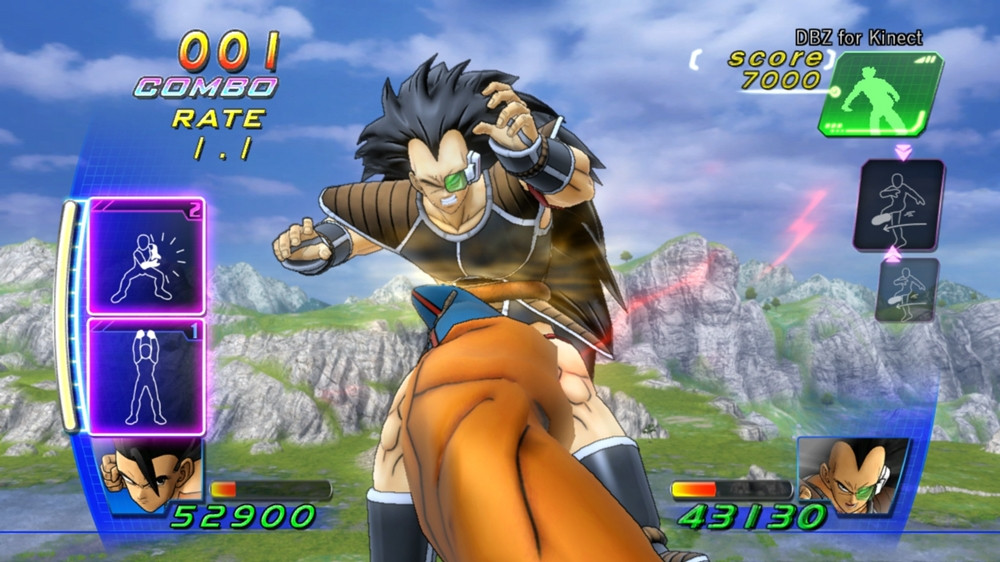
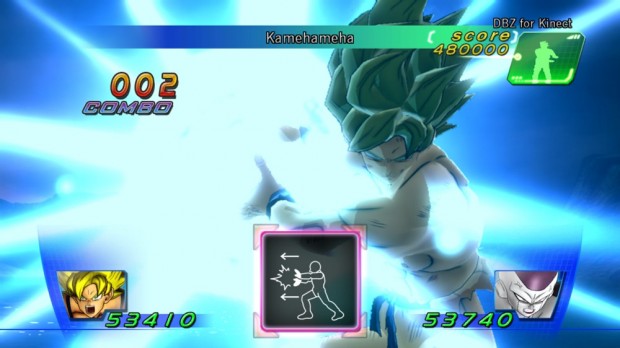
This is where Kinect game reviews usually go awry and so I am happy to say this one is MUCH better than most.  Mapping positions and movements are usually awkward and clunky but it this case it does an excellent job responding and reading movements.  I’m 6’5″ tall with really broad shoulders so reading certain moves are just going to be insanely difficult with a one position view.  When it came to blocking enemy attacks I almost never got it to read, which caused some frustration though it’s completely understandable, with my arm build the meat of my biceps completely block out the location of my hands when I put them up for the blocking gesture.  A person with normal arm proportion would have no problem being read and I think any of the issues I had with the game would be resolved with a normal physique.  Giving this consideration I was extremely pleased with the body mapping and game response.  When I put my hands to one side in a holding-a-ball position I had the pleasure of watching a magic ball build there and when I thrust that movement forward the ball flies at the enemy with a very reasonable response time.


I think a lot of the success for this game lies in the tutorials and the move display options being on the screen.  The tutorials are broken up into each style of fighting, not clearing you and unlocking the next type of fighting until you mastered it.  This makes sure the moves are ingrained but also gives you an idea of what moves will be weaker for you to do.  I knew for the tutorial my blocking ability and ability to break an enemy’s block were going to be my weak points in fights because of my build so I worked around them, I also knew that my jabs and upper cuts responded real nicely and stacked combos fast.  Being so big I had to jump pretty high to get my jumps to register but my dodges registered with ease.  The tutorial decided a lot of my fighting style and skills so that I could use what I knew worked when I got into actual matches instead of flailing and hoping.


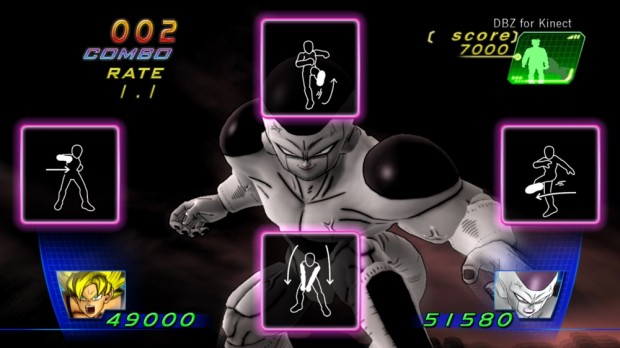
The move displays definitely need to get credit too.  Sure in theory they are like a kick boxing version of Dance Central for the most part with special moves and energy building ones displayed on the edges of the screen but it worked and reminded you that if you timed your energy building right you could unleash some seriously righteous fury down upon your enemies as well as jab and kick the snot out of them.  It shows energy building, how long you need to hold a position and how long you have to take the follow up position to complete the combination.  If you pull of some really good moves you are treated to a short cutscene to give you a quick breather and let you reset your position real quick before the next moves.  If the enemy is sending in a wicked attack at you the screen will show on each of it’s four sides different possible things you can do to dodge it such as lean left, right or back or duck.  This was where I had issues because blocking was sometimes the only option but I figured out a way around that I won’t spoil here.

I think something that really needs to be stated is how physical this game is.  You are basically kick boxing in time to a cartoon fight and it wasn’t long before I was sweating profusely and needing to get some fluids in me.  This will have kids of all ages worn out after a few rounds and even the games suggests after some of the longer battles to maybe rest your back a bit and take a break.  The Special Feature is a great way to do this and give you a rest before getting back to the cardio.  This is probably the only time I have every suggested this but I think it is important to supervise younger players of this game because it is possible to push yourself too far and either get dehydrated or physically injured.  As I said before this is basically kicking boxing with some mixed martial arts moves and stances thrown in and that can be extremely strenuous.


After completing a fight it gets unlocked in Score Attack mode which enables you to fight the same fight over again, using unlocked characters, to try to beat your own score as well as a preset one.  These literally can be used as a workout with the game being set on different level of difficulty for how hard you want the workout to be that day.


Special Features:

Normally I don’t address these too much but in this case I felt it really needed to be said that there is an actual subtitled episode of Dragon Ball Z called “Episode of Bardock” that shows a possible answer to a big question in DBZ lore that even a casual fan of the series may be wondering about, or a casual observer at recent conventions that saw people walking around with cardboard golden hair.

Last Call:

I’m exhausted but satisfied, something I have not said about a video game in a long time.  Normally my hands are sore and my wrists or arms ache but I am all over sore, sweat soaking through every inch of clothing and I feel proud of my video game accomplishments and my workout at the same time.  Parents should pick this up for their kids, adults with even a passing fancy in the cartoons or who think a kick boxing workout might be for them should totally grab this.  Just pay attention to the tutorial and note what works great for you and what doesn’t and this should be a good experience for you.  This game has also given me another satisfaction, the opportunity to recommend another Kinect game.

Trailer:


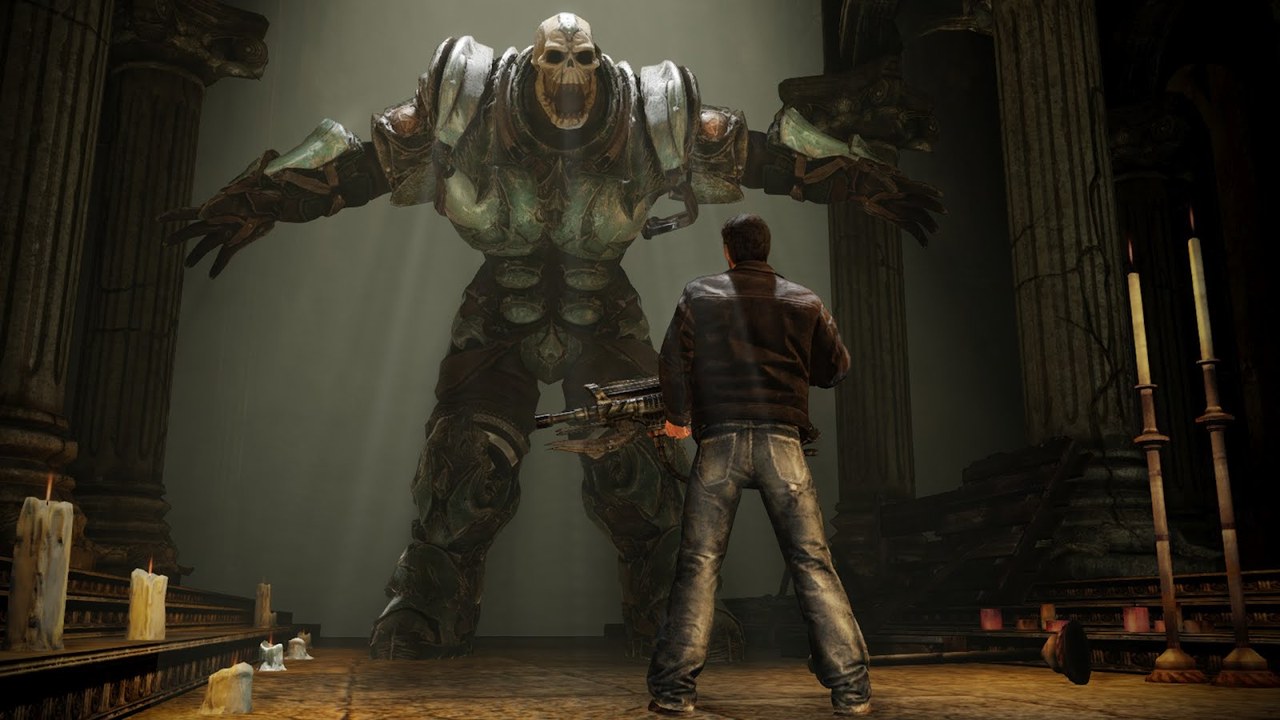
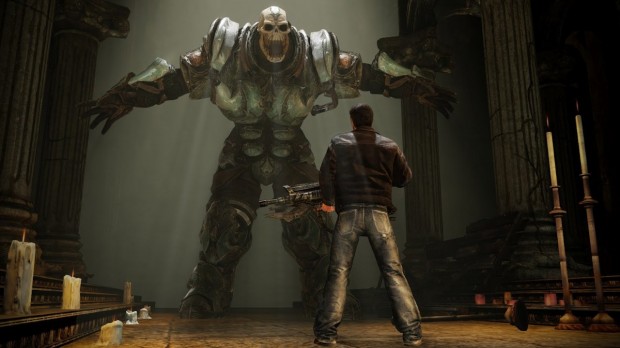
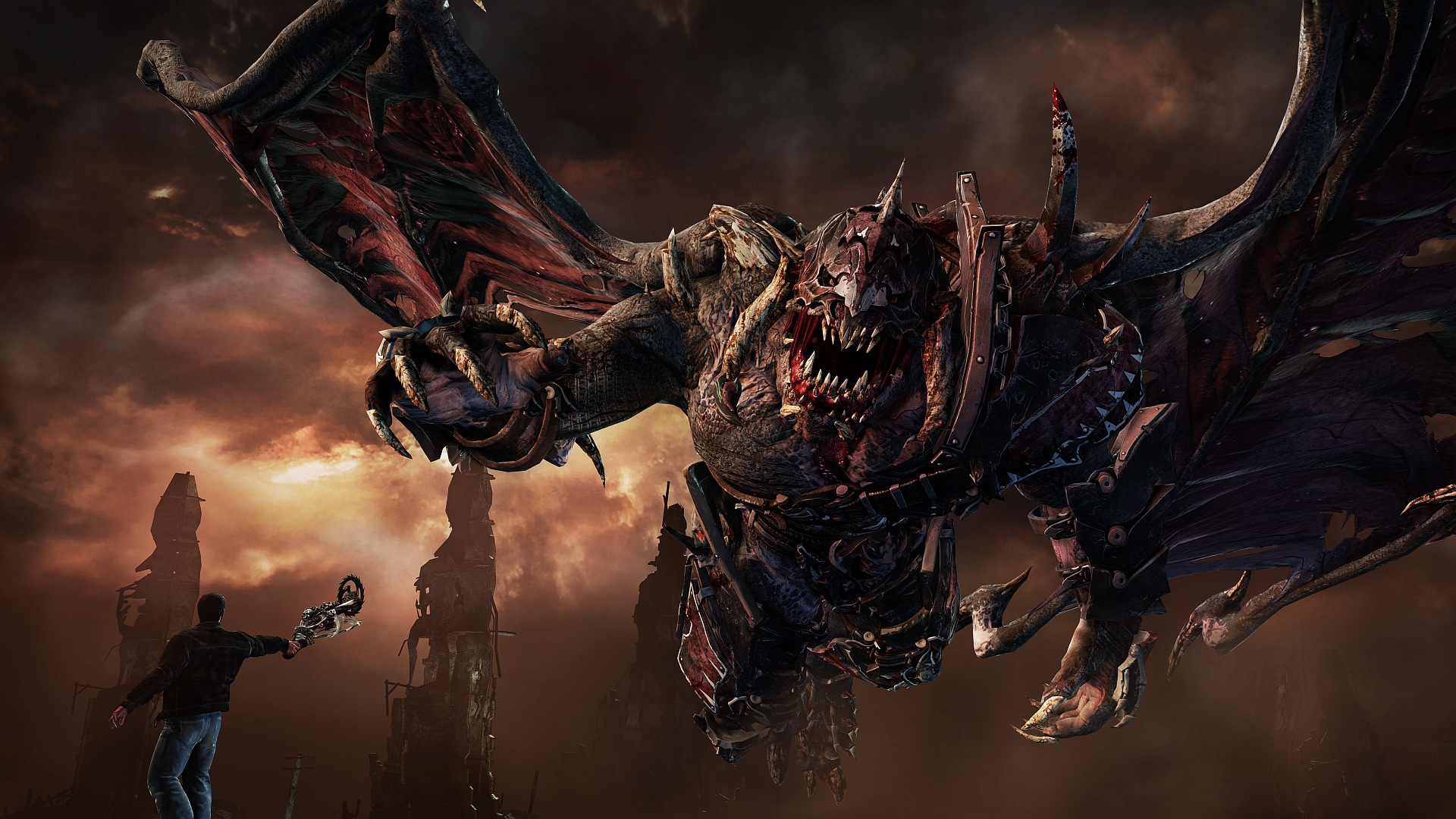
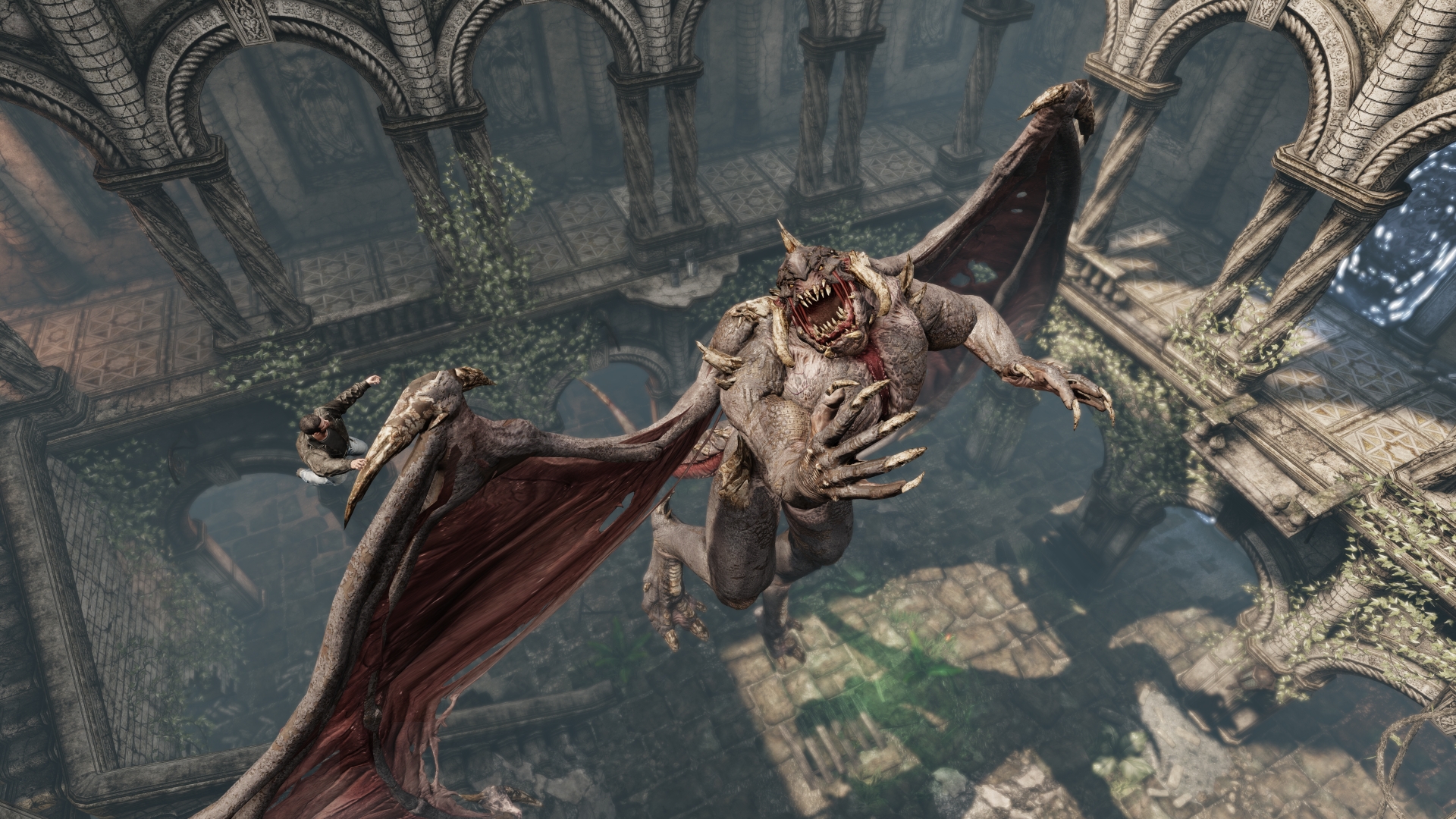
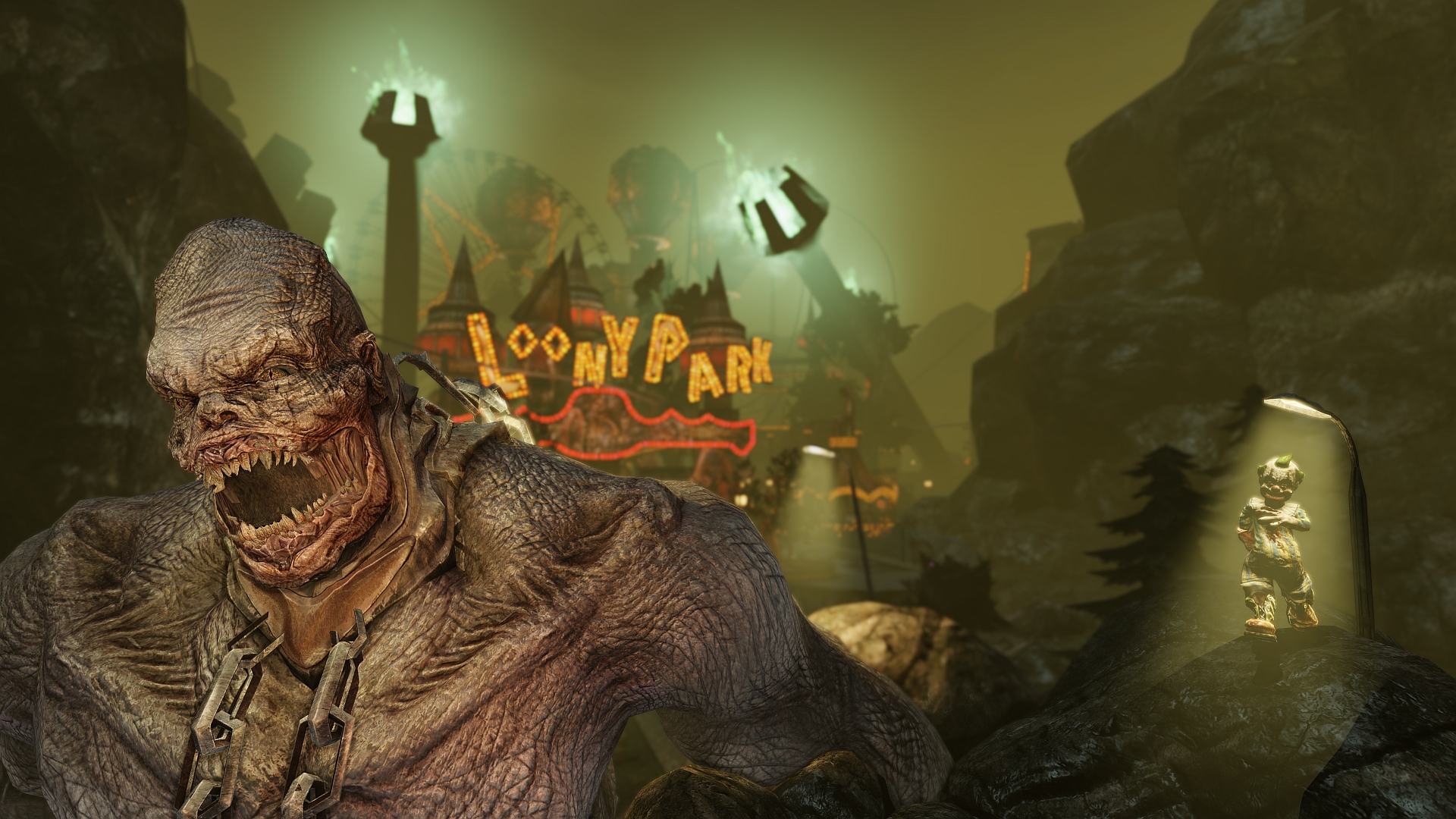
Painkiller: Hell & Damnation Review (PC/Steam)

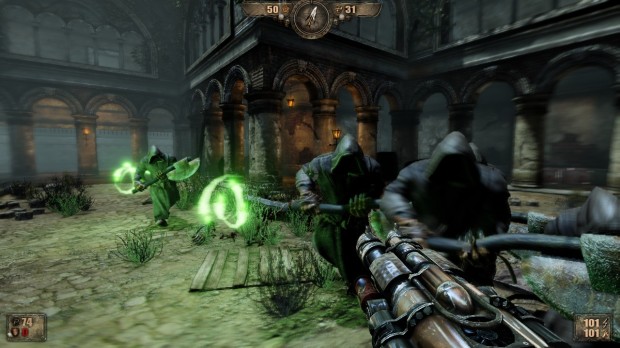
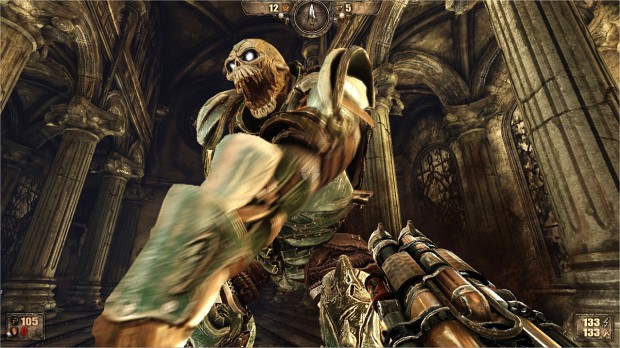
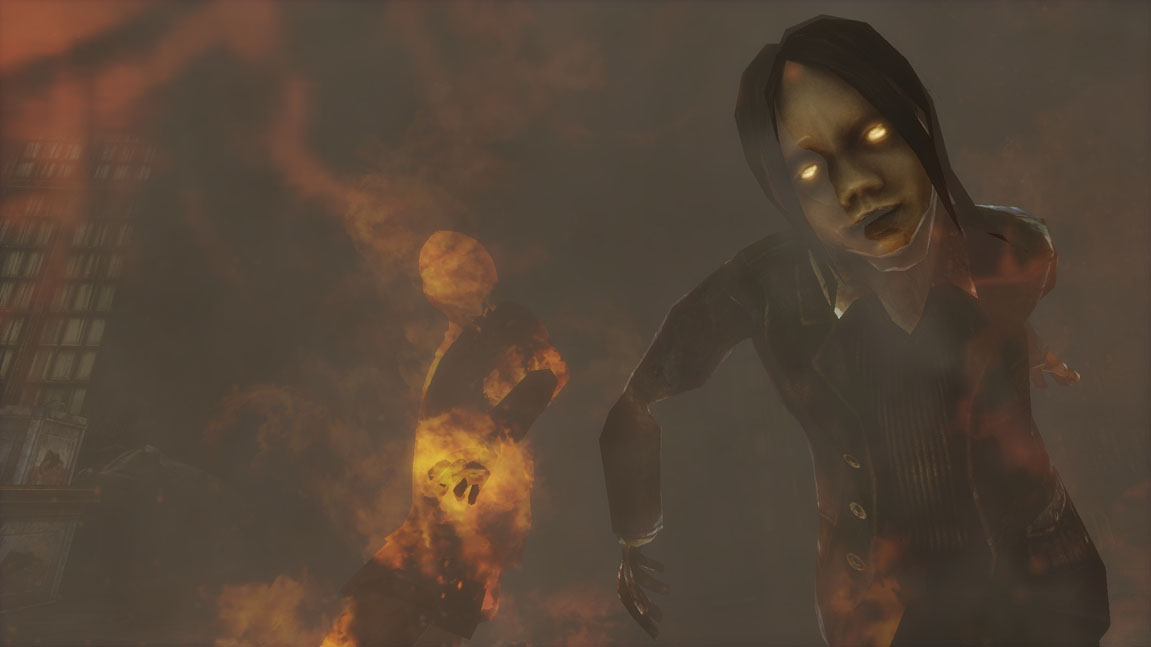
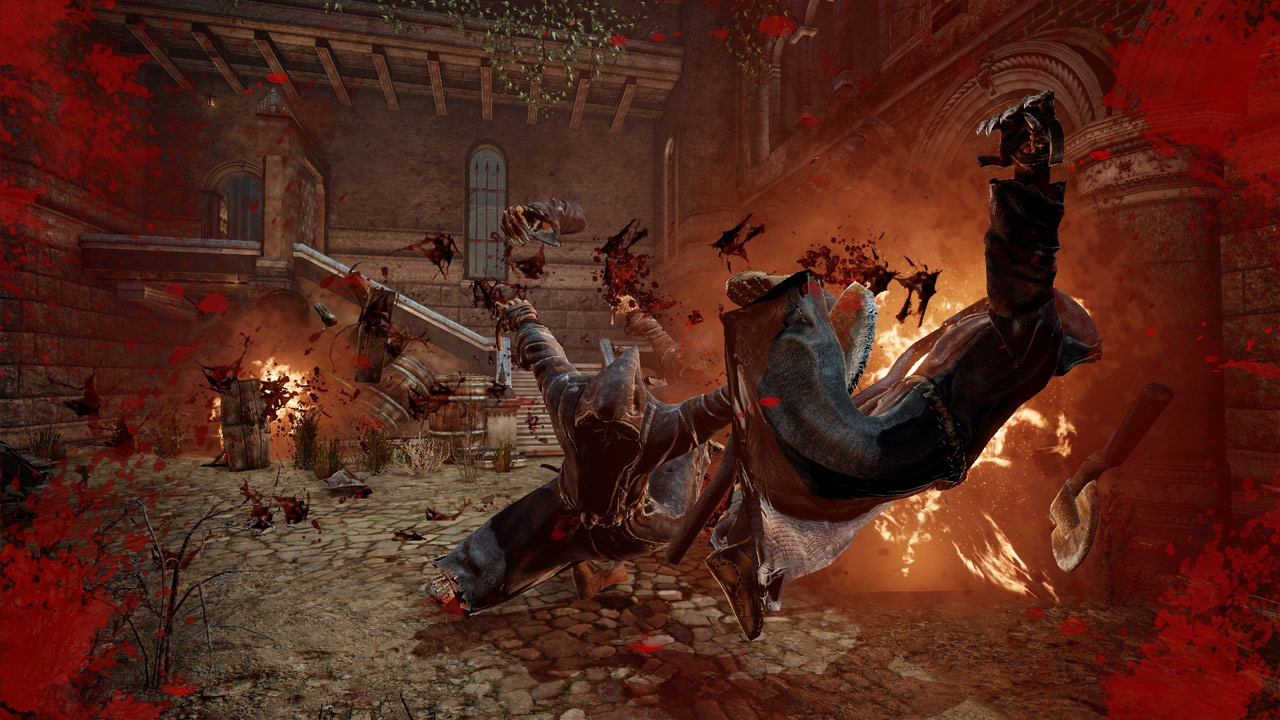
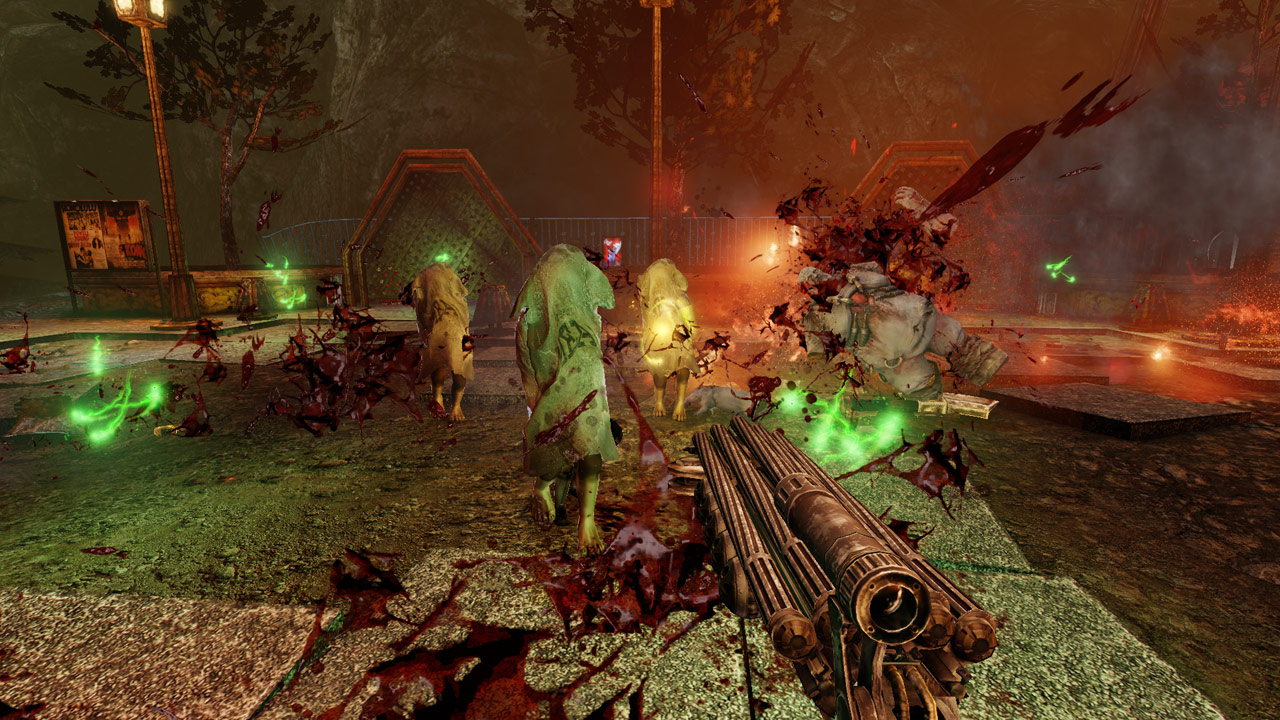
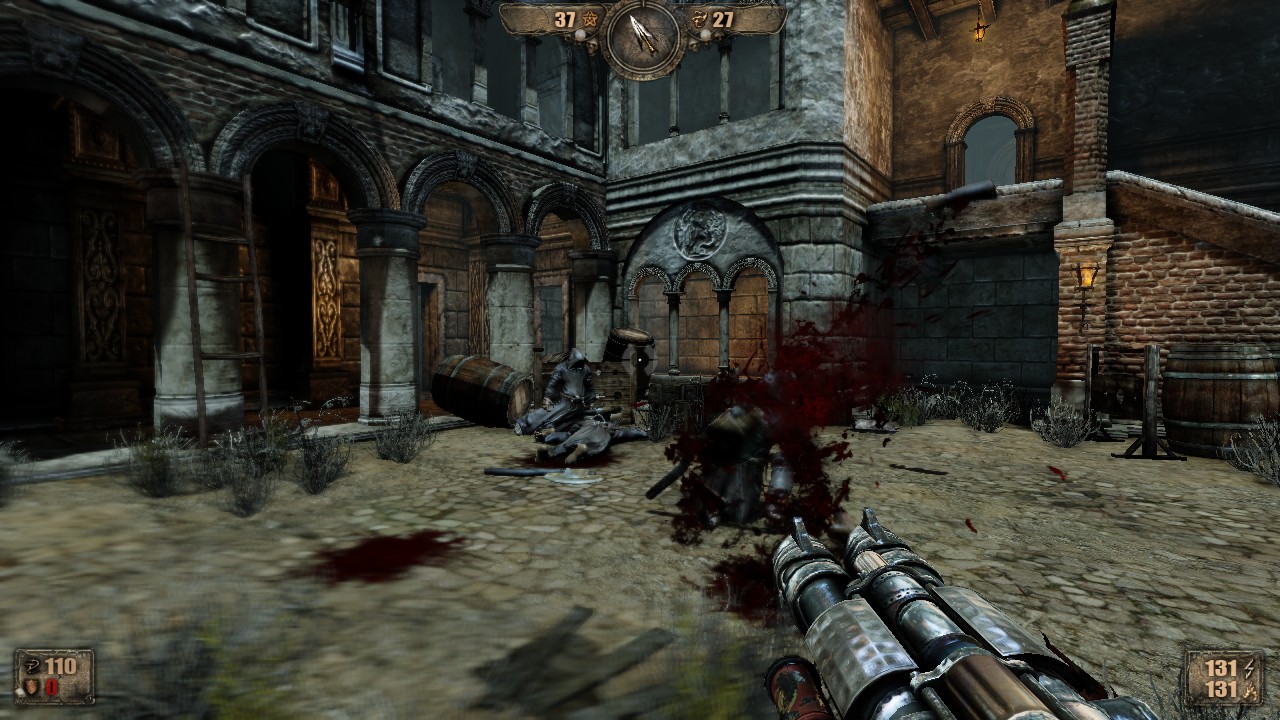
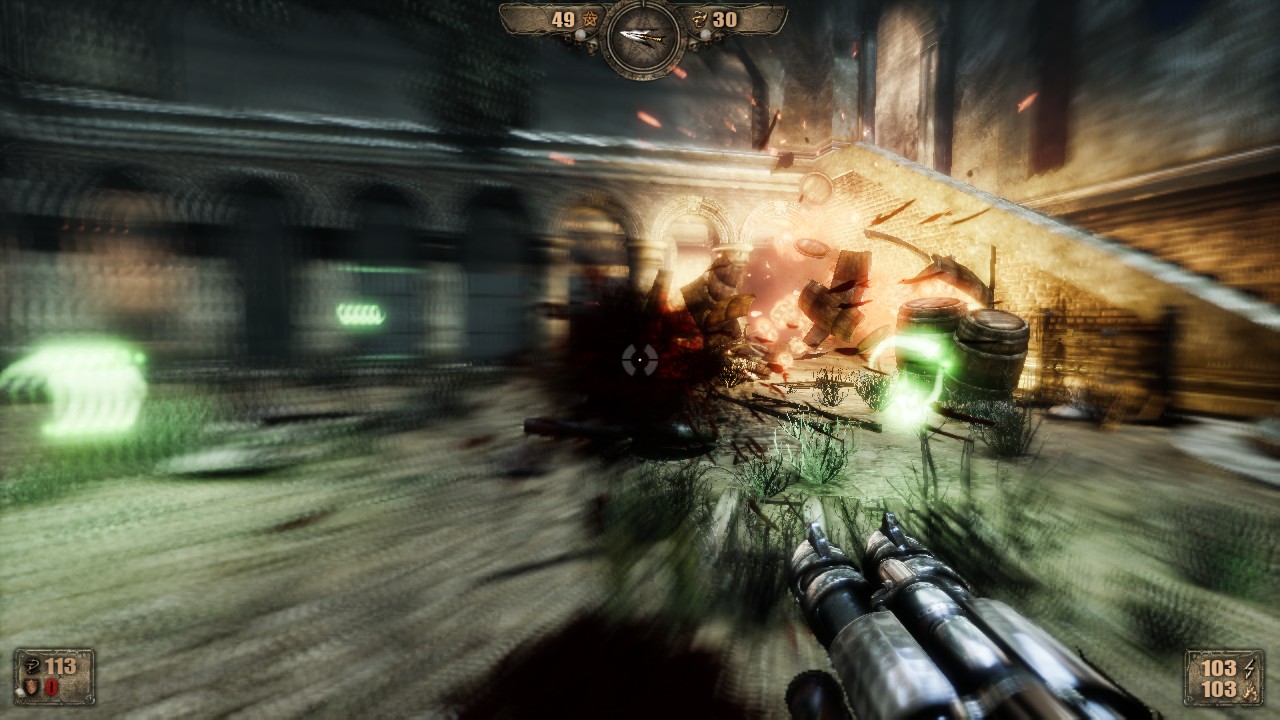
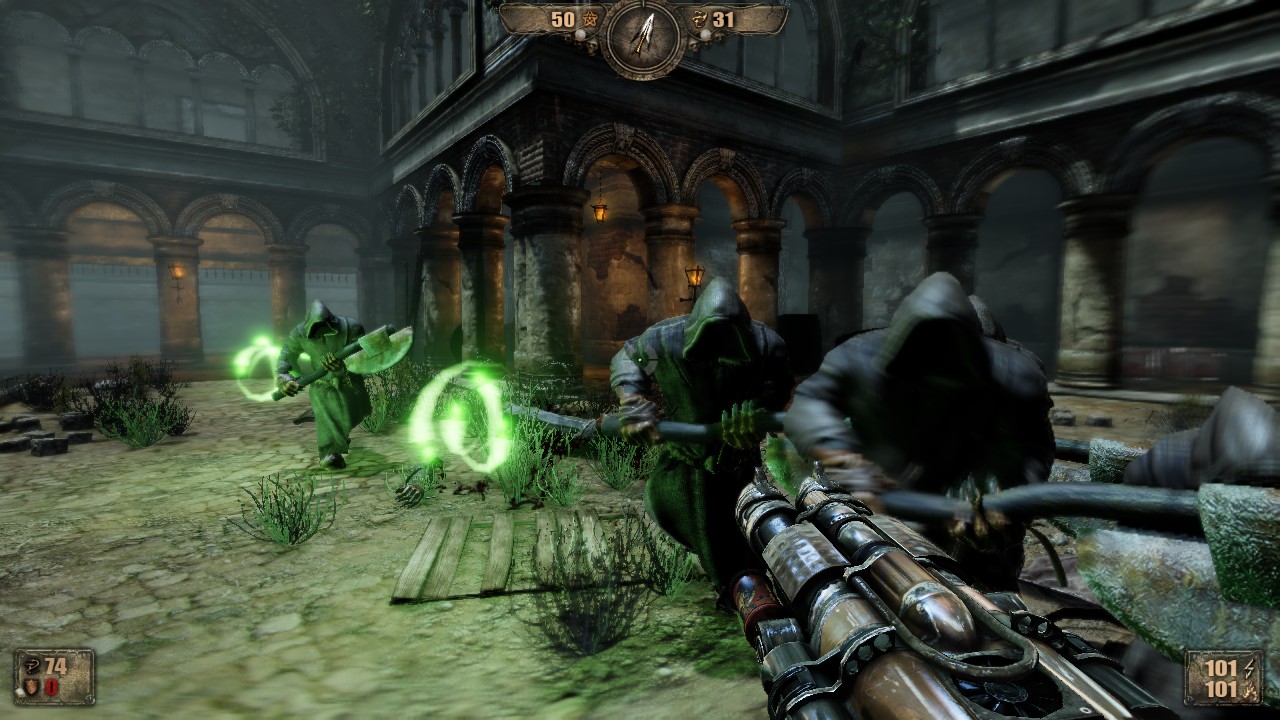
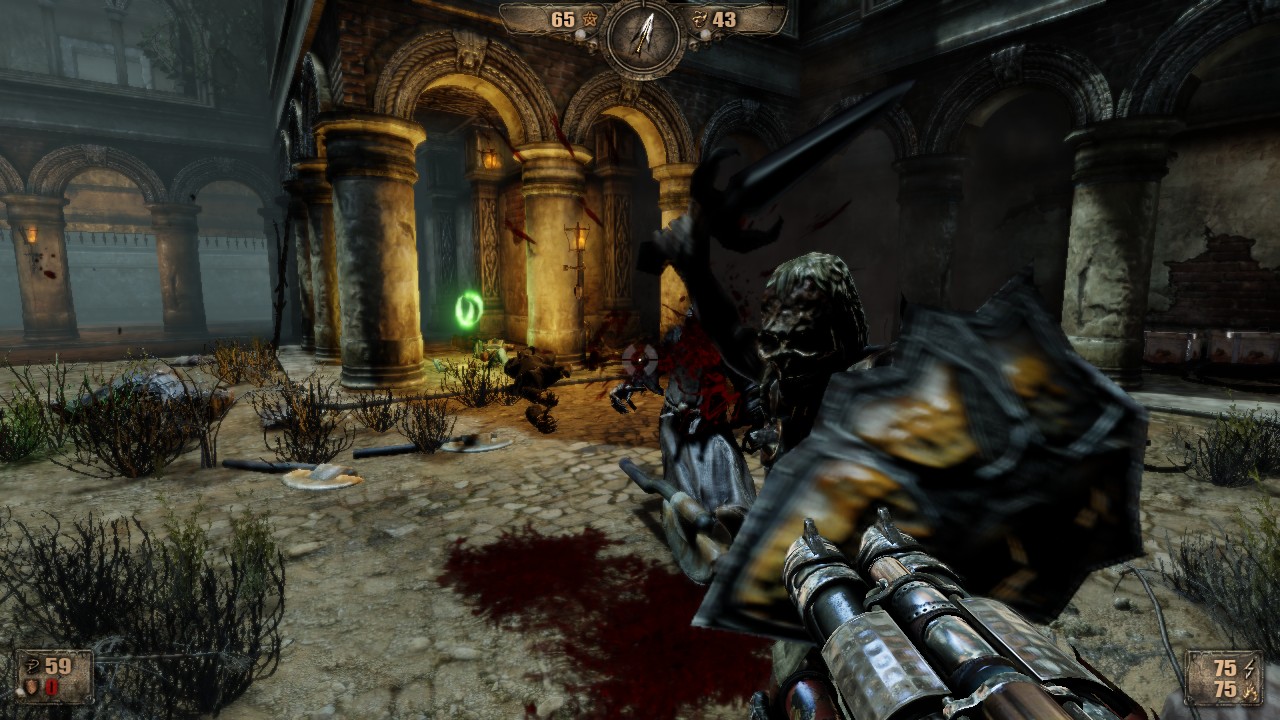
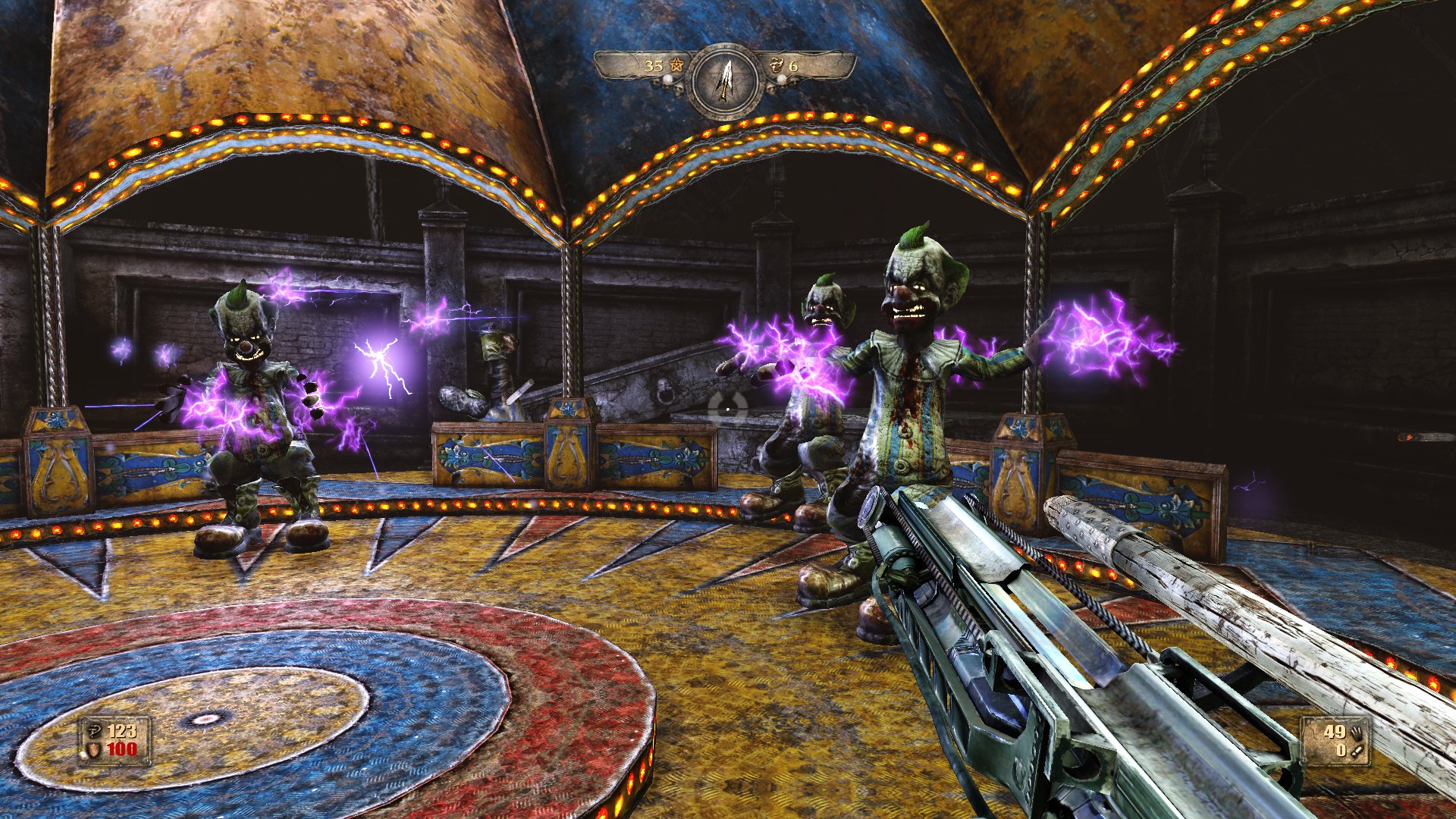
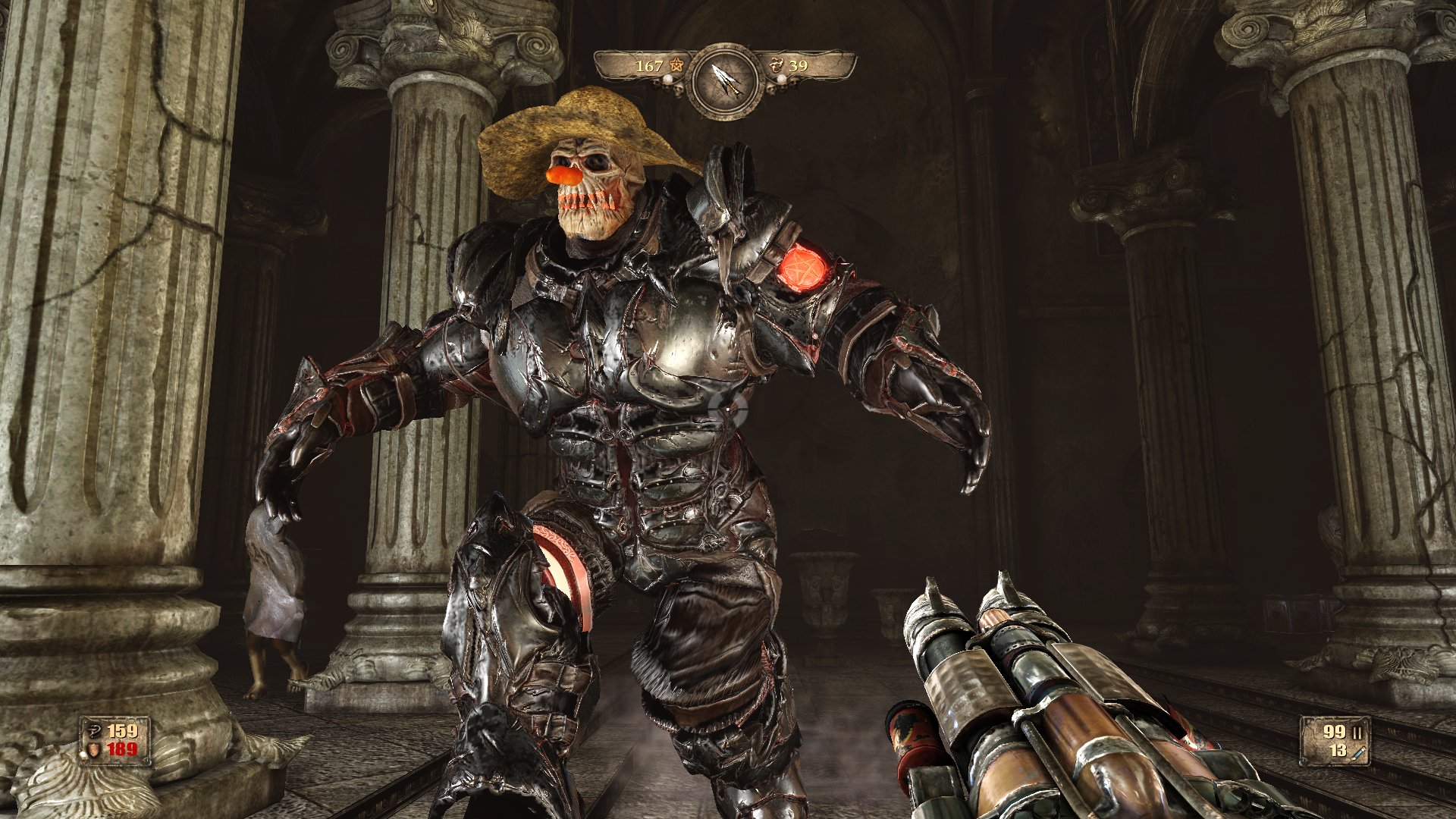
Fans of the first person shooter genre even if they haven’t played them know games like Doom, Wolfenstein 3D and, after it failed so badly, even non-FPS gamers (and non-gamers) know Duke Nukem 3D which wasn’t much different from it’s massively successful predecessor graphically.  Some may say it was a simpler time of gaming when those titles reigned supreme, graphics were good for their time, the story didn’t mean crap it was all about run and gun, shoot anything that moved because it all wanted you dead.  There have been sequels to these titles, each with varying success but all with the same formula: fun weapons and lots of things to kill with them.  Alongside these titles should be another that true fans of FPS hold close to their hearts but most outside the genre have probably never heard of: Painkiller.  It’s idea was simple: give the players cool looking weapons and have them kill everything in sight to Hell and back, literally.  The formula worked through add-ons and expansions where it just gave you more scenery and more killing because that is what players wanted, back then at least.  Now about eight years later does a sequel for the game stand a chance with today’s players or will it become Painkiller: Hell To Play?

Storyline:

Our hero of yore is back again, killing time in Purgatory pissed at how he kept getting jacked over in previous encounters with anything he didn’t shoot.  So when a new entity approaches him, this time Death himself, and offers him a way to reunited with his wife he tells Death off right quick.  Then he thinks about how bored he is and decides what the hell? Even if he doesn’t get back to his beloved Catherine at least he can kill some time killing.  Jaded and pissed off fits Daniel Garner just fine as he locks, loads and causes things to explode.  Death’s deal?  Kill stuff and collect souls.  If it sounds like I am spoiling things I’m not, that is all in the first few minutes, after that the storyline takes a backseat to slaughter, and I think sparse story works for better than bad story.

Graphics/Sound (Atmosphere):

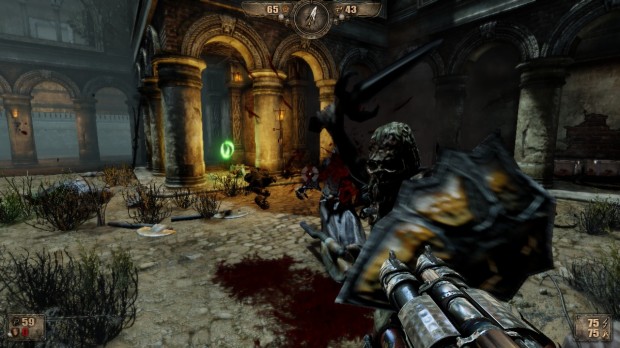
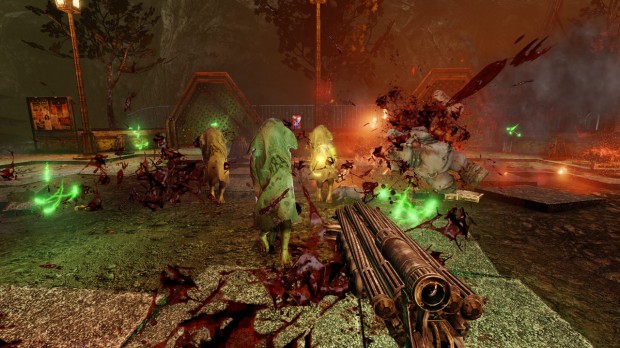
This is where some games went wrong recently, no matter how much even older gamers want to relive the glory days of video gaming genesis they have forgotten just how bad the graphics are compared to their youth.  Honestly the graphics on the original Painkiller games were no slouch, coming out only about eight years ago but there is still a marked improvement which was an extremely smart move.  It also has a kick ass soundtrack by Ojo Rojo which gets the blood pumping to match the blood splatter.

Gameplay:

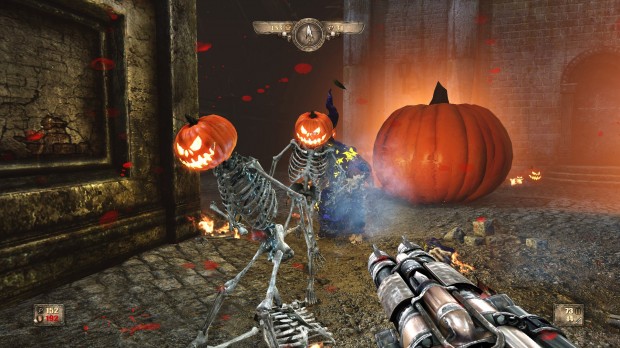
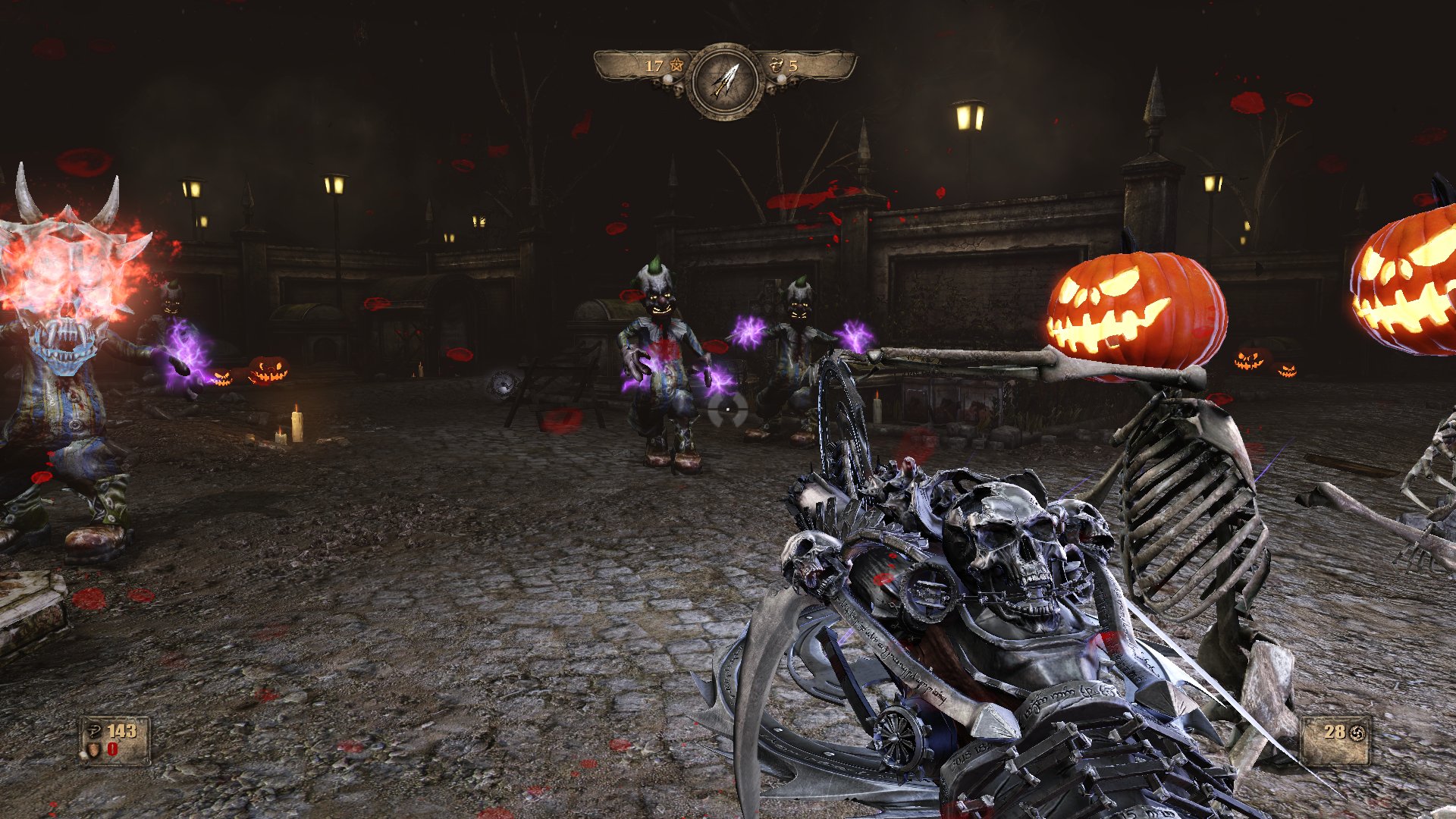
Ok the first step in making a sequel to a classic is updating the graphics, second is deciding how much of the old formula to stick to.  In the case of Painkiller: Hell & Damnation they went back to the old play formula even more than before, give a little back ground and then give wave after wave of enemies.  They vary a bit, during Halloween they even had special monsters just for the season, but in the end you take on tons of monsters of varying difficulties then a boss fight.  To do it they give you lots of weapons to slice, dice, and anything else you might want to do to an enemy killing wise.

The variety of kills helps the repetition of enemies seem less of a consideration as you care less about what they look like before you kill them and more about a new creative way to take them out.  I literally constantly cycled through the weapons, changing attacks on every enemy making goo and bits of them all.  This game knows what it is and what players loved about it in the past.  Sometimes players just want to play a good old fashion bloodbath and that is what it is.  The bosses require a bit of challenge and thought, and finding all the secrets of the game to unlock buffs can be challenging but in the end you can just sit down at this game and play a session of kill everything in sight.

The game is pretty short though playing through again trying to find more things, or in some cases less things just trying to beat the clock, can be rewarding.  There is a great co-op mode that allows you to go through the campaign with another player and the game adjusts enemies to match.  There is the classic deathmatch and capture the flag multiplayer modes as well to give you an opportunity to splatter other players as fast as you can too in case you like to share your bloodlust and get literally more bang for your buck.

Last Call:

This review is a bit shorter but that is because this game is simple and straight forward, it is a classic FPS updated graphically for today’s gamer.  If you remember the days of Doom fondly but still want your Halo style multiplayer Painkiller: Hell and Damnation is a great bridge between the games that made the genre and the play you have come expect.  When I feel like just doing lots of creative killing I plan to go back to this game time and again, I really hope they keep up with the holiday themeing too, I could get behind blasting Santa and his elves.

Trailer:

Gallery: