Author - Jerry Paxton

Kane and Lynch 2 Character Vignette Trailers

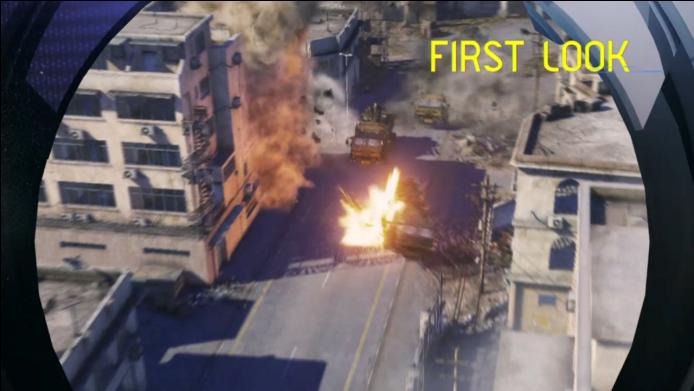
IO Interactive and Square Enix have released two new character vignette trailers for their upcoming shooter, Kane & Lynch 2: Dog Days. The game is due out on August 17th across North America and will again see the unlikely duo taking on insane odds – this time, in Shanghai.

Here is Kane’s vignette, and you can find Lynch’s, After the Break!

StarCraft 2: Wings of Liberty – A Review (PC)

If Command and Conquer founded the modern real-time strategy genre, it was StarCraft which revolutionized it. Originally released back in 1998, the game brought several elements to the table which have become RTS staples – for instance, the use of telling the game’s story through the use of three separate faction campaigns. Also important was its riveting story and incredibly beautiful cut-scenes to bring it to life. Before StarCraft, the most story we got in an RTS was some badly-done full-motion video (known as ‘FMV’ back then) or some cheesy splash images with which to garner the plot from. It has been twelve years since StarCraft was released and now Blizzard Entertainment has let loose the sequel, StarCraft 2: Wings of Liberty.

The story of StarCraft 2: Wings of Liberty takes place four years after the events of the StarCraft expansion: Brood War. At the beginning of the story, we find Tychus Findley being released from cryo-prison and Jim Raynor living on a backwater planet where he is leading a resistance movement against the corrupt Terran Dominion. Soon these characters cross paths again, and, without spoiling anything, they must save the human race from annihilation.

The overall tone and themes of this part of the StarCraft 2 trilogy (the other two are said to focus on the Protoss and Zerg campaigns) has been heavily-inspired by the Joss Whedon TV series, Firefly. From the Western-style musical score and cowboy drawls to the overall look of the characters and technology; Wings of Liberty is a hoot to watch unfold and will have you quipping in Chinese more than once (gorram Zerg!). Thankfully, the themes were only inspired by the Firefly universe. The only things taken directly from other IPs are actually from other Blizzard IPs (and maybe a Star Wars reference or two). Players with a sharp eye will definitely see a lot of references to both World of Warcraft and Diablo.

The most revolutionary thing about StarCraft 2 is the way it presents its single player campaign. It’s not that the multiplayer is not fun or the Battle.NET integration is not seamless – that it is all true. However, when you look at the most clever things done in the game, you have to look at the single player experience. The multiplayer seems more or less like it was built for the tournament players out there and doesn’t bring a lot of innovation to what was already laid out in the original StarCraft. However, the hardest thing for a real-time strategy title to do is tell a single player story as so much of these types of games is spent looking down at the battlefield, detached, from on high.

In StarCraft 2, Blizzard has managed to suck players into the experience through the use of a gameplay mechanic once seen in Origin Systems incredible Wing Commander series. Between missions, you will be able to hit various locations based on your current base of operations and interact with objects and characters by clicking on them with your mouse. These can simply be random objects with some story significance or important plot items that give some additional backstory to an upcoming event. Additionally, you will sometimes be forced to choose between two characters or choices which will affect the outcome of your available missions or force disposition.

One entertaining device used throughout many of these inter-mission sequences is a news network broadcast on the television screen in the cantina. The pro-government news anchor is just begging for a Holly McClane punch to the face.

More importantly, you get the opportunity to direct your forces by way of an Armory, Laboratory, and Cantina! In these rooms you will be able to hire mercenary forces that can be deployed on-world, purchase new abilities for your units and structures, or even research new technology options which are paid for in research points found during missions. There is a TON of customization and decision-making to be found here, and it gives the player a direct role in the outcome of his or her military. It makes sense, given that your character is Jim Raynor, leader of the resistance and whatnot.

Furthermore, Blizzard has added the ability for players to, in many cases, choose their next mission from a few options – each with their own rewards and perks! When you sum up all of these additions, you are left with one pretty awesome game. The word ‘awesome’ is generally not considered a very urbane adjective by most highbrows out there, but it is more than applicable in this case.

StarCraft 2: Wings of Liberty will have you on the edge of your seat the whole way through – one minute you will be listening to one of the in-house Blizzard bands on the cantina jukebox and the next you will be eating concertina wire and pissing napalm while fighting an army of Hydralisks.

In short: Get this game now. That is all. Dismissed!

Psyko 5.1 PC Gaming Headset – A Review (PC)

Gaming headsets are a dime a dozen these days – it seems like every manufacturer has some headset they market to the gaming crowd. Most are just general-use models with some flashy marketing. So, when we hear about a headset-maker who is genuinely trying to do something revolutionary, we take notice. Enter: The Psyko 5.1 PC Gaming Headset from Psyko Audio Labs.

The Psyko 5.1 PC Gaming Headset is a true surround sound headset. Unlike virtual surround sound models, the Psyko 5.1 actually features seven speakers mounted throughout the unit. Five of the sound drivers are meant for the surround sound channels and are mounted in the head band. The other two drivers are the sub-woofers and are located in the lower part of the ear cups. The price for all of these speakers comes in terms of added weight. The Psyko 5.1 headset is easily the most weighty headset I have ever used outside of aircraft-grade models. Thankfully, Psyko Audio Labs has put a lot of foam padding around the unit in an attempt to soften it as much as possible.

As previously-mentioned, the surround sound drivers are located in the top of the headband, leaving the question of how they get the sound from the headband down to your ears where it belongs. This is where the real magic of the Psyko 5.1 lies and how they recreate the ‘perfect room’ or audio ‘sweet spot’, which is the bane of many audiophiles’ existences. In short, the ‘sweet spot’ is the exact location in a surround sound system where all the speakers and sounds are exactly the same distance from the listener, ensuring a perfect balance of incoming sound channels. This spot is very hard to obtain and even more difficult when several people are attempting to enjoy the surround sound – obviously, some folks just wont be able to get the sweet spot – concessions need to be made. With the Psyko 5.1, they recreate this audio holy grail by funneling surround sound down from the headband via ‘waveguides’ which then output the sound in the proper direction from your ear. This means that the rear sound channel waveguides output the sound behind your ears, giving your body the chance to locate the sound as nature intended, instead of through the use of some virtual surround system.

For the gamers out there, this means that sound input will be accurately delivered to their ears in order to give them an additional edge while playing against their foes, virtual or real. Setting up the Psyko 5.1 is very simple. You plug the four input jacks into the included, external amp unit and then connect the cables coming out of the amp into the 5.1 surround sound outputs on your PC. Technically, the Psyko could be used with any audio source providing the four surround sound outputs, but there are certain aspects of the Psyko amp which make this unwise.

Confused on if you have plugged everything in correctly? On the external amp unit, there is an array of channel-specific LEDs. As sound is pushed out through the 5.1 channels, these lights will brighten and dim with the volume of the sound per channel. So, if you need to test a particular channel you will know rather quickly if you plugged everything in correctly.

Psyko Audio Labs has intended this for gamers. In speaking with their CEO, James Hildebrandt, the company has used the external amp to enhance the sound frequencies most found in first-person shooter titles. These are apparently not the best sound frequencies for movie watching or album listening. The company’s motto for this product is ‘The Dawn of Audio as A Weapon’, and it holds true. Do not buy these if you are not a gamer, they will simply be an incorrect fit for your needs.

I only found two things off-putting about the headset. First, was its weight, which after several hours of play began to bother the top of my head – even with the cushions provided. The second thing that threw me off was the lack of an auxiliary speaker output on the amp. If your PC is located on the ground like mine, you have to reach under there and swap out the headset plugs with your general-use system for movies and music. If I could just have the general speakers plugged into the amp along with the headset (maybe have a toggle to go back and forth between outputs) – it would be a lot more convenient. At least the earcups are ventilated, which helps not make your ears all sweaty after long hours at play. However, this also means that sound can be heard by people around you – so, if communications secrecy is a concern you may want to watch who is standing next to you.

I put the Psyko 5.1 through its paces over a few weeks (save for the week of Comic-Con) full of games like Call of Duty: Modern Warfare 2, Left 4 Dead 2, Call of Duty: World at War, Armed Assault 2: Operation Arrowhead, and a few others I am sure I am just forgetting at the moment. The channel separating in the games supporting 5.1 sound was incredible and definitely gave me an additional layer of situational awareness not found in the general-use headset I usually employ while gaming.

Left 4 Dead 2 was an especially eerie play-through, as that is an experience where the audio can be just as scary as the zombies intent on eating your flesh and sucking the marrow from your fractured bones! After setting up the Psyko 5.1, I could make out zombies scampering about all around me – especially when they start horde runs. The experience of hearing the sound being picked up by your ears from the actual direction it should be coming from was alarming to say the least.

Putting the CEO’s advice to the test, I did attempt to watch a few movies and listen to a few albums on my PC. The experience was definitely something I would not recommend as the equalizer was simply not right for those uses.

At $299, the Psyko 5.1 PC Gaming Headset will undoubtedly turn some folks off. It is a very pricey investment for a headset that is not a great fit for movie or music use. However, this is not for casual folk. This headset is for gamers and in a world of ‘for-gamer’ products which, in reality are anything but, the Psyko 5.1 headset is an exceptional work of audio art that is certain to give you the edge whether it be in single or multiplayer game sessions. Game on!

DCS A-10 Teaser Trailer Released

You may remember the Q&A we did with game producer Matt Wagner on the upcoming flight simulator, DCS A-10 Warthog from DCS and The Fighter Collection. If not, get to reading! If so, however, then feast your eyes on the official teaser trailer for the sim, which is due out later this year.

Two Worlds 2: Sordahon’s Journey Parts 1 and 2

The awesome folks over at SouthPeak Interative have released two clever little videos promoting their upcoming RPG, Two Worlds 2. Titled, Sordahon’s Journey, this web series chronicles the path of game antagonist Sordahon as he attempts to find his own way. Two Worlds 2 is due out on September 14th across North America.

Checkout Part One below and Part Two (featuring an actress I recall from TV series Nash Bridges), after the break!

Part Two:

Dragon Age 2 Hands-On Preview from the 2010 San Diego Comic Con

Over the weekend at the 2010 San Diego Comic-Con, I was able to get some hands-on time with BioWare’s upcoming Dragon Age 2. According to Lead Designer Mike Laidlaw, up until the beginning of the convention on Wednesday, only 11 people outside of the team had seen the game, so it was a real treat to check it out.

Before getting to play the demo which had been setup for the show, Laidlaw gave about a ten minute introduction to Dragon Age 2, including talking about some of the most significant changes since the original. The BioWare team developing the sequel first looked at Dragon Age: Origins after its release, including forum and reviewer feedback. From there, they went on to discuss if these suggestions/changes were something they would implement in the sequel… (cont.)

Read the rest of our Dragon Age 2 preview from the 2010 San Diego Comic-Con, head After the Break!
(cont.) After much hashing out, they decided that Dragon Age 2 would be a far more epic experience, where players would feel like they were controlling a party of ‘badasses’. Additionally, Laidlaw admitted that Dragon Age: Origins was ‘not great’, visually-speaking. To this, he made note of the re-designed overall visual style of the sequel, which would enable their upgraded game engine to pump out a lot more detail at the same frames per second. Again, We had not seen the game up to this moment – he had only been showing us charts and slides highlighting his topics.

Laidlaw then went on to announce that Dragon Age 2 would feature a new combat system. Gone would be the Frankenstein-like transitions between character movements, replaced by what was claimed to be a far more fluid system of control, character animation, and fighting. Interestingly, Laidlaw mentioned that Dragon Age 2 would not leave the tacticians out of the mix either – he noted that they want players to ‘think like a general and fight light a Spartan’. This means that queuing up actions would still be present (which made me, as a PC gamer, breathe a bit easier).

Something even more impressive, is that Dragon Age 2 will give the player much more of a ‘voice’ and really show off the results of his or her decisions and actions. The dialogue engine is actually capable of handling up to 10 different conversation choices – 4 more than Dragon Age: Origins! The game would also be told in a ‘frame narrative’ style, a story within a story, if you will. This will allow the game to cover a MUCH longer period of time than the original – a whole decade, to be precise!

The player’s character is named ‘Hawke’, and he is a survivor of the Darkspawn destruction of Lothering, a civilian town. Hawke ends up a refugee who escapes to the North – ten years later, Hawke is the ‘Champion of Kirkwall’ and also a ‘very prominent figure in the country’. One small problem, however, and that is that things have gone seriously wrong and now the people’s are again on the brink of war and Hawke (and his party) are the only ones who can fix things.

Different than Dragon Age: Origins, where players had multiple characters to choose from, Hawke is more of a fixed character in terms of name and origin – however, an unspecified length into the game, the player will be able to customize Hawke by deciding on a class, etc.

After talking about all the changes to the sequel, Laidlaw fired up the Xbox 360-based demo. Visually, characters looked A LOT more crisp and detailed than in Dragon Age: Origins. The graphical changes are very apparent, as is the new combat system…

I must admit, watching the combat initially, I was a bit concerned over the hack-and-clash style combat until the developer who was demoing the game hit the radial command menu, which allowed him to queue up actions for both Hawke and his companion, a female mage of some sort. After he performed some queuing, it was back to the fast-paced combat. It was just delightful to see Darkspawn giblets flying about everywhere. Blood was a major theme, both in figuratively and literally, in the first game and it looks like they are continuing this in the sequel – lots and lots of the red stuff flying about here.
Hawke’s melee swings could chop down several enemies at the same time while the mage had some very cool attacks of her own. She could stun an enemy, holding him in mid-air, then pretty much make him explode… VERY. COOL.
In fact, magic users will be very pleased to find out that they will also be getting those awesome fatality-style movements warriors so often received. In the demo, the mage pulled off a wicked finisher on the obligatory Ogre which joined the fray. Laidlaw mentioned that your party members would no longer just be ‘sacks of hit points’, but really formidable opponents in their own right.

After some this combat, a dialog sequenced opened up with Hawke and his companion. As I previously mentioned, not only is the dialogue system able to handle up to ten conversation choices, but BioWare is also adding a central icon to the dialogue choice wheel, which will display the general tone of the message you would convey with that choice. For instance, peaceful options would show and olive branch while aggressive choices would show a red clenched-fist. This is handy as, in Dragon Age: Origins, sometimes the context of your dialogue choice was not always apparent.

I could not help but draw a comparison between Dragon Age 2, Mass Effect 2, and even what Bethsoft did with Fallout 3 in that, they are much more streamlined and action-oriented than their originals while also leaving in much of the tactical elements fans also enjoyed. While I can foresee some fans of the original game being hesitant in the changes to the overall design of Dragon Age 2, I have a lot of faith in BioWare on this one as I got the chance to play the same demo myself after the presentation ended, and found it to be VERY smooth and easy to transition back and forth between combat and the radial command menu.

Speaking to Laidlaw after my demo time was up, I asked what PC gamers could expect in regards to these control system changes. Mike responded by saying that PC gamers could expect their version of the game to be very similar to Dragon Age: Origins in terms of control (WASD, mouse, etc) but with the combat system changes found on the console versions.

I also asked if Dragon Age 2 was following the same development path as the original – being created for the PC and then split off for its console variants. Apparently, this time around they are developing the game simultaneously on the PC, Xbox 360, and PlayStation 3. This is being done to avoid time delays but also to make sure the experience never feels ported over from one platform to another. Each experience promises to be rewarding on its own merits.

If this demo was any indication, Dragon Age 2 is shaping up to be a juiced-up version of the original with better graphics, more blood, and a very interesting story-telling dynamic. A special thanks to Mike Laidlaw, Chris Priestly, Fernando Melo, and David Silverman of BioWare for their hospitality in granting us access to this demo.

NCAA Football 11 – A Review (Xbox 360)

One thing about the last couple NCAA Football offerings is that, while they don’t seem to have quite as much mainstream market appeal as their Madden brother, they have a sense of style all their own. Instead of over-produced, out-of-touch players and huge stadiums with 70,000 fans, you get a much more intimate and realistic experience with schools and players grounded by life’s hardships. Thankfully, NCAA Football 11 stays the course in regards to this axiom and brings a lot of fun to the table.

For starters, the game’s visuals have been taken to a new level over last year’s respectable offerings. A new lighting system as well as animation engine has brought a new level of realism to the game’s overall look and feel. As mentioned previously, NCAA Football has always have a more intimate and player/school-driven focus. In keeping with this theme, NCAA Football 11 has a greater emphasis on individual players, even adding more expression to their faces, depending on what is happening at the time. Even the in-game cuts to a team’s cheer-leading squad adds to this intimate vibe. Game audio is very well done, with cheering crowds and the crackling of shoulder pads – save for two areas: The announcers and the player chatter.

Simply put: There is no player chatter in NCAA Football 11. Your QB will call out plays, sure, but there is no dialog amongst the players themselves. A small addition like this would have added a lot to the game’s presentation. The announcers in this edition of the game are ESPN’s Brad Nessler, Kirk Herbstreit, and Erin Andrews. Lee Corso is not in the announcer stable this time around. They just come off a bit dull in this edition of the game. Sure, they do the job of announcing plays and keeping things general to fit with any team they are talking about, but they seem to be lacking that little something extra brought to the table by Corso.

In terms of game presentation, what will become fairly obvious early on is the integration with an ESPN college football broadcast style. Unfortunately, while the developers were obviously trying for a ‘watching the game on Saturday’ vibe, it just never feels quite 100% in that department. Game introductions follow basically the same pattern, unless your team one that has a special opening ritual, and the process just gets repetitive after a while. However, because it has some of this feel, it shoot’s itself in the proverbial foot by not being able to have the presentation of seeing the game live, at the stadium – so it ends up being a sort of hybrid in this area. This is not to say the presentation is not often times enjoyable, but it would have been nice to some clearer direction in this area.

Actually playing the game has been streamlined quite a bit by allowing players to call plays at the line of scrimmage, instead of in a huddle. This makes for a much more tactical game of maneuvering, as if one side sees the other in a specific formation, they can alter their tactics to compensate, and vice versa. Another area where the gameplay has been enhanced is in the upper-body twisting system. When running the ball towards a TD, you can control the swing of your upper-body with the controller’s right stick. Pressing forward will cause your player to charge forward, while moving it side to side allows for help in throwing off would-be interceptors. Gameplay moves along at a quick pace, with interspersed team animations and replays which come up at just the right moment. Another interesting addition to this year’s NCAA Football offering is its ‘One Button Gameplay’ mode, where you can play just about the whole darn thing with one button (more or less). This helps make the multiple control schemes a non-issue for inexperienced players, but keeps the rest of the gameplay experience for them to enjoy.

While the single-player Dynasty mode is somewhat lackluster, as it is basically the same mode offered last year, the Online Dynasty Mode has been getting a lot of attention from reviewers and players alike, as it is not just an incredible way of playing against others from around the country, but also features a multi-platform implementation that is second to none. Not only can you perform a ton of activities through the web interface, but you can also use the game’s mobile apps for your iPhone or Android devices. All of these tools at your disposal are very important, as the Online Dynasty really gives you a lot of managerial duties to perform. You even have to put together packages of incentives for prospective recruits and hope they go for yours rather than ‘the other guys’! One aspect of this game mode which really ups its social aspects is the story generator and blog elements, which help trash-talk or praise your own team or an opponent’s. This social element is all compatible with Facebook and Twitter, so you can keep your friends up-to-date on your progress.

Despite a few flaws, NCAA Football 11 is the most-fun college football title to date, with enough new offerings to keep players excited and enough of the standard stuff not to confuse everyone. If you are looking for a more raw football experience than you get in Madden, be sure to try this one out.

*DISCLOSURE: EA Sports sent us a copy of this title for review.

Rock Band 3 Release Date, Pre-Order Incentives Announced


MTV Games and Harmonix have announced the retailer-dependent, pre-order incentives for their upcoming Rock Band 3. The incentives are available at Amazon.com, Gamestop, and Wal-Mart.

GameStop:
GameStop shoppers who reserve Rock Band 3 for PlayStation 3 system or Xbox 360 in advance receive three downloadable Rock Band songs at launch:
· Burning Down the House by Talking Heads
· My Own Summer by Deftones
· Blue Monday by New Order

Amazon:
Amazon shoppers who reserve Rock Band 3 for PlayStation 3 system, Xbox 360 and Wii in advance will receive access to an exclusive in-game guitar. Additionally, for a limited time only, PlayStation 3 system and Xbox 360 owners who pre-order Rock Band 3 in advance on Amazon will receive $10 off a future videogame purchase.

Wal-Mart:
Walmart.com shoppers who reserve Rock Band 3 for PlayStation 3 system, Xbox 360 and Wii in advance will receive a $10 eGift card for a limited time.

Rock Band 3 is due out October 26th across North America.

DC Universe Online Begins Beta Registration


Sony Online Entertainment, Warner Bros. Interactive Entertainment, and DC Entertainment have announced that the upcoming MMO, DC universe Online, has begin beta registration. Please not that a Station account is required for signing up to enter the beta test. While no official date(s) were mentioned as far as when the beta would take place, we do know that the retail game is set to launch this November, so stay-tuned!

DC Universe Online beta registration link.

Armed Assault 2: Operation Arrowhead – A Review

War-gaming enthusiasts rejoiced when they first heard that Bohemia Interactive was developing a stand-alone expansion to the realistic Armed Assault 2. Dubbed ‘Operation Arrowhead’, this expansion would add a new theatre of operation as well as new factions and units to command.

Visually, Operation Arrowhead has definitely been refined over its predecessor, with my gaming rig handling a lot more eye candy for the same frames-per-second. Units are excellently detailed, however human textures still seem a bit… unnatural. Just look at some of your compatriot’s faces and you will see exactly what I mean. Thankfully, the new terrain of Takistan, its capital, and a cool (albeit small-ish) desert map complete with oil derrick all hold tons of replayability. As always, the game audio is incredible, with sound ranging to source being spot-on accurate. See an explosion in the distance, don’t expect the noise of the blast to reach you instantaneously. The new music for Operation Arrowhead follows suit with the original ArmA 2 score, being made up of hard-hitting instrumentals and taiko drums.

The mission editor has been left fairly unchanged. However, with the new units and maps, it too seems to take on new life. The most fun addition to the game is the UH-60 MEV helicopter. This chopper allows for a completely different type of mission in the game: casualty evacuation. After setting my character up in this new chopper, as my mission unfolded, I would receive calls from around the battlefield from AI troops in need. It is up to the pilot and copilot to navigate to the correct grid reference and land. The entire trip to the requested LZ was fraught with danger – AA fire flashing past the cockpit. After successfully touching down at the location, I was shocked to see AI players rushing up to the nose of my chopper to heal and get back into the fight.

Even better, you can put a squad of medics and combat soldiers into your passenger seats, having them disembark and render aid/fire support where needed. The experience was so much fun, I wish Bohemia Interactive would create a full-fledged casevac DLC pack for us.

The story campaign mode takes place in the fictional county of Takistan, which has committed hostile actions against its neighbor.In response, the United States launches an invasion of the rogue country to remove its leadership. One major complaint regarding the original ArmA 2’s campaign was that it was VERY difficult. Movement in the ArmA series has always been a little clunky as players are kept within the bounds of realistic movement for a human being – almost rigidly so. This, coupled with overly-intelligent enemy AI and a slew of gameplay bugs made for an ‘iffy’ experience. Thankfully, the campaign in Operation Arrowhead is very much improved, with no bugs encountered and a brand-new difficulty setting for novice players.

One feature which I found myself enamored by was the implementation of infra-red imaging systems like FLIR (Forward-Looking Infra-Red). While some games have attempted to recreate this kind of system, Operation Arrowhead is the first game which has realistically-done so. In fact, watching scenes of carnage unfold through the sights of this kind of system brings an eerie memory of FLIR pod footage from actual war videos.

For fun, I whipped up a mission in the editor of a fictional US assault into an enemy country. Listen for details such as the ‘GO’ alarm sounding and the rush of choppers and vehicles ‘across the berm’ into enemy territory. You can do all this and more in Bohemia Interactive’s included mission editor. This title is worth the entire price of admission for this feature alone – not to mention all the rest of the awesome entertainment that ArmA 2: Operation Arrowhead will provide.