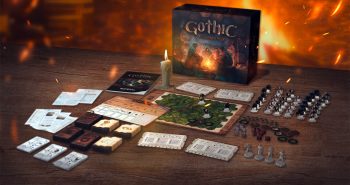
If you played the previous game in the series when it staggered out of its long development cycle, you probably still have some gaming scar tissue. It was buggy, automated to the point of playing itself, and felt strangely lifeless. So, when publisher THQ Nordic announced that a new team, Czech-based Ashborne Games, was taking another shot at the historic medieval simulator with The Guild – Europa 1410, my eyebrows shot up. Could they actually rescue a franchise with so much historical baggage? Today, the Steam Next Fest demo finally landed. After spending a few intense hours in the silver-strewn streets of Kuttenberg, I have some thoughts. Honestly, it is a fascinating, sometimes exhausting return to form. It will either delight you or make you miss the good old days of walking your character to the town square.
Before we get to the actual gameplay, can we talk about how wild it is that The Guild 2: Renaissance just got a massive official update? A sixteen-year-old game suddenly receives modern Steam multiplayer, achievements, and full workshop support out of nowhere. It is a brilliant move to keep the classic gameplay fresh, but it also shows exactly what the new developers are up against. Longtime fans still adore the chaotic, physical roleplaying of the older titles. That brings us to the first major surprise in Europa 1410, and it is a big one.
Where did my physical body go?
Here is the thing: you do not actually control your character directly anymore. In the second game, you spent half your time watching your avatar physically run across a huge 3D map just to deliver a simple letter, argue in court, or run for office. It felt incredibly immersive, sure, but it also caused endless pathfinding bugs and ruined the physical pacing of the game. For this new entry, the team decided to throw that concept out. They went back to the original 2002 classic for inspiration, choosing a strictly isometric, top-down perspective managed entirely through screens and menus.
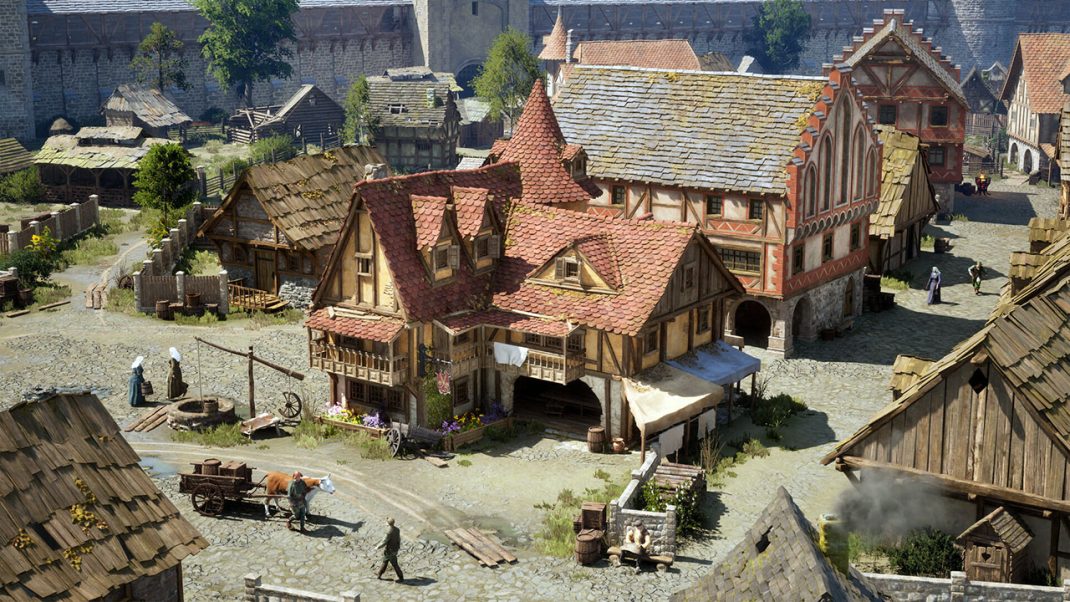
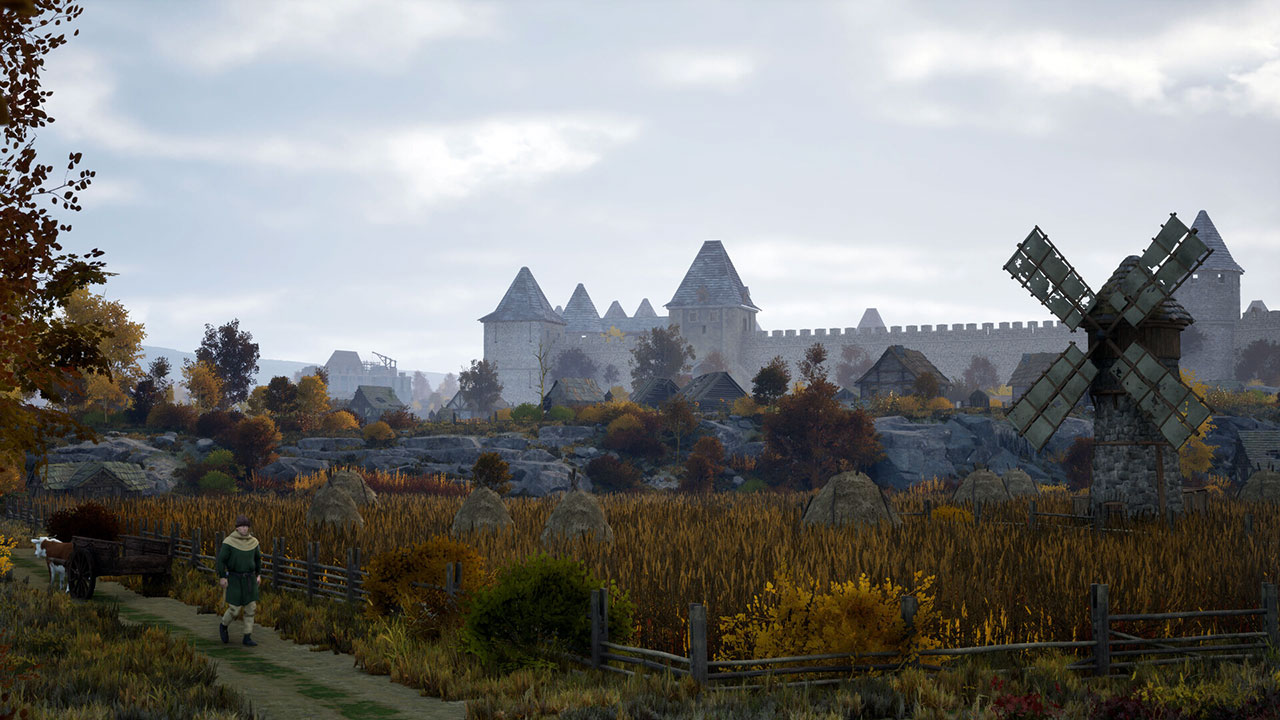
You might think this sounds like a massive step backward. I was certainly skeptical at first. Losing that direct, boots-on-the-ground connection feels like a disappointment. But let me explain why it actually works. By focusing on macro-management, the game runs beautifully. You are no longer babysitting stuck AI paths. Instead, you manage your family and your business like a medieval CEO using nested tables, pop-ups, and choice menus. The gorgeous Unreal Engine 5 graphics still display a bustling, detailed town below you, but your interaction with it is purely administrative. When you click on a building, the walls fade away like a dollhouse diorama, letting you watch your workers craft items or council members cast votes. It is a bold, abstract choice, and it will definitely split the community down the middle.
Boiling potions and counting coins
In the Next Fest demo, you get to play for a handful of turns in the city of Kuttenberg, choosing between three starter professions: the blacksmith, the alchemist, or the taverner. I started my run as an alchemist, thinking I would just quietly brew healing teas and make a steady profit. Boy, was I wrong. The economic loop in this game demands your full attention. You have to hire employees, monitor their exhaustion levels, and manually direct transport carts to fetch wild herbs and raw iron.
Managing your business is a constant balancing act:
- Logistics: If your transport cart gets held up on the road or robbed outside the city walls, your production line stops instantly.
- Worker Moods: Keep salaries too low or work your staff to the bone, and they will grow to despise you, which harms your shop’s reputation.
- Cash Flow: Upgrades are tempting, but if you spend all your liquid gold on cart capacity, you will find yourself in debtors’ prison faster than you can blink.
You know what? It is actually quite stressful in the best way possible. When you finally establish a steady flow of materials, craft some high-value combat bombs, and sell them at the central market for a massive profit, the rush is real. But making money is only half the battle.
Marriage, heirs, and the family tree
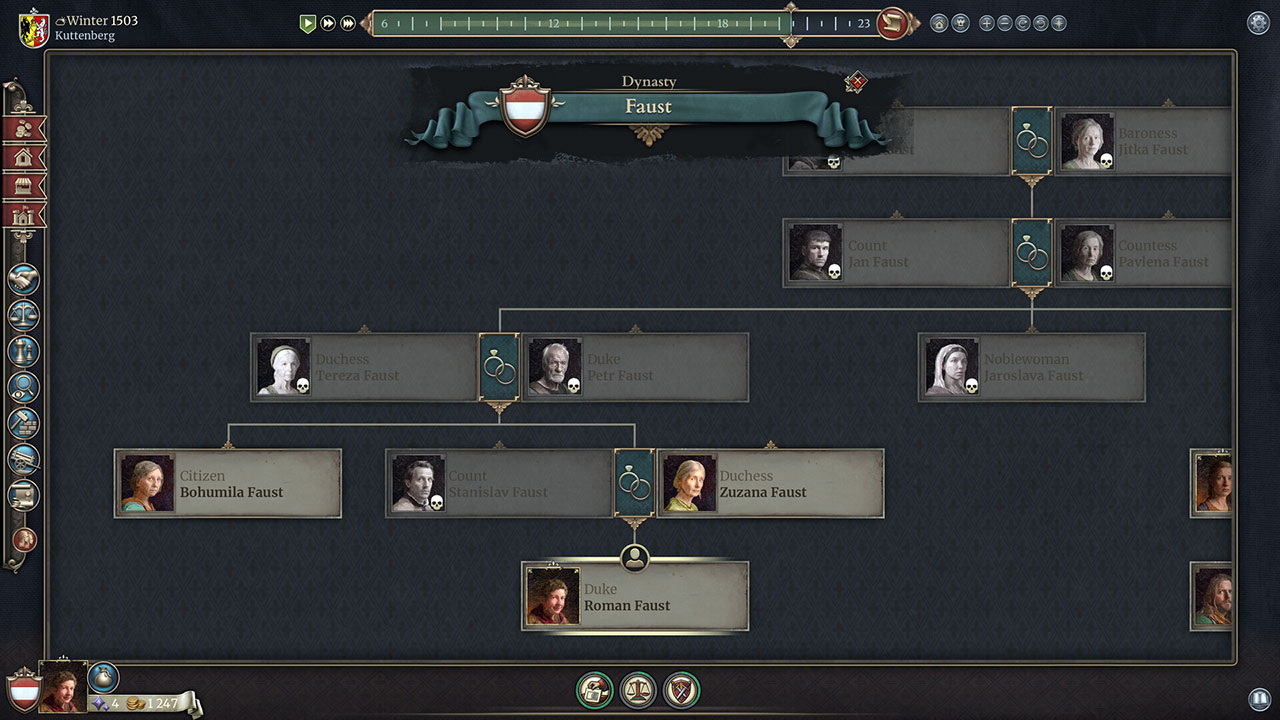
You cannot win this game in a single lifetime. If your character dies of old age, illness, or a violent street robbery without an eligible successor, it is game over. That means finding a partner is a strategic necessity. Courtship is a deliberate game of sweet-talking and gift-giving. Once you get engaged, you tie the knot at noon the very next turn, which boosts your reputation and brings a nice cash gift.
But do not expect a quiet domestic life. If you put your new spouse to work in your workshop to save on labor costs, your marital fertility rate drops. You have to balance family time with business growth to ensure you get a few children. And in 1410 Bohemia, you definitely want several heirs, because diseases are rampant. Once a child hits fifteen, you can officially name them your successor, ensuring your hard-earned wealth and social titles stay in the family.
Bending the law until it snaps
Eventually, you will want a seat on the city council. Why? Because holding public office lets you rewrite the rules of the entire city. Let’s say a rival alchemist is cutting into your profits. If you manage to get elected as the Treasurer, you can literally raise the rent and taxes on their specific district to choke their business. If you prefer a darker path, you can hire thieves to rob their carts or kidnap their family members for a massive ransom.
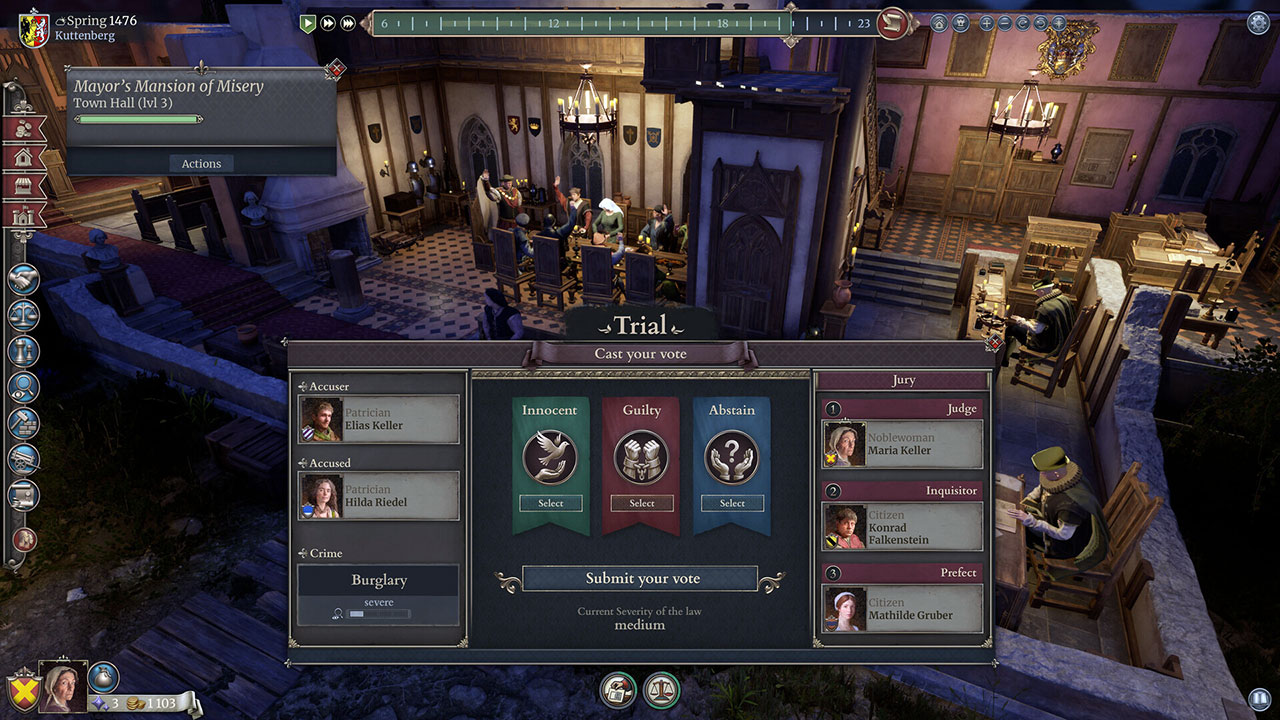
Just be careful. Every illegal deed leaves behind physical evidence. If a rival collects that proof, they can drag you into a courtroom. While these trials play out in beautiful 3D diorama scenes, the actual interactions are decided through text choices. If you have enough cash, you can bribe the judge or use your high-level political immunity to have the charges dismissed. It is dirty, sneaky, and absolutely delightful.
The rough edges of Kuttenberg
The demo is not perfect. Honestly, the user interface can get incredibly messy. When you have three different production screens, a family tree, and a political voting menu open at the same time, the screen looks like a crowded tax form. The seasonal turns also pass by a bit too fast on high speeds, making it tough to react to random events, like a collapsed pilgrim showing up on your doorstep with a holy relic. We also occasionally experienced an annoying bug where items get stuck in your personal inventory and cannot be placed back into building storage. The developers have built a highly stable, deep foundation here. If they can clean up the window clutter and polish the menus, this could easily become the gold standard for medieval management simulations.
Pros
- Recaptures the beloved macro-management gameplay of the original 2002 game
- Eliminating physical avatar movement avoids the pathfinding bugs
- Deeply satisfying mechanics for bribing officials, forging evidence, and rigging elections
- Spontaneous micro-events like deciding whether to steal a holy relic make each run unique
- High-fidelity, detailed diorama views of Kuttenberg
Cons
- Lacks a physical player character to walk around the city
- The menu-heavy UI suffers from overlapping nested windows that crowd the screen
- Daily turn cycles pass too quickly
- The aesthetic leans heavily on dark, dusty brown tones that can look bland