Author - Jerry Paxton

New Mortal Kombat Trailer is Disturbed

Warner Bros. Interactive Entertainment and NetherRealm Studios have released a new trailer for their reboot of the Mortal Kombat fighting game series, Mortal Kombat. This new trailer doesn’t show off any gameplay but does get our geeky hearts pumped up with silhouettes of your favorite fatalities in action. Also features in this trailer is rock band Disturbed’s new track, ‘Another way to die’.

Playseats Flight Simulator Gaming Chair – A Review (Hardware)

Playseats has long been known for their line of gaming chairs – mostly for racing titles. However, they more recently released a new chair aimed at desktop pilots. Their Flight Simulator Gaming Chair is large, standing at 44 inches tall and 39 inches wide when fully assembled, weighing in at about 50 pounds. It arrived in several pieces which, at first glance, seemed a bit daunting to put together. Thankfully, the guys at Playseats have instructions that the folks at IKEA should be vehemently jealous over – they are very easy to understand and follow.

Making the task even easier, Playseats includes all of the necessary Allen wrenches, bolts, screws, and nuts necessary for the job in a baggy. Following the instructions from start to finish, I had the chair assembled in a few minutes shy of a half hour. Once all bolted together, the chair’s durability becomes readily apparent. The black-coated steel frame supports the chair and arm assemblies with easy and, even though the rear side of the chair legs is set at an acute angle, it slides very easily even across carpet.

The vinyl seat is comfortable and is of the same style as seen in the company’s other gaming chairs, with one great exception – foldability! With the pulling of a small level on the user’s right side, the seat can fold forward for easier storage or just to custom-fit their posture. On the head-rest of the chair is the Playseats logo, and I often found myself a little too comfortable when in the most-reclined position. It is not all that reclined even, the chair is just comfortable.

The chair arm assemblies are mounted onto a rail system on both sides of the base frame. Each arm nacelle is adjustable and makes it very easy for both the long and short-armed user to reach their peripherals. Attached to each arm nacelle is a plate with several mount holes on it. The chair was designed in mind with Logitech’s G940 flight system, however I was able to use Saitek’s X-65F Pro Flight System without any issue. The secret to using other peripherals lies in the two greatest assets included with the Flight Simulator Gaming Chair – zip-ties and velcro strips!

Lining the right chair arm plate with velcro, it easily supported the use of the X-65F’s flight stick, and by using the included zip-ties, I easily fastened down the throttle quadrant. Even through repeated usage over several weeks, neither peripheral felt like it was loosening its grip on the unit and that is really saying something when one considers the amount of force required to move the X-65F’s throttle quadrant!

Product Characteristics
* Fully adjustable black-coated steel construction.
* Aluminium quick releases.
* Unique positioned steering wheel column; steering wheel plate fully adjustable in depth.
* Steering plate fits almost all joysticks like steering wheels and flight sticks.
* Patented foldable and suburb comfortable Flight Seat.
* Seat upholstered with sophisticated Black Alcantara fabric or optional in Military Green.
* Compatible with PC, Xbox & Xbox 360, Logitech, PS2 & PS3, Wii®.

Specifications
* Measurement assembled (LxWxH) 98×50×112 cm/ 39×20×44 inches.
* Net weight 24 kg/ 53 lbs.
* Maximum recommended drivers weight 112 kg/ 247 lbs.
* HS Code 9401 71.

Packaging
* Small full colour box, plus brown carton protection box.
* Dimensions (LxWxH) 60×50×40 cm/ 24×20×16 inches.
* Gross Weight 26 kg/ 57 lbs.
* Manual and guarantee card included in package.

Optional Accessories
* Floor Mat in order to protect fragile or wooden floors.

In between the legs of the user is a detachable center pylon. At the end of this pylon is a plate designed for your favorite flight yoke. I utilized it as a keyboard stand, as I primarily tested out combat flight simulators with the chair. The keyboard obviously would not screw down into the plate’s provided mounting holes, so again the savior here was velcro. Velcro and this gaming chair simply go together like peas and carrots – they expand the usability of the chair immensely.

An additional use of this central pylon comes through attaching an optional steering wheel adapter to it. Once done, you will be able to utilize Logitech racing wheels! This, again, would allow the user greater flexibility as they could use it on their console and PC racers as well as the originally-intended PC flight simulations.

The biggest challenge in using the chair is getting into and out of it – especially when the center pylon is mounted. Thankfully, this pylon is detachable, but if you have a heavy or unwieldy keyboard, yoke, or wheel attached to it – it is difficult to detach. The alternative is that you have to remove the peripheral mounted to the pylon, then detach it. Either way, it is not very user-friendly. Once you are seated, however, you are golden.

Overall, Playseats has done PC sim jocks a real favor in their Flight Simulator Gaming Chair. It provides a more realistic flight experience by allowing proper placement of throttle and flight stick peripherals as well as flight yokes through the central pylon. Your PC flight simulator experience will never be quite the same once have tried out one of these seats.

Review of the Otterbox iPhone 4 Defender Series Case

As a clumsy technophile, sure to drop his iPhone 4 within the first few weeks of ownership, I searched high and low for the most protective suits of armor for my phone. During my search, I happened across an article for Otterbox’s then-upcoming iPhone 4 Defender Series Case. What caught my eye first was that, for such touted protection, it appeared to be very stylish and not overly-clunky like a few other models out there. Otterbox has, since that read, released their new Defender case and we got our very own to play with.

Too many cases out there are simply a sleeve of rubber to encase your phone in. Otterbox’s Defender is actually a multi-layered protection system, starting with the internal skeleton giving the whole setup its strength. The internal skeleton is a hard plastic complete with inner felt lining so as to not scratch your phone from any banging around that may occur while encased by it. This has proven to be somewhat unnecessary as there is not much room for the phone to move around inside this skeleton, however it is a nice feature nevertheless.

One really nice thing about the internal skeleton is that it has a built-in screen protector. I hate having to constantly purchase those little stick-em screen protector packs for my devices and having one built-in is a blessing. I wish more phone/device cases had this feature.

After placing your iPhone 4 inside this inner skeleton, the entire thing is encased in the outer silicone layer. The silicone skin tightly wraps around the internal skeleton, and after installation you have to set it in place by pressing the edges into the internal skeleton’s ‘grooves’, nooks, and crannies.

The silicone layer has numerous flaps which allow the user access to the more vital iPhone 4 interfaces, such as the big sync/power/IO port on the bottom of the unit as well as the mute toggle on the side of the phone. Since this outer layer is silicone, it will stretch quite a ways before tearing or ‘stretching out’. This will ensure you are able to install and uninstall the phone from the Defender as many times as you like without the case getting worn out.

The only negative aspect to this case assembly is the over-sized belt clip. Unlike the iPhone 3GS Defender case, this model has a very robust clip. It is made of a hard plastic and covers the entire side of the phone and then some. It is cumbersome to say the least and I think the system would have been far better served to have a sheathe-style belt clip seen on the iPhone 3GS Defender model.

Overall, the iPhone 4 Defender Series Case from Otterbox is a must-buy if you are an iPhone 4 user. It provides maximum protection with minimum fuss.

Stay-tuned when we release our review of the Otterbox iPad Defender Series Case in just a few day’s time!

New Dev Diary for The Secret World Delves into Starter Experience

Funcom may have taken some inital flak over the initial lack of high-end content in their MMO, Age of Conan. One thing they undeniably know how to do, however, is make a starter experience. AoC features a VERY well-thought out first twenty levels. It looks like they are bringing that same starter experience ingenuity over to their upcoming The Secret World, which features a world divided by secret societies and factions with supernatural abilities.

Portal 2 and new L4D DLC on GTTV

A couple nights back on GameTrailers, Chet Faliszek of Valve Software dropped a huge bomb. While reporting standard information on Portal 2, he gave word of the new L4D DLC, entitled ‘The Sacrifice’.

The original L4D is coming back, with an all-new DLC featuring the original four survivors. ‘The Sacrifice’ weaves the story of the death of a comrade, but who dies is left up to the players themselves. A 150-page comic will be released in four digital portions as well, giving backstory to what happened to Bill before the events of the most recent L4D2 DLC, ‘The Passing’. Another fun thing is that this DLC will encompass both games. Yep, ‘The Sacrifice’ comes to L4D2 as well, and will bring all four original survivors, and even the No Mercy campaign.

Read more on this story, After the Break!
(cont.) Portal 2 was also reported on in the episode of GTTV, displaying the power of the Source engine, as well as the story to the game’s co-op mode. There’s a story completely independent of the single-player story, but it does take place in the same universe. More information will arrive when PAX rolls around.

The episode of GTTV featuring information on both games can be found here.

Logitech G700 Gaming Mouse – A Review (Hardware)

Logitech has always been a friend of the PC gamer – releasing several iterations of PC gaming peripherals over the last twenty years or so. Its latest ‘G-series’ of gaming peripherals offers their most robust array of features yet. The gaming mouse component of this new series is the G700 Gaming Mouse. Looking like something from their more business-oriented MX series, the G700 offers an impressive array of features.

Looking like something from their MX series of business/personal use mice, the G700 features an all-black, heavy plastic body with a chrome-clad mouse wheel. A very impressive mouse in the looks department, the G700 does not have a ton of lights blinging out from every direction. It is, in fact, a very classy-looking gaming mouse.

The black plastic around the main mouse buttons is smooth and features a small silver Logitech logo. The side plastic parts of the mouse body are have been ruggedized with a very effective friction-generating texture. This means you will not lose your grip on the unit while playing. From a ‘feel’ standpoint, the G700 is exceptional.

The mouse comes packed with a USB extender cable, a USB power/interface cable, and Logitech’s small, Nano-Receiver which will allow you to use the G700 in its wireless mode. Installing the mouse is very simple – just plug either the Nano-Receiver or the USB cable (mouse connected) into the PC and watch it go. If you want to unlock the full feature-set of the unit, you will need to install the SetPoint software package. These extra features are well worth the installation, as the G700 has 13 programmable buttons lining its body, as well as three programmable sensitivity presets which can be accessed on-the-fly.

After we got everything installed and setup, we began running the mouse through games of Left 4 Dead 2, Call of Duty: Modern Warfare 2, and World of Warcraft. The G700 performed very well, with two quirks worth mentioning. First is that, while the thumb buttons on the G700 are very useful for assigning functions to, they are far too low on the mouse body to avoid being accidentally clicked by a larger thumb. I found myself accidentally depressing the two bottom thumb buttons of the four button-array several times over the course of the more frantic action found in the two FPS titles that were used in testing.

In World of Warcraft, we did not experience this issue at all.Eventually, I just disabled the thumb buttons when playing the shooter titles to avoid the problem. The G700 seems more ideally-suited for MMORPG usage, where its comfort and smooth glide will keep you gaming for hours, comfortably.

The second quirk of the G700 is its sensor alignment. Being a clutch mouse-user (that is, resting my palm on the mouse body), moving the unit on the yaw axis of my wrist should yield a horizontal cursor-sweep. On the G700, a yaw movement yields a diagonal cursor sweep. This is because the unit’s laser sensor (at least on our review unit) is slightly off center when held in a clutch fashion. It should be noted, that claw-usage (palm off the mouse body) is not possible on the G700 due to the exposed thumb buttons and recessed thumb rest for comfort. While not a deal-breaker, this second quirk definitely takes some getting used too.

Ending on a positive note, gamers will experience some of the smoothest glide-action they have ever felt in a gaming mouse before with the G700. It has much larger Teflon-coated pads on its bottom than most gaming mouse sport, and this is very apparent when gaming. Also of benefit to gamers is that while on wireless mode, the G700 runs off of one replaceable, included, and rechargeable AA battery.

The Logitech G700 gaming mouse hosts a very impressive array of features. While its $99.99 dollar price point may not be cheap, its closest competitor is thirty dollars more expensive. While not perfect, Logitech has made a very solid gaming mouse (especially got MMORPG players) that, so long as you heed the quirks we have mentioned, should serve you well for years to come.

Razor2: Hidden Skies – A Review (PC)

Most people that grew up on gaming in the 90’s are probably familiar to the ‘shmup’ style of gaming. The game sets you off story-wise in the midst of a nameless, faceless battle against a nameless, faceless group. You take the position of a pilot in the midst of a war of some sort; you get the point. It’s a basic setup for the ‘shmup’-style game. The story is not the strong point of this game, but that’s given due to the style. Style is where RAZOR2 should shine…

That being said, the style of the game is great… if we were living fifteen years in the past. While the nostalgia factor is fun, it fades quickly, and leaves you with a remorseful feeling of something along the lines of: ‘I spent $10 on this game, so what do I do now?’ The fun can only carry for so long, and without two strong legs of a story, the game relies mainly on its mechanics and fun music to pull you through the rest of the missions.

Gameplay:
While the story rates as sub-par to nonexistent, the gameplay shines like a supernova. It’s upbeat and racy, which is extremely enjoyable for some people. If button mashing is your thing, this game has a lot of that in store for you. If racing around a screen in a ship is also your thing, this game is for you. If you don’t appreciate the former or the latter, then this game just flat out isn’t for you. It has some very fun moments, but the gameplay also some fairly large negative aspects as well.

There are minor flaws in the controls to this game. In terms of maneuvering the craft, the default keys for movement were set to the arrow keys, and it was awkward at first, but then became bearable. Switching between Team Fortress 2 and RAZOR2 was difficult, though, being so used to the famed WASD keyboard setup. The mouse is not involved at all, which was a bit surprising as well. A fun fact, however, is that key binds are stackable, so if you see it to be necessary, there can just be one button that destroys everything instantaneously.

The gameplay in terms of combat is adequate, if not a bit messy at times. The screen will become so overcome with fire sometimes (especially at boss battles) that it will be hopeless to even attempt to maneuver past enemy fire. It’s understandable as a difficulty thing, but it was still annoying at times to find that my screen had become overrun by small lasers and rockets to the point that my vessel wasn’t even maneuverable.

One of the better gameplay features in RAZOR2 is the upgrade system, albeit navigation to it. By killing enemy ships, having good accuracy, and finishing the mission in time, credits are awarded. Also, after a certain number of missions, you ‘rank up’, earning another cache of points. These points are then used to purchase shiny new upgrades for your ship, which will help you in future missions. As the enemies get tougher, so does your ship. The upgrades range from more ammunition to better shields to more energy to faster and stronger weapons. All around, it’s a nicely ‘polished’ (I say that cautiously) system.

Graphics and Sound:
The graphics to this game are reprehensibly horrible, and the blame lies with the developers, INVENT4 Entertainment. Understandably, if the graphics are part of the ‘immersion’ or ‘throwback’ to 90’s ‘shmup’ games, then that will make this section irrelevant.

Having blocky, pixelated textures made the game feel awkward, especially while in the loading bay for upgrading my ship. When looking at my craft, I saw a brick, not a glorious space vessel that had just taken on a wave of five hundred or so enemies. It didn’t contribute to any of the affect of the game, and for a game without a story, there is the expectation for the graphics and gameplay to compensate for it.

For a game with low-quality graphics, however, it sure did suck up a lot of CPU cycles. While in the first mission of the game, when enemies suddenly swarmed on-screen, my computer actually began to lag. This lead to the belief that the game was poorly optimized, or something of the sort, because hardware-wise, my PC is a fair beast to be sure. Aside from minor stalls and hiccups, the gameplay was smooth and breezy.

Taking out two birds with one stone, as they’re both under the menus, there are the fonts and voice-overs. Unmistakably, the voice-overs are provided by Microsoft Anna. I’d love to leave it at that, but it gets worse. ‘She’ provides annoying (not to mention useless) intel throughout a whole mission. This tends to leave the player hearing a monotonous voice droning on and on about superfluous details that they don’t care about, especially for ‘shmup’. Then, the fonts, which are nigh unreadable. Navigating the menus in this game is easy once you’ve adjusted to them, but for someone just starting, it will be hard to find your way around them.

Ending on a good note, one good quality to this game is its music. Upbeat and heroic, the soundtrack to this game is by far the best out of the graphics and sound department – truly a pleasure to listen to. The biggest problem with the game audio was the Microsoft Anna voice-overs coming in and interrupting the music. Thankfully, there was an option to mute the voice-overs via an audio slider.

Final Thoughts:
All in all, I wouldn’t call RAZOR2: Hidden Skies a ‘bad’ game. A more fitting word is ‘misplaced’. Misplaced, in that it’s fifteen years past its prime, and fifteen years past its graphical threshold. If it were 1995, I’m sure that this game would have succeeded. Unfortunately, in a day and age where people expect fully-functional products with all the bells and whistles, RAZOR2 flounders. It lacks an enticing story, which is generally necessary for a strictly single-player game, as well as smashing graphics. The Microsoft Anna voice-overs also serve as a detriment, pulling the game further down the quality ladder. There are well-formed ideas, the game shows that it’s just bare-bones, with nothing else to truly offer, aside from a nostalgic feeling that passes five minutes into gameplay.

RAZOR2: Hidden Skies is available on Steam for $10. There is also a demo available for anyone who wishes to try before buying.

Third Part in Sordahon’s Journey Web Series

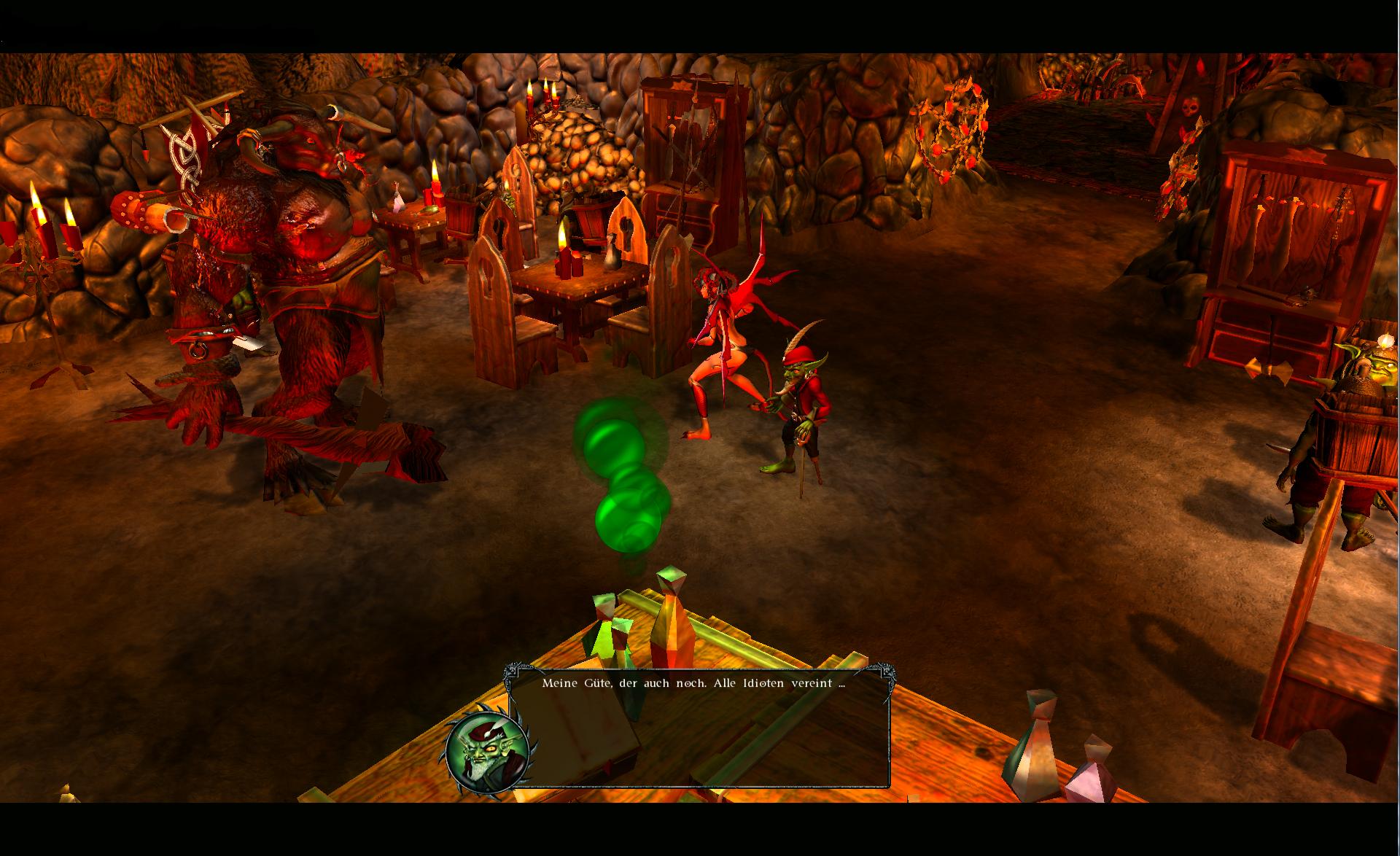
SouthPeak Games has released a new video adventure in the life of Two Worlds II’s #2 evil antagonist, Sordahon. In this part of the ongoing web series, Sordahon is at the psychiatrist’s office seeking advice on if SouthPeak and Two Worlds II is the right place for him to be. Two Worlds II is an upcoming RPG from SouthPeak and is due out this October.

Kane and Lynch 2 Character Vignette Trailers

IO Interactive and Square Enix have released two new character vignette trailers for their upcoming shooter, Kane & Lynch 2: Dog Days. The game is due out on August 17th across North America and will again see the unlikely duo taking on insane odds – this time, in Shanghai.

Here is Kane’s vignette, and you can find Lynch’s, After the Break!

StarCraft 2: Wings of Liberty – A Review (PC)

If Command and Conquer founded the modern real-time strategy genre, it was StarCraft which revolutionized it. Originally released back in 1998, the game brought several elements to the table which have become RTS staples – for instance, the use of telling the game’s story through the use of three separate faction campaigns. Also important was its riveting story and incredibly beautiful cut-scenes to bring it to life. Before StarCraft, the most story we got in an RTS was some badly-done full-motion video (known as ‘FMV’ back then) or some cheesy splash images with which to garner the plot from. It has been twelve years since StarCraft was released and now Blizzard Entertainment has let loose the sequel, StarCraft 2: Wings of Liberty.

The story of StarCraft 2: Wings of Liberty takes place four years after the events of the StarCraft expansion: Brood War. At the beginning of the story, we find Tychus Findley being released from cryo-prison and Jim Raynor living on a backwater planet where he is leading a resistance movement against the corrupt Terran Dominion. Soon these characters cross paths again, and, without spoiling anything, they must save the human race from annihilation.

The overall tone and themes of this part of the StarCraft 2 trilogy (the other two are said to focus on the Protoss and Zerg campaigns) has been heavily-inspired by the Joss Whedon TV series, Firefly. From the Western-style musical score and cowboy drawls to the overall look of the characters and technology; Wings of Liberty is a hoot to watch unfold and will have you quipping in Chinese more than once (gorram Zerg!). Thankfully, the themes were only inspired by the Firefly universe. The only things taken directly from other IPs are actually from other Blizzard IPs (and maybe a Star Wars reference or two). Players with a sharp eye will definitely see a lot of references to both World of Warcraft and Diablo.

The most revolutionary thing about StarCraft 2 is the way it presents its single player campaign. It’s not that the multiplayer is not fun or the Battle.NET integration is not seamless – that it is all true. However, when you look at the most clever things done in the game, you have to look at the single player experience. The multiplayer seems more or less like it was built for the tournament players out there and doesn’t bring a lot of innovation to what was already laid out in the original StarCraft. However, the hardest thing for a real-time strategy title to do is tell a single player story as so much of these types of games is spent looking down at the battlefield, detached, from on high.

In StarCraft 2, Blizzard has managed to suck players into the experience through the use of a gameplay mechanic once seen in Origin Systems incredible Wing Commander series. Between missions, you will be able to hit various locations based on your current base of operations and interact with objects and characters by clicking on them with your mouse. These can simply be random objects with some story significance or important plot items that give some additional backstory to an upcoming event. Additionally, you will sometimes be forced to choose between two characters or choices which will affect the outcome of your available missions or force disposition.

One entertaining device used throughout many of these inter-mission sequences is a news network broadcast on the television screen in the cantina. The pro-government news anchor is just begging for a Holly McClane punch to the face.

More importantly, you get the opportunity to direct your forces by way of an Armory, Laboratory, and Cantina! In these rooms you will be able to hire mercenary forces that can be deployed on-world, purchase new abilities for your units and structures, or even research new technology options which are paid for in research points found during missions. There is a TON of customization and decision-making to be found here, and it gives the player a direct role in the outcome of his or her military. It makes sense, given that your character is Jim Raynor, leader of the resistance and whatnot.

Furthermore, Blizzard has added the ability for players to, in many cases, choose their next mission from a few options – each with their own rewards and perks! When you sum up all of these additions, you are left with one pretty awesome game. The word ‘awesome’ is generally not considered a very urbane adjective by most highbrows out there, but it is more than applicable in this case.

StarCraft 2: Wings of Liberty will have you on the edge of your seat the whole way through – one minute you will be listening to one of the in-house Blizzard bands on the cantina jukebox and the next you will be eating concertina wire and pissing napalm while fighting an army of Hydralisks.

In short: Get this game now. That is all. Dismissed!