

When was the last time you forgot to charge your wireless earbuds right before a flight or a late-night gaming session? You pop open the case, see a blinking red light, and sigh. That tiny moment of rage is exactly why Razer dropped the Razer Hammerhead V3 Chroma earbuds on November 5, 2026. Priced at $79.99, these wired USB-C earbuds promise zero lag, active noise cancellation, and glowing RGB lights without a single battery cell inside. These actually saved my mobile gaming during a recent train ride to New York City.
Sounds like a magic trick, right? Well, it’s actually just smart power routing. By ditching Bluetooth and plugging straight into your phone, handheld, or PC, these buds sip juice directly from your device. They are a throwback with a twist, and after looking closely at what they bring to the table, they are also one of the most polarizing pieces of gaming gear to hit shelves this holiday season.
ANC Without a Battery?
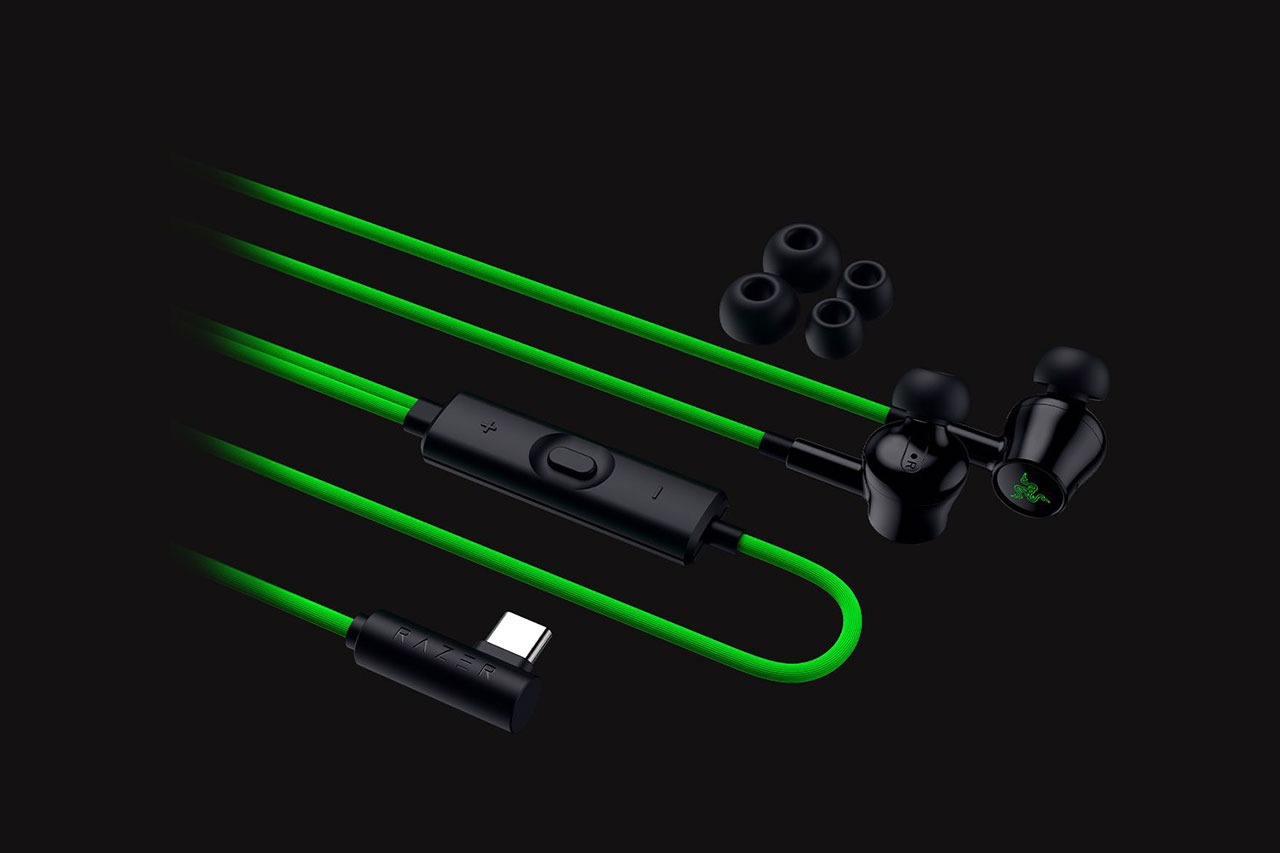
Let me explain, because on paper, wired active noise cancellation (ANC) and RGB lighting sound like a contradiction. Usually, wireless earbuds need a battery to run tiny microphones and chips that cancel out background noise. Here, the USB-C plug carries both digital audio and power through a built-in DAC, that’s a digital-to-analog converter, which is just a fancy chip that turns computer ones and zeros into actual sound waves.
Because there is no battery pack weighing your ears down, the whole setup weighs a featherlight 27.1 grams. You also get an IPX4 rating, which means sweat from a frantic match or light rain on your walk to the train won’t kill them. Just don’t drop them in a puddle, okay?
The ANC itself uses a feed-forward design. Basically, an outer mic listens to steady rumbles, like airplane cabins or subway tracks, and plays an opposite sound wave to hush them. It works surprisingly well against low, steady hums, though sudden chatter and sharp noises still sneak through. And here’s a catch: if the silicone ear tips don’t seal snugly in your ear canal, that noise cancellation drops off fast.
The PC-Only Catch
You know what makes these buds genuinely punch above their $79.99 weight class? The hardware packed inside each glossy black shell. Instead of relying on one all-purpose speaker, Razer crammed in an 11 mm dynamic main driver for bass and a separate 6 mm tweeter just for highs.
That split pays off. Explosions and music tracks get a satisfying thump, while crisp high notes make footsteps and reload clicks pop during competitive shooters. With a 20 Hz to 28 kHz range and 32 ohms of impedance, any phone or handheld drives them easily without needing extra gear.
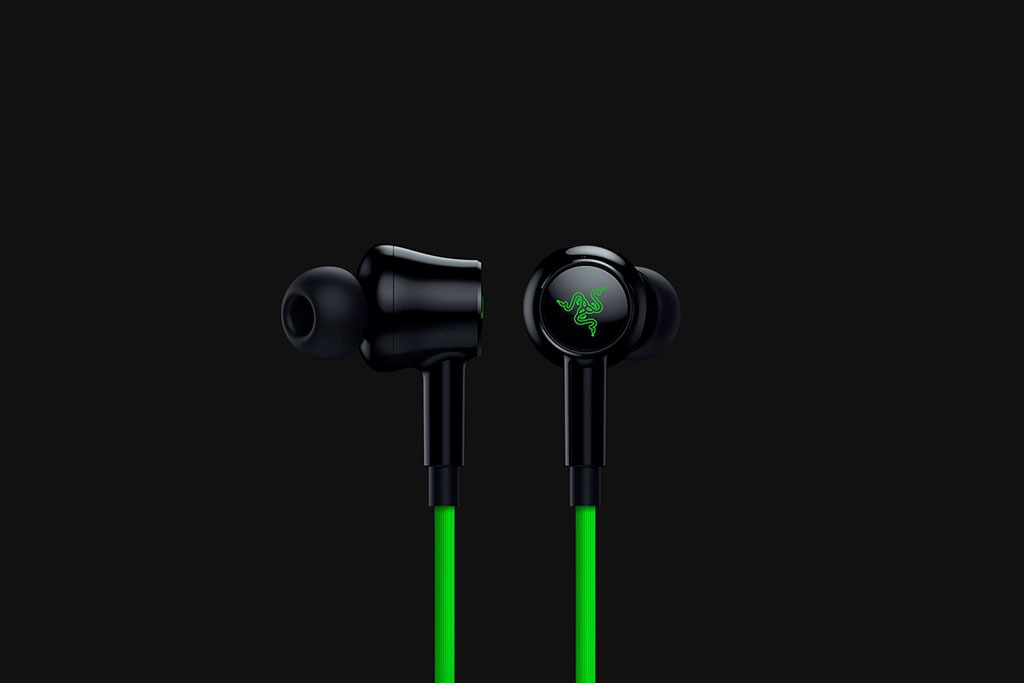
Here’s the thing, though. You get four built-in sound presets, Gaming, Music, Movies, and Call, plus one custom equalizer slot. That’s awesome when you bounce from Spotify to Call of Duty. Yet the headline surround feature, virtual THX 7.1 Spatial Audio, only runs through Razer Synapse 4 on a Windows PC. Plug them into your phone or handheld, and that fancy spatial trick stays behind on your desk. Same goes for customizing the 16.8 million Chroma RGB colors on the ear caps. Away from a PC, those glowing logos are mostly just flashy desk candy, though if you stream on camera, they do look pretty slick.
The 90-Degree Plug
At first glance, the 90-degree USB-C connector looks brilliant. Standard straight plugs jab right into your palm when you hold a phone sideways. Razer bent this plug flat so it hugs the edge of your device. Problem solved, right?
Not quite. Let’s talk about real life. Because the plug sits so flush against the frame, slapping it into a phone wearing an average protective case can be a real pain, some folks have to peel their case off every single time they want to listen. On top of that, if you play touchscreen games horizontally on a bare phone, that flat cable junction can still create an annoying lump right under your grip. Even handheld consoles hit a snag: on a Nintendo Switch 2, plugging into the top USB-C port can crowd the game card slot, aux jack, or fan vent depending on which way you point the wire.
And don’t forget the elephant in the room, there is zero 3.5 mm headphone jack support here. Your phone’s single USB-C port gets hogged for the whole session, which means no wired charging while you game unless you carry a dongle hub or use a wireless pad.
Daily Quirks
Living with a 1.2-meter fixed cable brings a few extra trade-offs. That length feels right at home when your phone or Steam Deck sits in your hands, but good luck stretching it to a PS5 across the living room. A detachable cord would’ve fixed that fast.
The wire itself splits opinions, too. Some people I let use the ear buds loved the rubbery, tangle-free finish over stiff braided cords that fray. Others found the textured plastic snags constantly on shirt collars, yanking the buds right out of your ears, and let’s be honest, bright neon green screams “gamer” on a crowded train. Worse, the stock medium and large ear tips can feel a bit flimsy, sometimes flipping inside out when you pull them out.
As for the inline remote and mic, it’s a mixed bag. An inline omnidirectional mic handles quick Discord chats and phone calls just fine, though you won’t want to record a podcast on it. Also, the raised physical buttons let you adjust volume and toggle ANC by feel, which beats tapping tiny touch sensors. Still, while specs list track-skipping support, hands-on testing shows double-clicks and triple-clicks can end up tied to ANC modes and EQ presets instead, forcing you to pull out your phone just to skip a bad song.
The E-Waste Question
Before we wrap up, there’s a bigger tech gripe floating around gaming forums worth mentioning. When you cram DAC chips and USB controllers inside tiny, sealed earbuds, a frayed cable turns the whole set into landfill material. Traditional 3.5 mm earbuds are way easier to fix or keep alive for years.
Still, if you hate charging cases and just want reliable, zero-lag sound, the V3 Chroma undercuts Razer’s own wireless lineup by a clean chunk of change. The wireless Hammerhead V3 X HyperSpeed runs $99.99 with no ANC, while the full Hammerhead V3 HyperSpeed jumps to $129.99 for hybrid noise cancellation. Of course, modern 2.4 GHz wireless dongles already wipe out almost all noticeable lag anyway, so wireless gamers aren’t missing much on speed. And if you want simple analog reliability, the standard Hammerhead V3 gives you a 3.5 mm jack plus a USB-C adapter for less money, just minus the tweeter, ANC, and RGB glow.
Should You Buy It?
So, who should actually buy the Razer Hammerhead V3 Chroma wired earbuds? If you game on a bare phone, a Steam Deck, or a Windows PC, and you’re tired of babying another battery, these $79.99 earbuds pack killer dual-driver punch and handy noise cancellation. Just keep your expectations in check. If you rock a chunky phone case, hate bright green cables, or want wireless freedom, you’re better off saving up for the Hammerhead V3X HyperSpeed, or waiting for a good holiday sale.