
We have all been there. You spend four hours editing a killer gaming montage or filming a street vlog, only to realize your voice sounds like you are speaking through a soggy tin can. Bad video hurts, but bad audio will make viewers click away in five seconds flat.
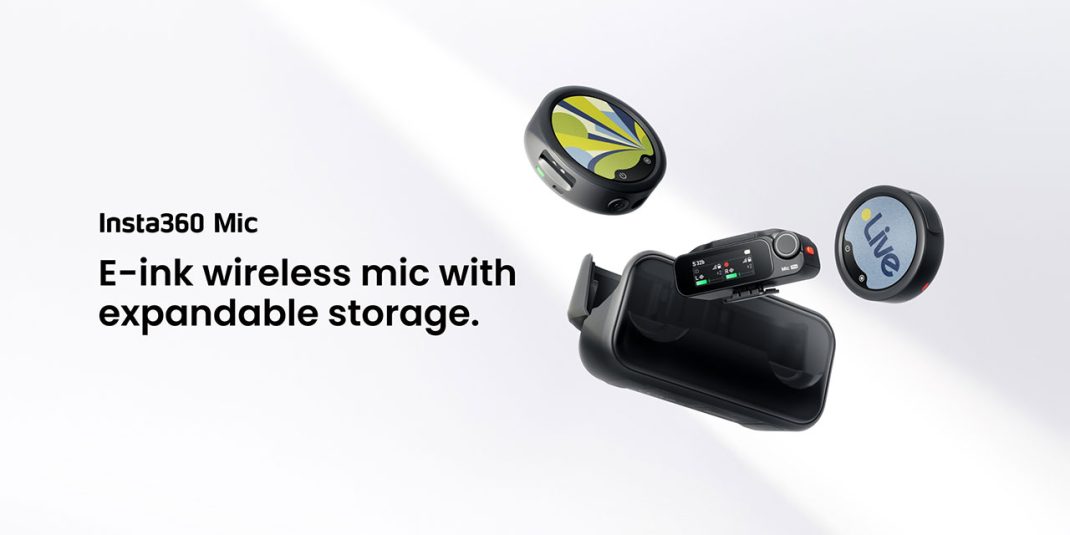
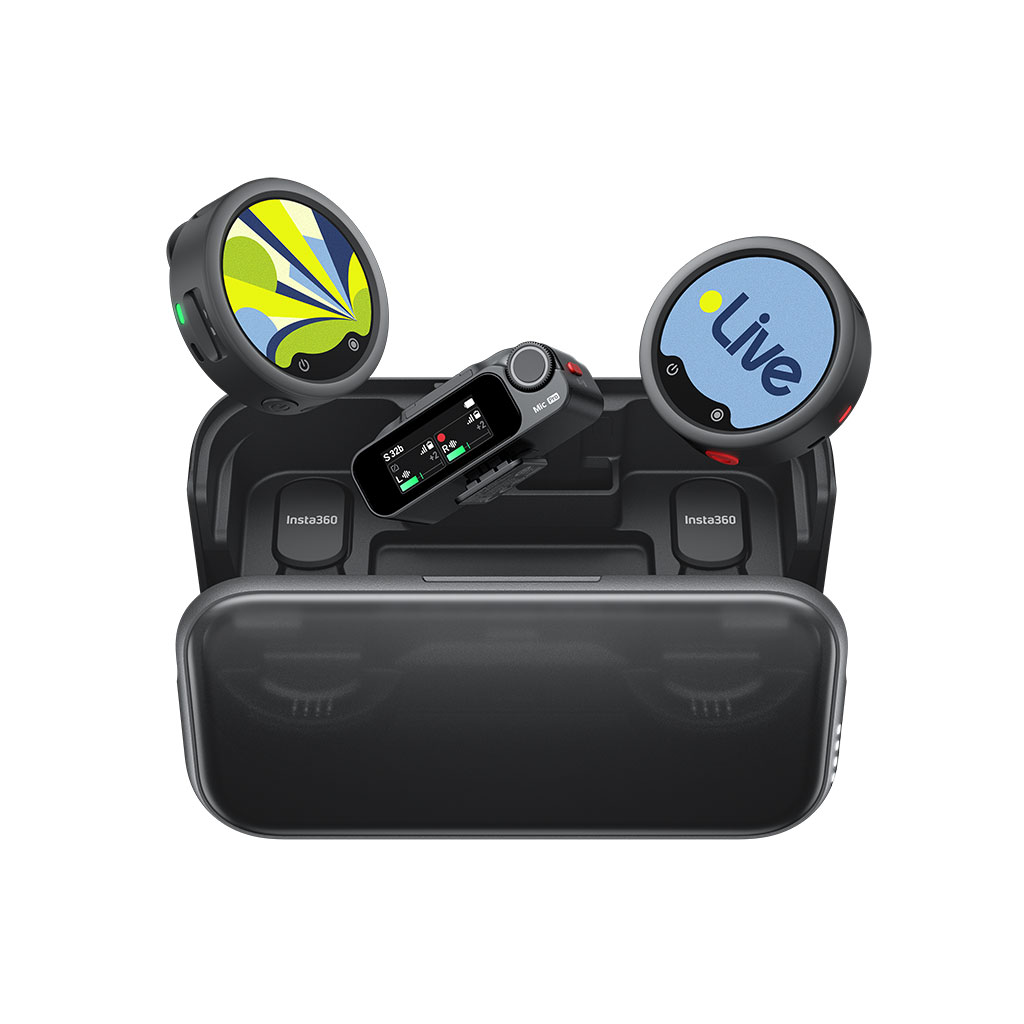
Insta360 made a big splash with their high-end Insta360 Mic Pro, but they quietly dropped a sibling that might actually be the smarter buy: the standard Insta360 Mic. It sits neatly in the middle of their lineup, right above the tiny Insta360 Mic Air and just under the Insta360 Mic Pro. The full kit costs $249.99. That gives you two transmitters, a receiver, and a slick charging case.
Is it worth your hard-earned cash, or should you stick with familiar names like DJI or RØDE? Let’s break it down.
That Cool Little E-Ink Screen on Your Shirt
The first thing you notice when unboxing the transmitter is that it looks like a chunky square coin. It weighs about 19.4 grams. That is light enough to stay put on a hoodie or jacket, though it can tug a bit on thin gym tees. You can clip it on directly or use the included magnetic disc underneath your shirt. The magnet holds strong, so you do not have to worry about it taking a dive while you pace around during a stream.
The standout trick is the 1.22-inch color E-Ink display on the face. You know how most wireless mics make you look like a walking billboard for audio brands? Insta360 flipped that script.
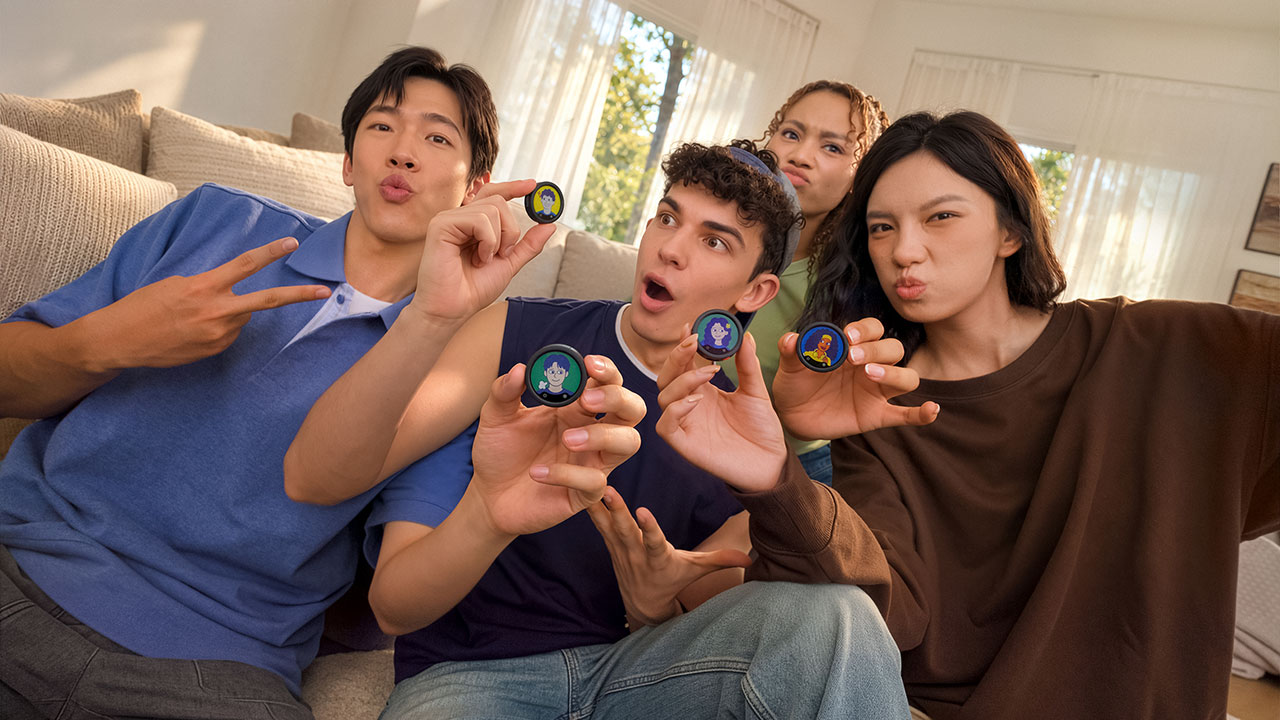
Through the mobile app, you can beam custom pictures right onto the screen. You can show your Twitch logo, a YouTube badge, your gamertag, or a picture of your cat. Because it uses electronic ink, it draws zero battery power while showing a static image. It stays visible even when turned completely off. Best of all, it does not glare under bright sun or ring lights like cheap glossy screens. It looks crisp and genuinely fun.
MicroSD Storage: The Real Hero Feature
Here is the thing about the pricier Mic Pro: it comes with 32GB of built-in storage. Once that fills up on a shoot, you must plug it into a laptop with a cable and wait to dump files.
The regular Insta360 Mic ditches built-in memory for a hidden microSD card slot. At first, that might sound like a downgrade. But honestly? It is a massive win. The slot supports cards up to 1TB. When your card gets full during an all-day convention or LAN party, you just pop it out and slap in a fresh one. Your editor can start cutting footage immediately while you keep shooting.
When you insert a card, you get 32-bit float internal audio recording. If you have never used 32-bit float before, it is like shooting RAW photos for your ears. Did you drop a plate off-camera? Did you scream into your mic after clutching a 1v4 in *Valorant*? On normal gear, that audio clips into harsh digital screeching. With 32-bit float, you just pull the gain slider down in Premiere or DaVinci Resolve, and your vocal peaks return cleanly without distortion.
The mic also splits files every 30 minutes, keeping your data safe if a battery dies mid-sentence.
How Does It Actually Sound?
A microphone can have fancy screens and huge storage, but none of that matters if voices sound muffled. Fortunately, the audio here is clean, full, and natural right out of the box.
Inside sits a single omnidirectional mic capsule. It picks up sound evenly from every angle. If you turn your head to check a second monitor while talking, your volume does not suddenly plummet.
You get three simple voice tone presets in the settings:
- Standard: A balanced, neutral profile that captures speech accurately.
- Rich: Adds pleasing low-end weight to your vocal tone, giving casual commentary an easy broadcast feel.
- Bright: Lifts the upper frequencies, making muffled voices pop and cutting through ambient street noise.
Background noise handling is another bright spot. Instead of basic filtering that makes you sound like a robotic alien, the mic uses a built-in neural processing chip. It strips out humming computer fans, spinning graphics cards, and air conditioners while leaving your voice intact.
If you are filming outside in heavy wind, snap on the included furry windscreen. It grabs on tight and cuts wind noise down without muddying your speech.
Insta360 Direct Connect: Ditch the Dongle
If you already own an Insta360 camera like the Ace Pro 2, X5, or GO Ultra, this mic setup has a huge perk. It connects directly over Bluetooth using *Insta360 Direct Connect*.
You leave the receiver in your bag. The transmitter links straight to the camera hardware and streams clean 48kHz audio. That means no dangling wires, no cold-shoe adapters, and nothing blocking your camera mount.
Even better, the power button on the transmitter doubles as a remote control. You can hit the button on your collar to start and stop video recording on your camera across the room. For solo creators shooting with a long selfie stick, that feature alone saves tons of wasted takes.
If you do use the receiver, it connects through USB-C or a standard 3.5mm cable to your PC, phone, or mirrorless rig. The wireless link reaches up to 400 meters in open spaces, so dropouts are practically non-existent in typical rooms and studios.
Battery Life That Refuses to Quit
Battery anxiety is real, especially during long tournament streams or travel days. The Insta360 Mic is a beast here.
A single transmitter runs for up to 13 hours on its own. The receiver lasts around 11 hours. When you pop them back into the charging case, you get up to 34 hours of total juice. That easily outlasts the flagship Mic Pro, which tops out around 30 hours.
Forgot to plug your case in last night? No problem. A 5-minute quick charge pumps 2 hours and 20 minutes of runtime back into the transmitter. By the time you grab a cup of coffee and stretch your legs, you are ready to record another long video. The case also sports a neat sliding lock so it will not spring open if it rattles around in your backpack.
What’s Missing?
No piece of gear is perfect, and this kit cuts a few corners to keep the price down.
First, the transmitters are somewhat thick. They are not huge, but they stand out more than stealthy button mics like the Mic Air.
Second, the regular Mic sticks to a single omnidirectional pattern. The pricier Mic Pro has a three-microphone array that lets you switch between cardioid, figure-8, and super-directional pickup modes. If you need a mic that isolates audio from only the front while rejecting everything behind it, the Pro is better suited for that.
Third, remember that there is zero onboard memory out of the box. You must supply your own microSD card if you want to use internal 32-bit float recording. Forget your card at home, and your backup safety net vanishes.
Lastly, it does not support professional timecode generators for multi-camera cinema setups, though most YouTube and Twitch creators will never miss that.
What’s the Verdict?
The Insta360 Mic is easily one of the most enjoyable creator tools released this year.
At $249.99 for the full two-person kit, it hits a sweet spot in the market. If you only need a single transmitter for an existing Insta360 action camera, you can grab one for just $79.99 and skip the receiver entirely.
By trading fixed internal storage for a flexible microSD slot and adding reliable 32-bit float audio, Insta360 made a mic that genuinely respects how real creators work. Add in class-leading 34-hour battery life and an E-Ink screen that lets you show off your channel brand, and you have an easy recommendation for any creator looking to level up their audio.