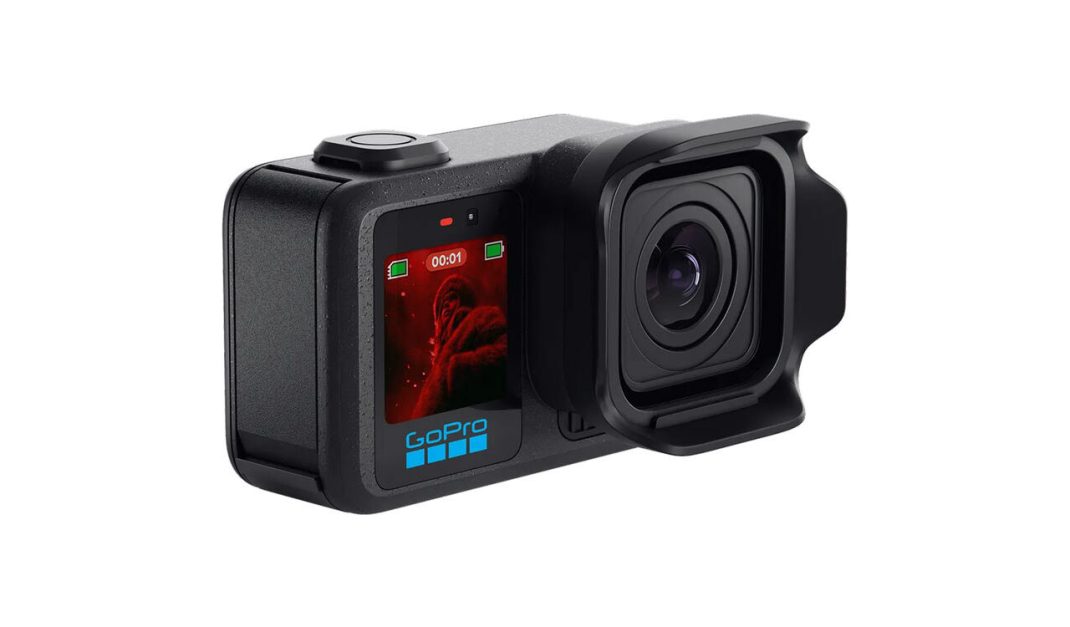
I honestly didn’t think GoPro would ever pivot away from its standard point-of-view formula. For years, content creators have gotten the same incremental yearly refreshes, a few extra frame rate options here, a slightly tweaked sensor layout there. But the GoPro Mission 1 Pro isn’t just another casual action camera. It is an ultra-compact cinema rig designed to claim a permanent spot on your desk tripod, your camera gimbal, or your travel pack.
At $699.99 USD, it asks for a massive chunk of change. That is nearly $300 more than competing options like the Insta360 Ace Pro 2 or DJI Osmo series. So, does this new 1-inch sensor layout actually solve the usual action camera headaches, or is it just extra hype? Let’s break down what actually matters when you’re capturing B-roll, streaming outdoor adventures, or editing game-day footage.
Chunky Hardware and Strategic Mounting Systems
Here’s the thing: the moment you pull the Mission 1 Pro out of its box, you feel the extra heft. Weighing in at 207 grams (roughly 7.3 ounces), it sits about 50 grams heavier than the Hero 13 Black. It feels less like a light plastic action toy and more like a dense, metal camera block. Is that extra weight annoying? Not really, unless you try mounting it directly onto a flimsy baseball cap.
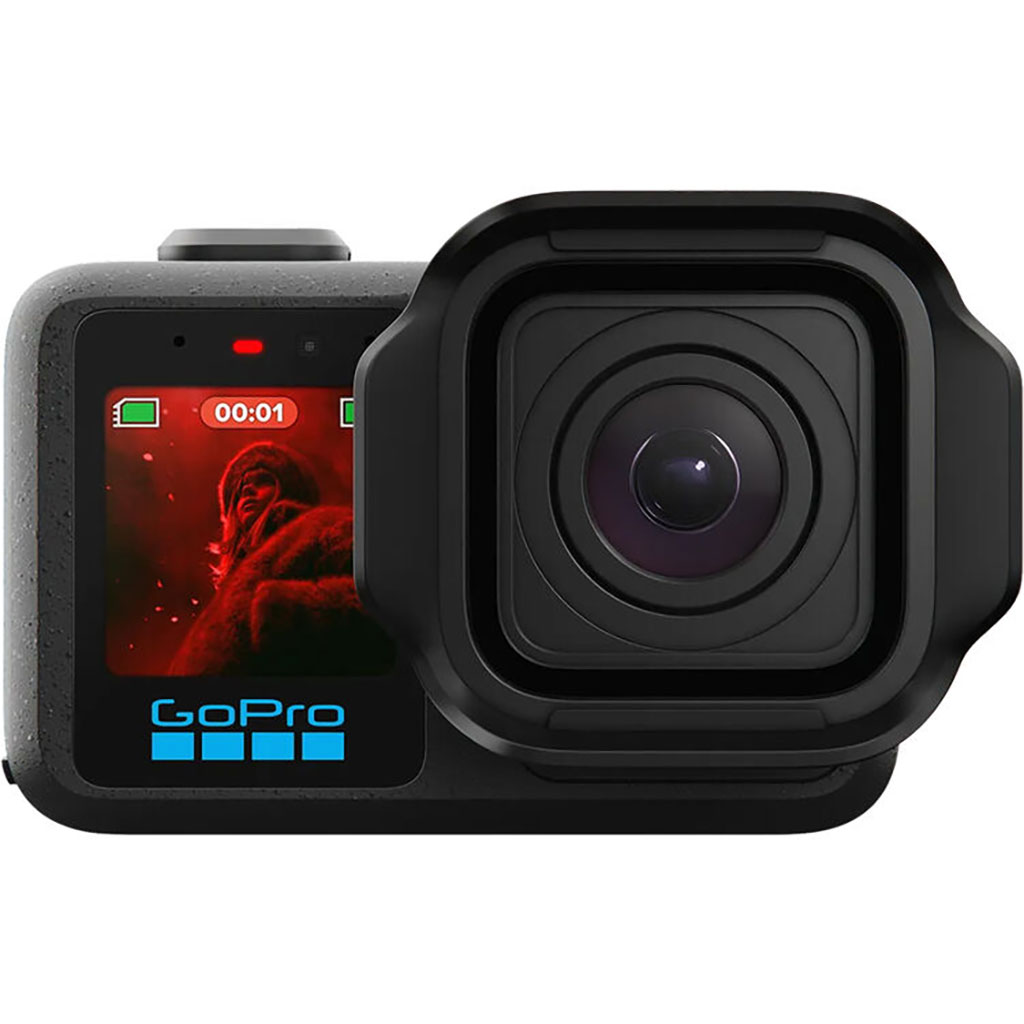
Thankfully, GoPro finally gave us three distinct ways to mount this unit. You get classic folding fingers for legacy mounts, a standard 1/4-20 thread for standard tripod plates, and a magnetic quick-release latch for fast rig swaps. If you are constantly jumping between a desk tripod during a stream and a chest rig for outdoor B-roll, that magnetic latch is a real time-saver.
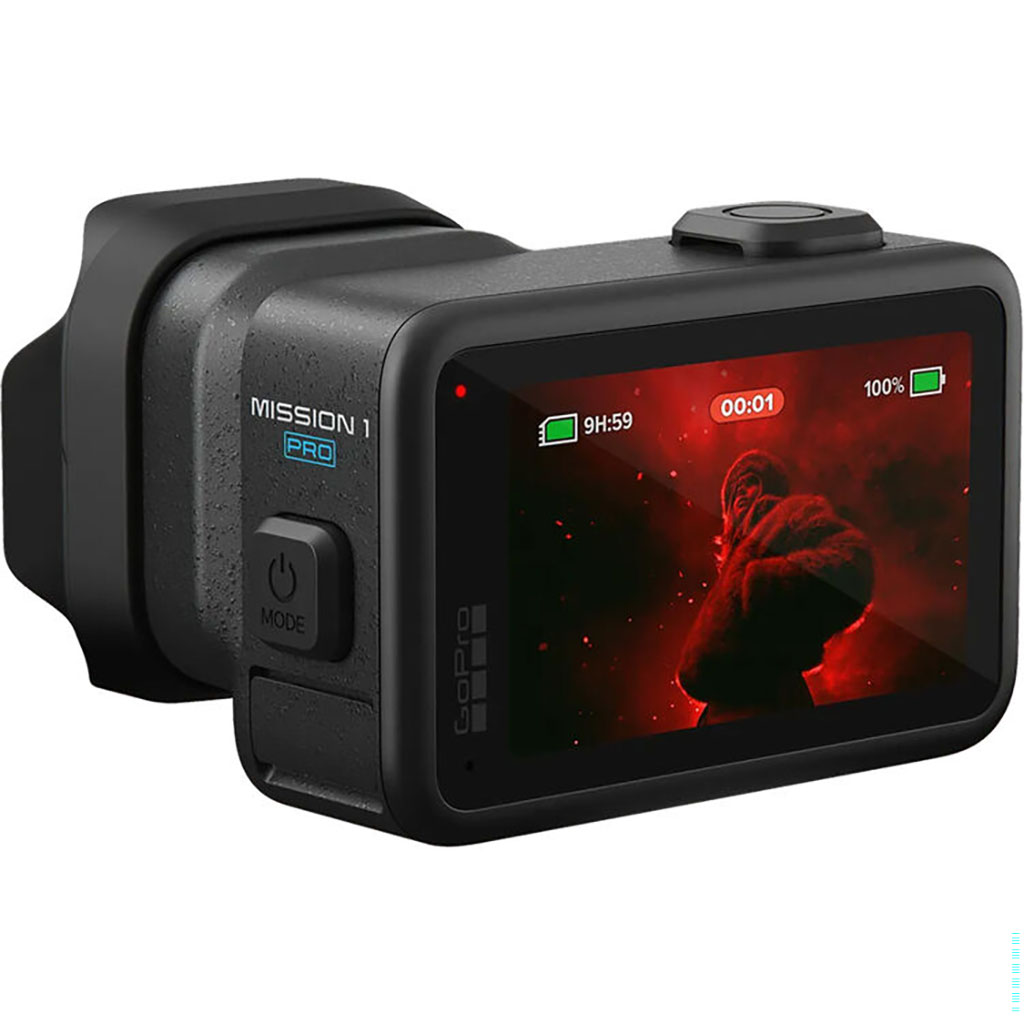
The dual screens make a return, too. You get a snappy 2.6-inch touchscreen on the rear and a 1.4-inch display on the front for framing up selfie clips. The body is also natively waterproof down to 20 meters (65 feet) without needing a bulky clear housing.
Battery life gets a huge boost thanks to the upgraded Enduro 2 battery platform. You can pull over three hours of continuous recording in 4K at 30fps. However, keep in mind that older Hero 13 batteries only work as emergency backups, they will not support fast charging or high-drain thermal settings.
The 1-Inch Optical Caveat
Let me explain the single biggest optical change. The Mission 1 Pro packs a massive 1-inch 50-megapixel sensor paired with an f/2.8 fixed lens. Low-light video quality is remarkably clean compared to older models. You will notice far less noisy grain crawling through dark shadows, thanks in large part to the new GP3 processor running subtle AI noise cleanup.
But here comes the catch, and it is a major issue for self-shooters.
Because the physical sensor area is so much larger, optical physics forced the focus plane back. The minimum focus distance gets pushed out to nearly 2 feet (around 60 cm). Older GoPros could easily focus on objects just 12 inches away. With the Mission 1 Pro, if you hold the camera at arm’s length to vlog or show off a piece of gaming hardware up close, your face or gear will end up soft and out of focus.
Anything from two feet out to infinity stays razor sharp without annoying focus lag. But close-ups? You will need to stand back or buy a 58mm or 67mm macro filter adapter from online creators on Etsy. It is a strange design trade-off: you get incredible image depth, but you lose simple close-range flexibility.
High Frame Rates
If you love editing smooth motion montages or vertical clips for social feeds, this sensor shines bright.
You can capture 8K Open Gate footage in a full 4:3 aspect ratio at 30fps. Open Gate is brilliant because it captures the entire sensor surface at once. Later in post-production, you can crop the exact same master file into a 16:9 YouTube video and a 9:16 vertical clip without losing image quality.
Want hyper-smooth slow motion?
- 8K at 60fps gives you sharp half-speed slow motion.
- 4K at 240fps offers incredible 8x slow-mo while preserving 10-bit color.
- 1080p Burst Slo-Mo hits a wild 960fps for a 10-second capture window. That single ten-second burst stretches into over six minutes of buttery playback on a standard timeline.
For color grading, the GP-Log2 color profile offers up to 14 stops of dynamic range in 4K modes. It makes matching your footage alongside a Sony mirrorless camera or a dedicated video rig surprisingly smooth. Just remember that running full 8K readout places a heavy processing load on the system, which slightly reduces dynamic range compared to 4K. If you are shooting bright outdoor environments with harsh highlights, stick to 4K GP-Log2 for cleaner shadow detail.
RAW Photography
Can this action unit replace a dedicated point-and-shoot camera for stills? Well, yes and no.
When you fire off 50-megapixel RAW photos in broad daylight, the detail retention is stunning. You can pull shadow details and highlight textures in Adobe Lightroom with impressive latitude. Wide-angle geometric distortion can also be corrected in post-processing to give your photos a standard rectilinear look.
However, pulling 50 megapixels off that sensor takes serious computational horsepower. Every time you snap a 50MP RAW image, the camera locks up for a 2 to 3 second processing buffer. You cannot use this mode for rapid burst photography. It works great for static landscape or gear shots, but fast-paced photography requires dropping down to standard photo modes.
Audio and Thermal Info
How often has bad audio ruined a killer clip? Maybe you shouted during an intense gaming session or a car exhaust popped, causing your mic to crackle and clip.
The Mission 1 Pro records native 32-bit float audio through its multi-microphone array. This means the digital signal captures loud volume spikes without clipping. You can recover quiet whispers or loud yells in editing software without dealing with terrible digital distortion. You can also connect USB-C wireless mic setups, such as a DJI Mic 3 or Mic Mini.
Here is the catch, though: plugging in a USB cable requires opening the side battery door. The moment that door snaps open, you lose all waterproof protection. If it starts raining during an outdoor stream with an external mic attached, your rig is exposed.
What about heat limits? Small 8K cameras often overheat quickly. In stationary testing with zero airflow:
- 4K at 24fps: Records continuously for over 2 hours without overheating.
- 8K at 30fps: Runs for 51 minutes before shutting down.
- 4K at 240fps: Pushes the processor hard, shutting down at roughly 12 minutes.
When moving, like riding a bike or car mounting, active airflow keeps 8K recording going for around 74 minutes. Heat management is solid for a chassis this size.
Stabilization Modes
GoPro’s HyperSmooth stabilization gets a nice upgrade with a specialized “Sport” tuning profile. If you mount this camera in a race car, on a bike, or on a high-speed tracking rig, the new algorithm handles heavy cornering without weird panning jitter. You can also export raw gyro data into tools like Gyroflow for precise post-stabilization control.
One quick note on marketing: online communities had a field day analyzing GoPro’s official promotional footage. Many of those glossy, shallow-depth-of-field shots were actually captured on the unreleased Mission 1 Pro ILS, a specialized sister camera featuring an interchangeable Micro Four Thirds mount. The standard Mission 1 Pro has a fixed lens, so do not expect background blur like a $3,000 cinema setup without external optics.
Is It Worth It?
Honestly, the GoPro Mission 1 Pro is not meant for every casual user. If you just want a cheap, lightweight head-mount for quick family vlogs, this camera is probably overkill. The $699 price tag is steep, and that 2-foot minimum focus limit can annoy casual vloggers holding the camera close.
However, if you are a streamer or video creator looking for a durable B-camera that captures sharp footage, this box is exceptional. The GP-Log2 color, 4K 240fps slow motion, 32-bit float audio, and 8K Open Gate mode offer incredible production value. It bridges the gap between basic action cameras and heavy mirrorless setups. If your budget allows for it, the Mission 1 Pro is easily one of the most capable compact cameras available right now.