
Picture this: you’re three hours into a late-night game stream. You are creeping down a dark hallway in Phasmophobia or holding a tight angle in Valorant with your whole team watching. Suddenly, a jump scare pops up – you scream. Two seconds later, your Twitch chat floods with ear-bleed memes because your voice sounded like a chainsaw tearing through a tin can.
We’ve all been there, and frankly, it sucks. For the longest time, fixing loud, distorted audio meant buying an expensive XLR microphone, a dedicated audio interface, thick cables, and spending hours tinkering with audio filters in OBS Studio. USB microphones were convenient, sure, but the moment you got excited, they’d hit an invisible ceiling and clip hard.
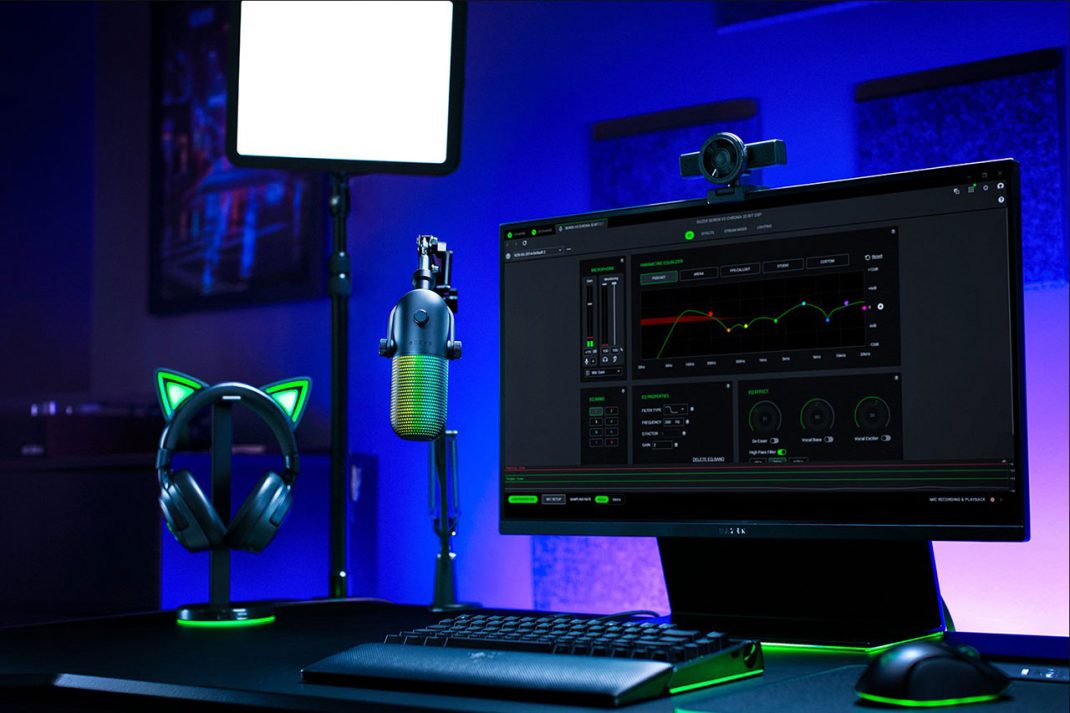
Razer aims to fix problems like this with the new Razer Seiren V3 Chroma 32-Bit DSP Microphone. Sitting at $119.99, this updated USB microphone promises studio-grade clipping prevention, smart background noise control, and stream-reactive lighting without demanding an audio engineering degree. I’ve spent the past few weeks putting it through its paces on stream, and here is how it actually holds up when the chaos starts.
Sleek Hardware and Lighting
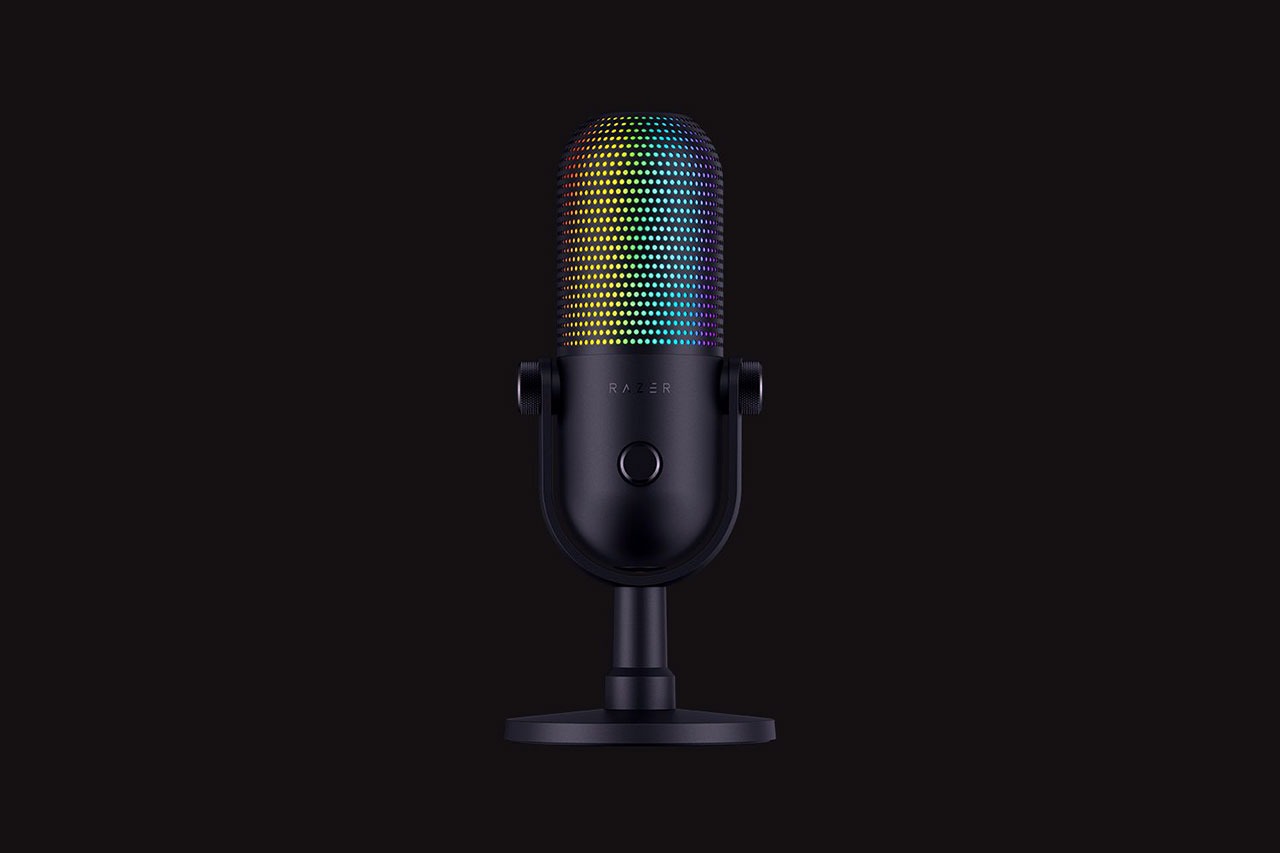
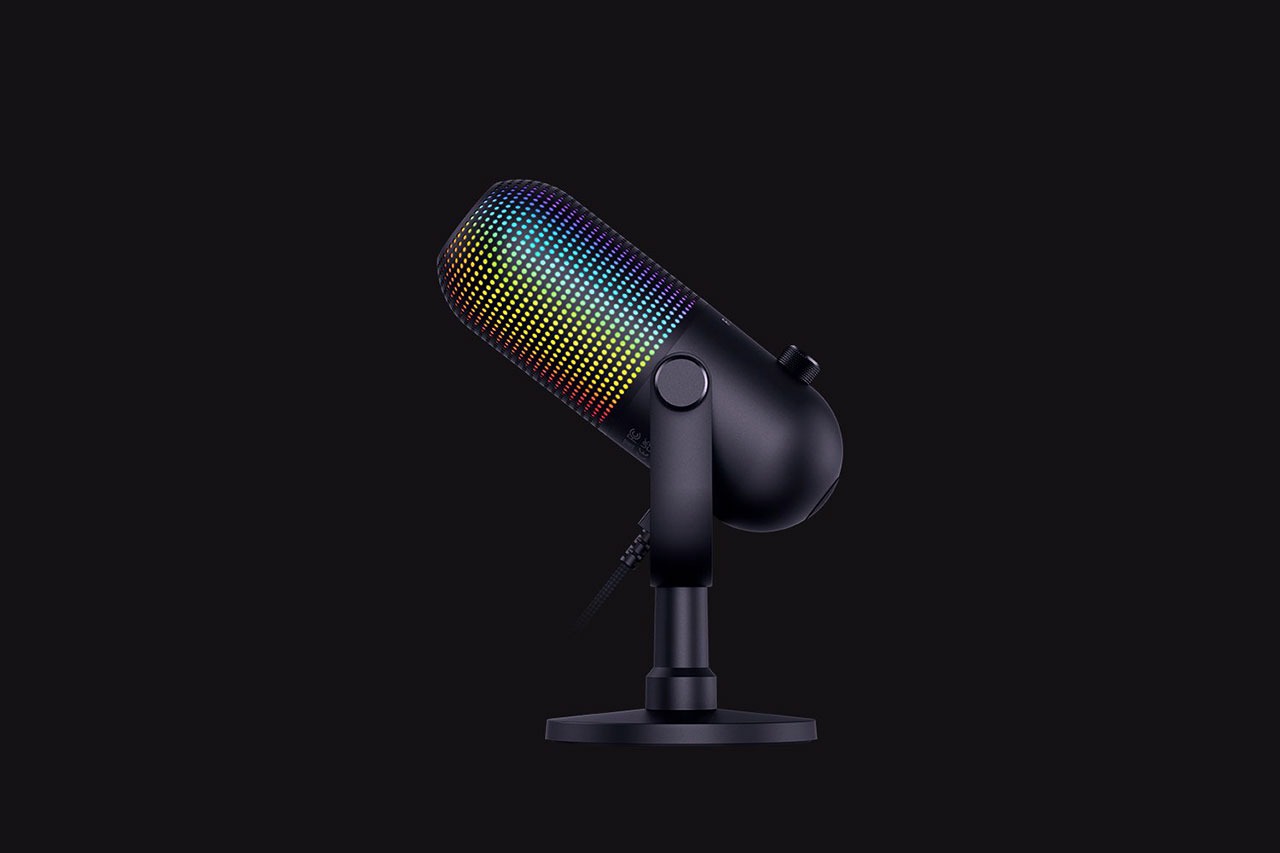
Out of the box, the Seiren V3 Chroma hits a sweet spot between sleek studio gear and playful gaming aesthetics. Razer offers it in three colorways, Classic Black, White, and Quartz pink, so matching your desk theme is effortless. The pill-shaped metal chassis feels surprisingly dense and well-constructed. It sits on a heavy metal desktop base fitted with a rubberized dampening ring and a built-in elastomeric shock mount to absorb desk thumps.
Now, let me be honest: I am usually skeptical of RGB lighting on audio equipment. On most gear, it feels like a gimmick designed to raise the price tag while blinding your camera feed. But Razer turned the lighting into something genuinely practical here.
Tucked beneath the grille is a 10-zone LED array. Sure, you can set it to cycle through custom rainbow colors in Synapse, but you can also set it to act as a real-time peak meter. When you speak, the mic glows green, shifts to amber as you get louder, and flashes bright red if you start pushing too close to distortion levels. It gives you immediate visual feedback without needing to keep an eye on audio mixer bars on a second monitor.
My absolute favorite design touch is the capacitive tap-to-mute sensor sitting on top of the dome. Traditional clicky mute buttons make a loud THUMP through your voice channel every single time you press them. With this sensor, a light touch instantly cuts your audio signal, turning the entire microphone body solid red. Double-tapping cycles through your lighting patterns, while holding it down lets you toggle the front knob between gain control and headphone monitoring. It feels snappy, fast, and completely silent.
What is 32-Bit DSP Tech?
What makes this specific revision special? The big news is right in the name: the 32-bit Digital Signal Processor (DSP) chip built directly into the hardware.
Why should a gamer care about audio bit depth? Let’s break it down in plain terms. Traditional USB microphones convert your voice using fixed 16-bit or 24-bit audio depth. Think of bit depth like the height of a doorway. If you speak normally, you walk right through. But if you shout suddenly, your voice hits the top frame of that doorway, smashing the digital audio wave into harsh, crackling noise known as clipping.
The 32-bit DSP in the Seiren V3 Chroma gives your audio stream massive internal headroom. When you burst out laughing or scream during a clutch play, the onboard processor analyzes the incoming wave and applies automatic gain limiting and dynamic compression right inside the mic. It squashes those dangerous volume spikes down to a safe level before the sound ever reaches your computer.
Because this processing happens on the mic’s internal hardware, it doesn’t drain your computer’s CPU resources or introduce buffer latency. You don’t need to load up heavy VST plugins or mess with third-party software chains. You plug it in, and the microphone automatically keeps your vocal levels smooth, balanced, and broadcast-ready.
Stream Testing
How does it sound in action? Vocal clarity from the 16 mm supercardioid condenser capsule is remarkably crisp. It captures warmth and detail in your voice without making you sound muddy or thin.
The supercardioid pickup pattern narrows the capture field, focusing directly on your mouth while rejecting sound coming from the sides and rear. During tests with an air conditioner running in the background and PC fans spinning at full tilt, the microphone filtered out ambient room hum effortlessly.
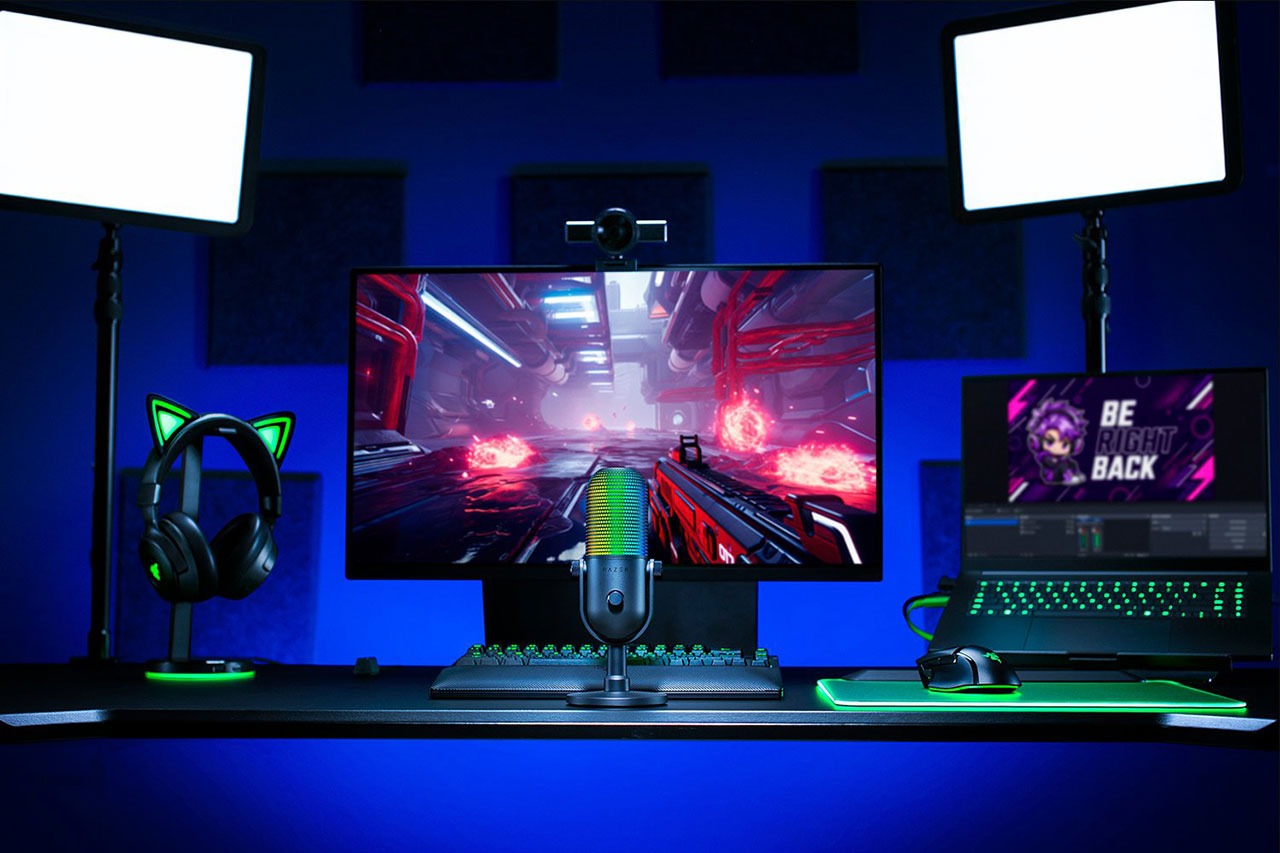
Here is the catch, though: it is still a condenser mic. Condensers are naturally sensitive creatures. If you leave the Seiren V3 sitting on its desktop stand right next to a mechanical keyboard with clicky switches, your stream will definitely hear your keystrokes. To get the best results, unscrew the base, attach the mic to an adjustable boom arm via its standard 5/8-inch thread mount, and position it roughly 6 to 8 inches away from your face. Getting it off the desk surface makes a world of difference.
On the software side, Windows users get access to Razer Synapse. The software includes a slick 30-second setup wizard. It listens to your room’s ambient noise, checks your distance, and automatically crafts a custom EQ profile for you. You can also jump in to manually adjust parametric EQ settings, toggle AI noise suppression, or configure sub-mix routing for separate stream and headphone audio.
However, there are a couple of small quirks worth noting. If you operate primarily on macOS, Razer Synapse isn’t available. The mic still works fine as a plug-and-play USB device, but you lose access to the advanced DSP controls, EQ profiles, and lighting customization. Also, make sure to plug the USB cable directly into a motherboard port on your desktop PC. Plugging it into an unpowered USB hub can sometimes cause faint static ticking artifacts.
How It Compares to the Competition
Priced around $120, the Seiren V3 Chroma 32-Bit DSP sits in a very crowded mid-tier market. Its direct competitors are the Elgato Wave:3 and the HyperX QuadCast S.
The Elgato Wave:3 offers fantastic software routing via Wave Link, but its physical design feels lightweight and plasticky by comparison. The HyperX QuadCast S looks flashier with its full-body light column, but its internal audio limiter isn’t quite as effective at managing loud outbursts.
The Razer Seiren V3 Chroma 32-Bit DSP strikes a great middle ground. It offers the real-time clipping protection of Razer’s flagship $250 Seiren V3 Pro, packaged into a mid-tier USB microphone with vibrant, customizable lighting – it’s fantastic!
The Final Verdict
Razer nailed the assignment here. The Razer Seiren V3 Chroma 32-Bit DSP takes the frustration out of streaming audio. It gives you clean, professional voice reproduction, reliable clipping prevention during high-energy gaming, and practical RGB lighting that enhances your setup.
If you stream on PC, love custom aesthetic setups, and want crystal-clear audio without dealing with mixers or plugin chains, this microphone is a slam dunk. It proves that you don’t need a bulky studio rig to sound like a seasoned broadcasting professional.