
Forensics: Crime Scene Detective Review
Have you ever watched a detective show and yelled at the television screen? Most of us have. We see the investigators walk past a obvious clue, and we think we could easily do a better job. But what happens when a video game actually takes that fantasy seriously? What happens when a game strips away the action-movie gunfights and forces you to follow the real, slow rules of science?
This is the exact premise of Forensics: Crime Scene Detective, a highly detailed simulation game published by Aerosoft and co-developed by the teams at Binary Impact and Alchemical Works. Released on July 13, 2026, for PC, PS5, and Xbox Series X|S, the game aims to show you the quiet, careful work that starts after the police sirens fade. The developers even worked with Germany’s State Criminal Police Office Rhineland-Palatinate (LKA RLP) to make sure every single procedure is scientifically correct.
But does scientific accuracy actually translate to a fun game? Honestly, it is a bit of a mixed bag. Let me explain how this simulator plays, where it succeeds, and where it might drive you absolutely crazy.
First, We Suffer Through the Academy
Before you can even look at a real crime scene, the game forces you to go to school. You know what? I appreciate a good tutorial, but this game takes onboarding to a painful extreme. You have to play through four mandatory, unskippable training levels before you can access the main cases.
These tutorials slowly walk you through taking crime scene photos, dusting for fingerprints, and safely collecting DNA. It feels less like a video game and more like sitting through a training seminar at a new job. If you are a seasoned gamer, you will probably feel like the game is holding your hand a little too tightly. Even worse, by the time the tutorials end, you have basically seen almost every tool and puzzle the game has. It is a very slow start, and it might turn off players who want to jump straight into the mystery.
The One-Handed Investigator
Once you finally get your hands on the real cases, you will find 14 distinct scenarios to solve. But do not expect to run around questioning suspects. Your job is purely scientific, and the game introduces some very strange rules that might test your patience.
The biggest culprit is the strict inventory system. In this game, you can only carry one single item at a time. Yes, you read that right. If you want to place yellow evidence markers around a blood stain, you have to pick up the markers from your kit, walk over to the stain, and place them. If you then want to take a photo of those markers, you cannot just pull a camera from your pocket or use a strap around your neck. You have to walk all the way back to your forensic case, drop the markers, pick up the camera, and walk back to the scene.
The developers claim this is a realistic choice to prevent scene contamination, but in practice, it just feels like tedious busywork. You spend half your time walking back and forth to your toolbox.
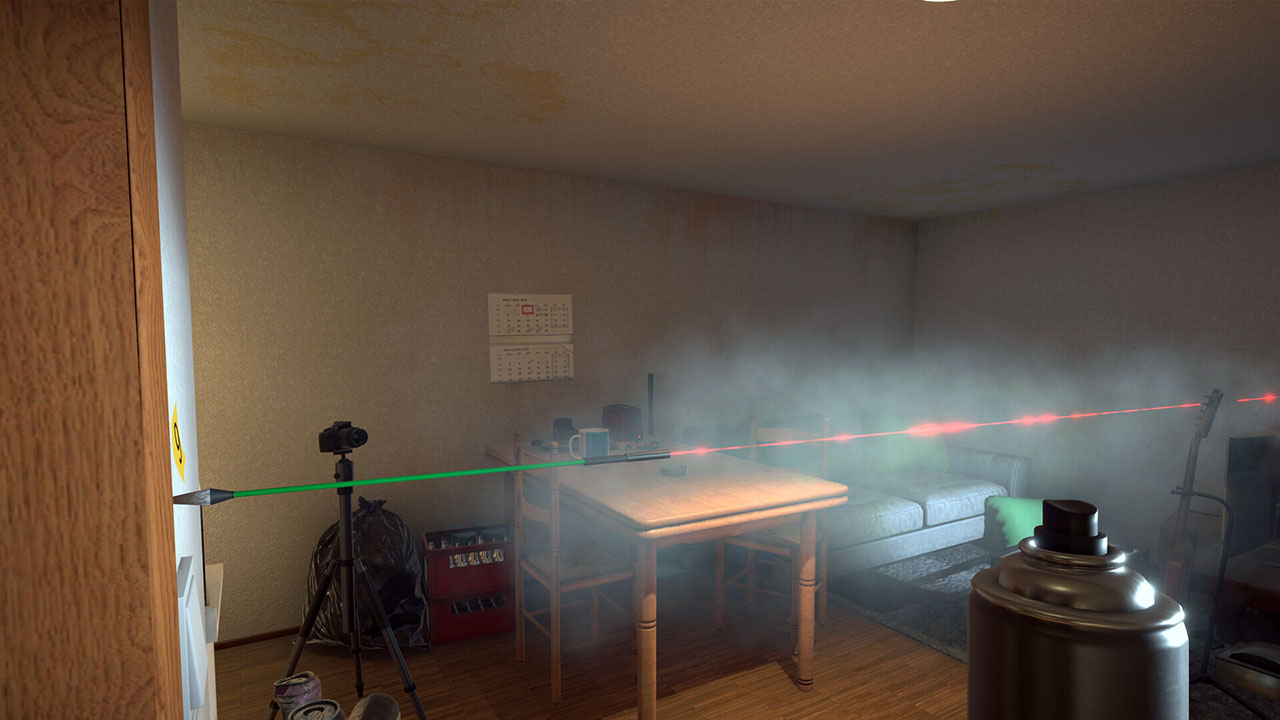
Furthermore, the game does not give you any help. There are no magical glowing highlights on clues, and there is no helpful chime to tell you that you found a key piece of evidence. If you miss a tiny hair or a faint smudge, you might leave the case completely unsolved. It forces you to slow down and really look at your surroundings, which is great for immersion, but it can quickly turn into a frustrating search for a single hidden pixel.
Where the Lab Work Shines
Now, I know I have been a bit critical so far, but here is the twist: once you pack up your evidence bags and head back to the laboratory, the game becomes genuinely fantastic.
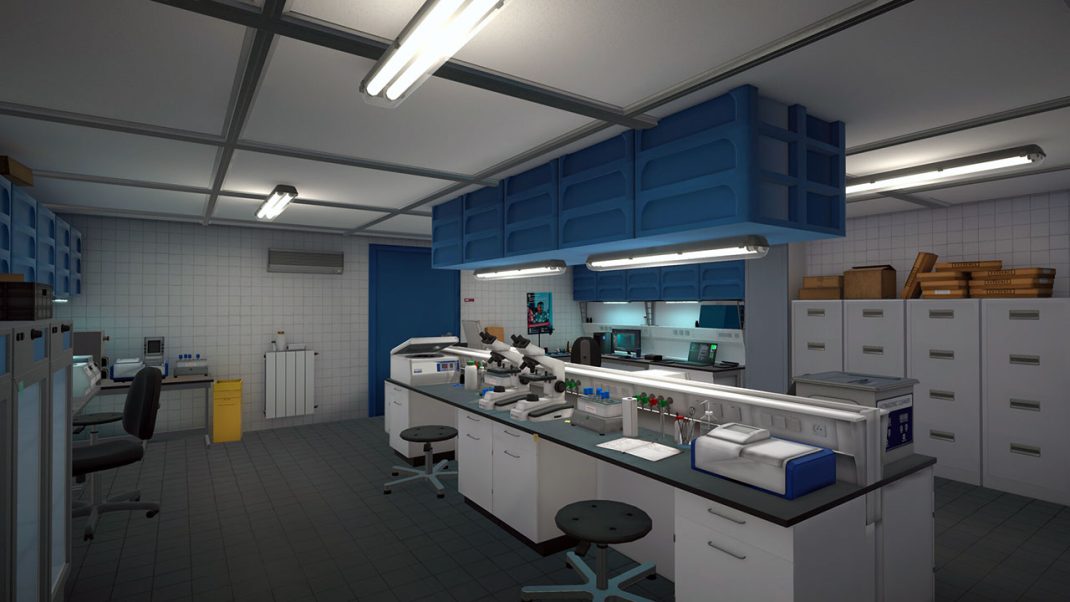
The lab is a beautiful, quiet space. There is no dramatic background music, just the soft hum of cooling fans and the click of your mouse. And this is where the game truly finds its rhythm.
Instead of clicking a button to instantly analyze a phone, you actually have to do the physical work. You pick up a heat gun and carefully heat up a broken smartphone to melt the adhesive. If you move too fast or let the chip get too hot, you will damage the physical memory and ruin your evidence. Once the chip is desoldered, you place it in a reader, decrypt the files on a computer, and read through recovered messages. It feels incredibly earned and satisfying.
The ballistics work is just as engaging. You place bullet fragments under a comparison microscope and manually rotate them until the tiny scratches from the gun barrel match up perfectly. You can even measure blood droplets on the floor, calculate the impact angles, and draw physical lines through the room to find the exact spot where a victim was standing. It turns dry police work into brilliant, tactile puzzles that respect your intelligence.
A Tale of Two Cases
To see how this loop plays out, let’s look at two very different missions.
In Case 1, “Cold Storage,” you are sent to a quiet server room to investigate a major cryptocurrency scam. This case focuses heavily on digital forensics. You have to locate encrypted drives, desolder chips, and recover deleted database keys. It feels like a high-tech heist in reverse, and finding the digital trail of the scammers is a blast.
On the other hand, Case 6, “Smash and Grab,” is a messy field investigation. You are looking at a smashed-up vehicle in a dark parking lot. Here, you have to dust the windshield and doors for prints, but the game expects you to find a second set of overlapping fingerprints with almost no direction. This is where the game can get frustrating. Without any hints, you might spend twenty minutes dusting every square inch of a car bumper, wishing for just a little bit of guidance.
Gaps in the Realism
For a game that prides itself on realism, there are also some very odd blindspots.
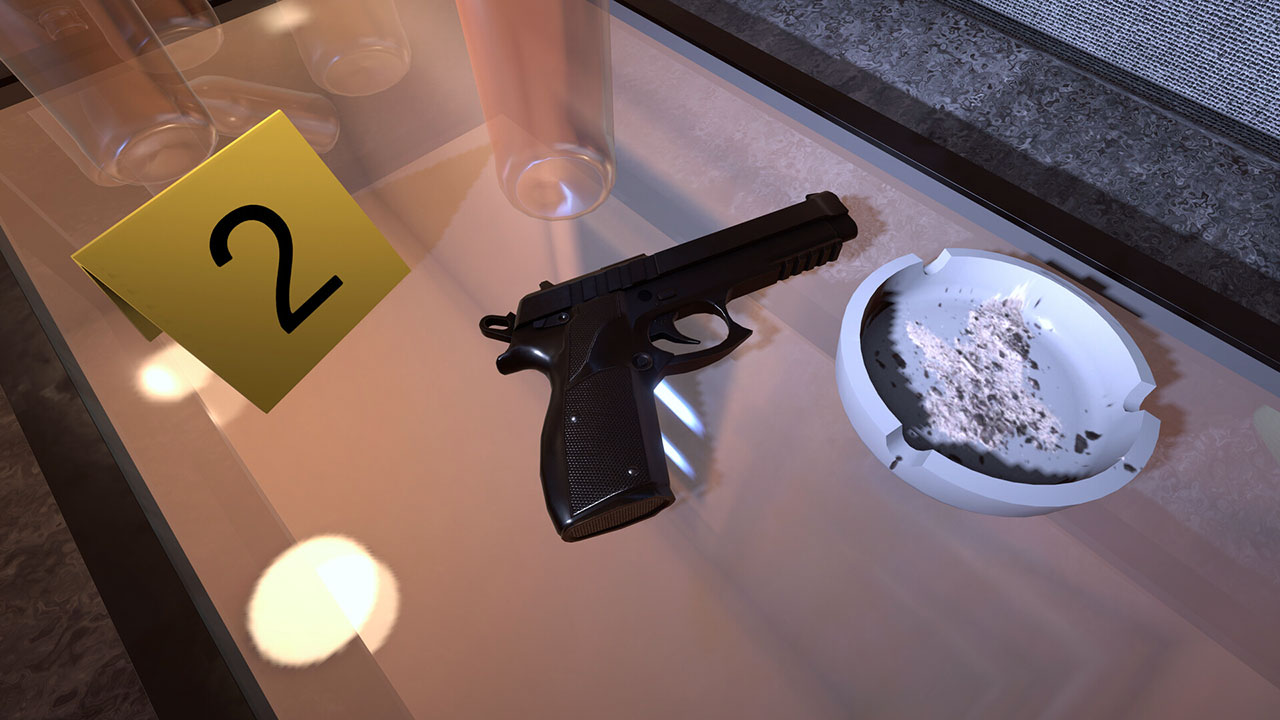
In a real investigation, a room is covered in millions of prints. But in Forensics: Crime Scene Detective, those lived-in spaces are curiously sterile. Fingerprints only exist on the exact objects tied to the puzzle, like a wine glass or a gun. Everything else is perfectly clean.
And then there is the lack of actual bodies. You are often investigating serious violent crimes, yet there are no victims to examine at the scene. You might find a pool of blood or a damaged car, but the physical human element is completely missing. It makes the environments feel a bit like empty stage sets rather than actual places where tragedy occurred.
There are also some funny shortcuts. While you have to manually walk back and forth to carry a camera, the blood samples you collect immediately teleport into your evidence kit. It is a strange compromise that highlights the constant struggle between making a realistic simulator and making a fun video game.
The Developers Are Listening
At launch, players faced some annoying bugs and clunky controls. For example, trying to match DNA markers with a controller felt incredibly frustrating. But the developers have been working incredibly hard to clean things up.
In the first week after launch, Binary Impact and Alchemical Works released multiple updates. They added fine-tuning keyboard controls (using WASD) to the DNA station, making the puzzles much easier to navigate. They also fixed visual bugs, cleaned up the email interface, and added fun “fluff” emails from your colleagues to make the department feel more authentic. They even made the projectile matching a bit more forgiving so you do not lose points over a single pixel mismatch. It is great to see a development team react so quickly to player feedback.
Is This Your Cup of Tea?
At the end of the day, Forensics: Crime Scene Detective is a highly niche game, and it knows it. On Steam, the game has a Mixed rating of $57\%$ positive reviews, while the PS5 version sits at around $3.12$ out of $5$ stars. That feels about right.
If you are looking for an action-packed mystery game like L.A. Noire or a procedurally generated detective game like Shadows of Doubt, you will probably find this game incredibly dry. You are not a detective chasing clues; you are a scientist processing facts.
But if you enjoy slow, methodical simulation games, there is something special here. The lab analysis loop is brilliant, and the sense of calm, quiet focus is deeply rewarding. Just be prepared to do a lot of walking back and forth to your toolbox.