
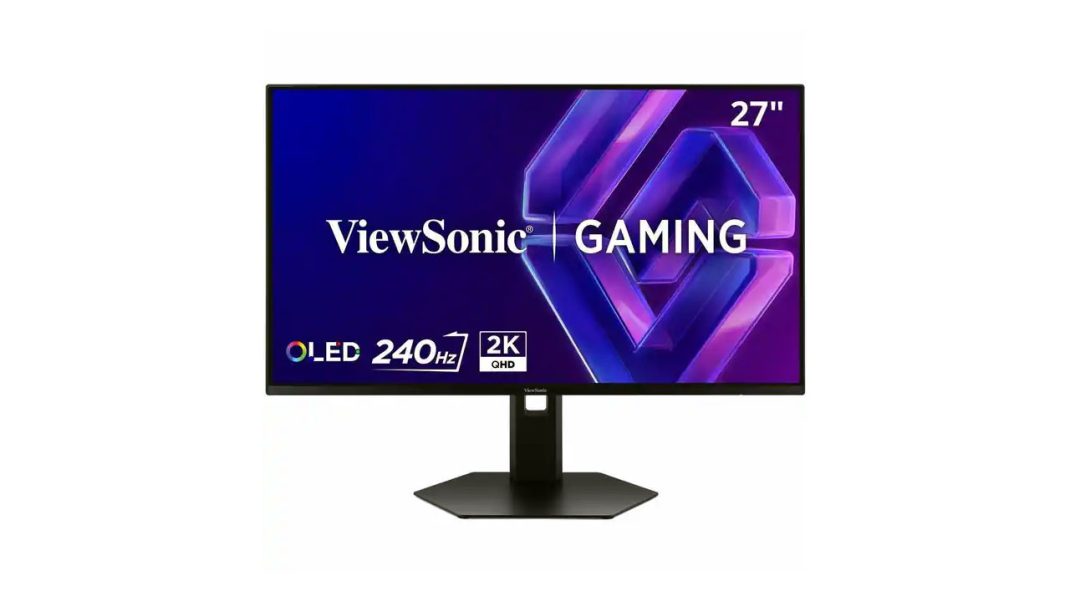
Let’s be real for a second. If you told me two years ago that I’d be sitting here in May 2026, writing about a high-spec QD-OLED monitor that costs less than a decent weekend trip to Vegas, I’d have laughed you out of the room. We spent years watching prices for these panels hover in the “I need to sell a kidney” range. But then the ViewSonic VX2738-2K-OLED showed up and essentially decided to flip the table on the entire industry.
Look, I’ve been through the monitor ringer. I’ve owned the TN panels that looked like they were covered in a layer of milk; I’ve dealt with the “IPS glow” that makes horror games look like they are set in a foggy gray swamp. Coming from that world to this? It is like finally putting on your glasses after squinting for a decade. Honestly, the shift to OLED is the biggest jump in tech since we moved from spinning hard drives to SSDs. You know what? It might even be bigger.
The “Wait, It’s How Much?” Moment
When I first heard the $450 to $500 price point, I figured ViewSonic must have cut some serious corners. Maybe the stand was made of cardboard? Maybe the panel was a factory second? But here’s the thing. They used the same panel technology found in monitors twice the price. We are talking about a 27-inch, 1440p Quantum Dot OLED display with a 240Hz refresh rate.
That is the sweet spot for almost everyone I know. 4K is nice if you have an RTX 5080 and a bottomless wallet, but for most of us, 1440p is where the actual gaming happens. It is sharp enough to look crisp but light enough that your GPU doesn’t start screaming for mercy the moment you turn on ray tracing. ViewSonic is basically giving us the “entry-level” OLED that actually feels like a flagship. It is a strategic move that makes the “Pantone tax” on some of those other big-name brands look a bit ridiculous.
Speed That Feels Like Cheating
If you play anything competitive, you know that refresh rate is only half the story. The real hero here is the response time. This monitor claims 0.03ms (GtG). In human terms? That is basically instant. Traditional LCDs have to wait for physical crystals to move around, which creates that annoying blur when you flick your mouse in an FPS. On this screen, the pixels just… change.
I hopped into a few rounds of Valorant to see if the hype was real. (And yes, I am still stuck in Gold, before you ask). The motion clarity is just disgusting. Even at 240Hz, an OLED feels smoother than a 360Hz or 500Hz IPS panel because there is zero ghosting. It feels like the image is painted directly onto your eyeballs. There is no trailing behind players as they peak a corner. It is just raw, immediate visual data.
They also included this weirdly specific “Esports Mode.” You can actually scale the screen down to a 24.5-inch view through the settings. I know it sounds like a digression, but if you have ever played in a tournament, you know that 24.5 inches is the standard. It is a nice touch for the hardcore crowd who want to practice exactly how they play on stage.
Dark Rooms and Inky Voids
Let’s talk about the “OLED look.” You’ve heard the phrase “inky blacks” a million times, but until you see it, it is hard to grasp. In a typical LCD, the backlight is always on, so “black” is really just “very dark gray.” On the VX2738-2K-OLED, when a pixel is black, it is literally turned off.
Playing a game like Cyberpunk 2077 or the newer horror titles is a different experience entirely. Night scenes actually look like night. Neon signs pop against the darkness with a level of contrast that makes the image look three-dimensional. Because it is a QD-OLED (Quantum Dot), the colors are way more vibrant than the older WOLED panels. The reds are redder; the greens are greener. It covers 98% of the DCI-P3 color space, which is great if you do some video editing on the side, but for gaming, it just means the world looks a lot more alive.
Here Is the Catch (Because There Is Always One)
You know how people say there is no such thing as a free lunch? Well, there is no such thing as a perfect $450 OLED. We have to talk about the brightness. In SDR mode (standard desktop use), this monitor tops out around 200 nits.
Honestly? That is not very bright. If you have a desk right next to a giant window in the middle of the afternoon, you are going to be fighting some reflections. The anti-glare coating helps, but this isn’t a lighthouse. It is meant for a room where you can at least pull the curtains. In HDR, it can spike much higher for those tiny bright highlights, but for general Windows use, it can feel a bit dim compared to a punchy IPS display.
Then there is the text clarity. This is a 1440p OLED, and because of the way the pixels are shaped (the triangular layout), you might notice some slight green or purple fringing on the edges of text if you look closely. If you spend 10 hours a day reading spreadsheets, this might bug you. For gaming and watching movies? You will never notice it. But I have to be honest; it is there if you go looking for it.
The Build Quality: Function over Fashion
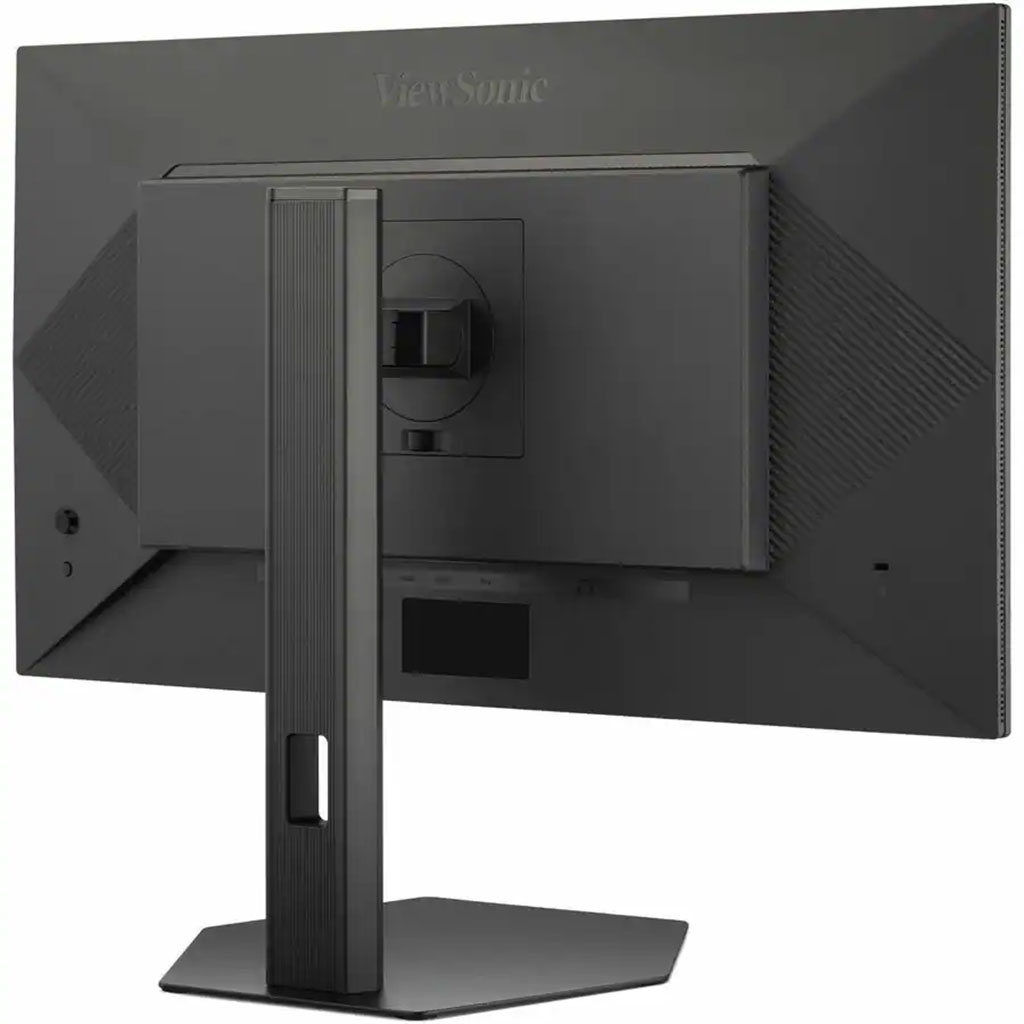
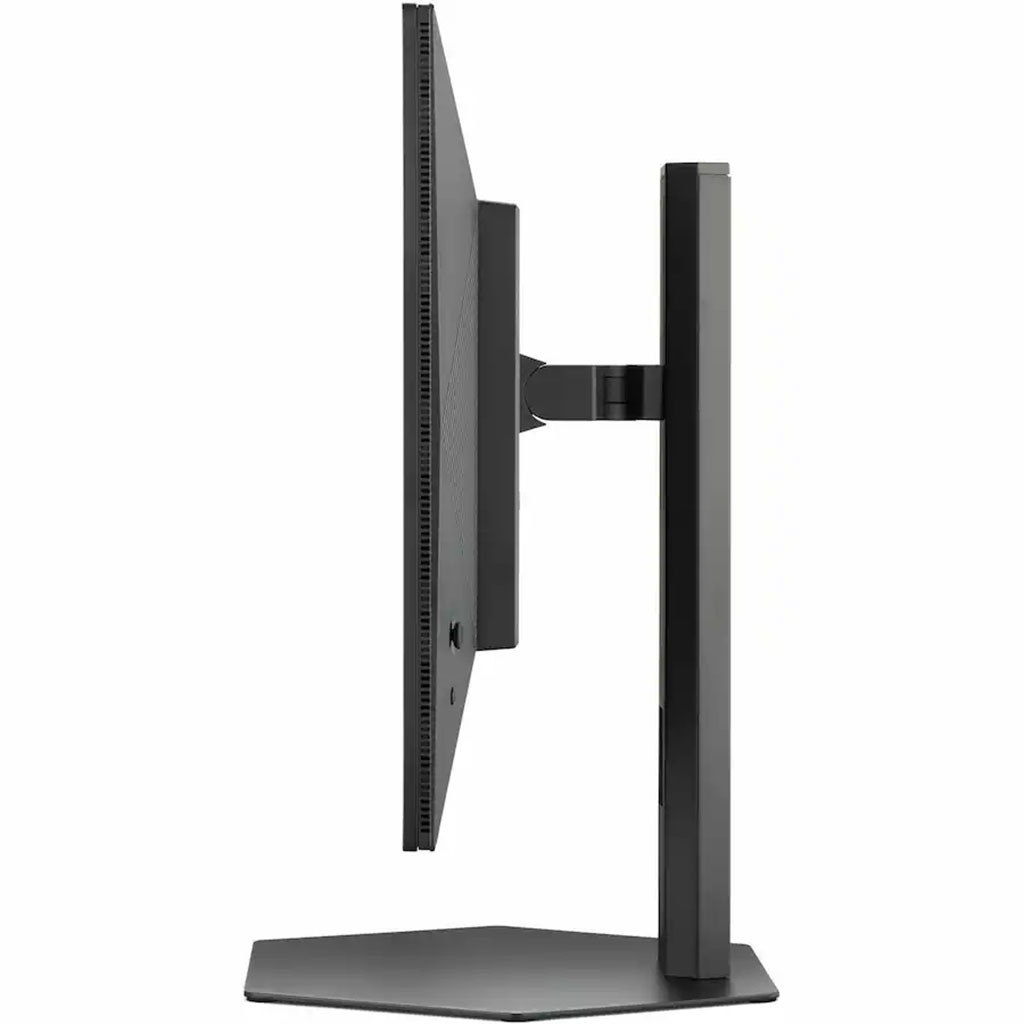
ViewSonic clearly spent all the money on the panel and the internal tech. The housing is… plastic. It is fine; it doesn’t creak or feel like it’s going to fall apart, but it doesn’t have that “premium” metal feel of an Alienware or an ASUS ROG display. The stand is actually surprisingly good, though. You get height, tilt, swivel, and even pivot adjustments. It is sturdy enough that the screen doesn’t wobble when you are typing like a madman during a heated Discord debate.
The connectivity is solid too. You get two HDMI 2.1 ports and two DisplayPort inputs. Some early rumors mentioned DP 1.4, but most units are showing up with 2.1 support, which is great for future-proofing when the next wave of GPUs hits the market later this year. Plus, if you are a console gamer, those HDMI 2.1 ports mean you can actually get 120Hz at 1440p on your PS5 or Xbox Series X without jumping through hoops.
Living with the “Burn-In” Ghost
I can already hear the comments. “But what about burn-in?” Look, it’s 2026. The tech has moved on. ViewSonic has a whole suite of “OLED Care” features. It has PXL Orbit, which subtly moves the image by a few pixels so static elements don’t get stuck. It has static screen detection that dims the monitor if you walk away to grab a coffee.
Is the risk zero? No. If you leave the CNN news ticker on for 24 hours a day at max brightness, you are going to have a bad time. But for a normal gamer who plays different titles and uses dark mode in Windows? You are probably fine for the next five to seven years. ViewSonic even throws in a three-year warranty that covers the backlight, which gives a bit of peace of mind. Just don’t be that person who never lets the monitor run its cleaning cycles.
Is It Worth It?
At the end of the day, you have to ask yourself what matters more: a fancy brand logo and a metal stand, or the actual image on the screen. The ViewSonic VX2738-2K-OLED is a “performance-first” machine. It takes the best display technology currently available and strips away all the unnecessary fluff to make it affordable.
It is the monitor that finally brings OLED to the rest of us. It is not perfect (the SDR brightness is a bummer), but the moment you load into a match and see how fluid and deep everything looks, those complaints tend to vanish. If you are still rocking an old 144Hz IPS panel, this is the upgrade you have been waiting for. Honestly, it is a night and day difference.
Just make sure you have some decent curtains. You’re going to want to see those deep blacks in all their glory.