Archive - 2011

Total War: Shogun 2 Review (PC)

While some strategy players love a good game set in the future with ever evolving technology and science fiction effects. There is a certain sect of strategy players though who truly prefer to look at the past and try to see how they would have done at the great already written moments of mankind. Those times when empires rose and fell, those crucial moments where fate, luck and a strong mind and will made the difference resulting in what we now call history. The Total War game series has always been a shining example of games aimed toward this purpose, where we get a chance to make history our own and test our abilities with not weapons of the future but the technology of the time, the philosophy of war as seen by those of a forgotten and possibly misunderstood period. In this case they chose the Sengoku period of feudal Japan when warring clans fought for their piece of land and power from the fading glory of the shogunate. Land and the development of it is a tight commodity and every inch of province you can control may decide the difference between becoming the new leader of Japan or becoming a member of an extinct clan.


Atmosphere:

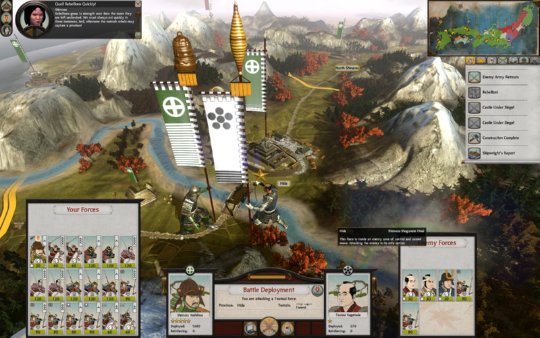
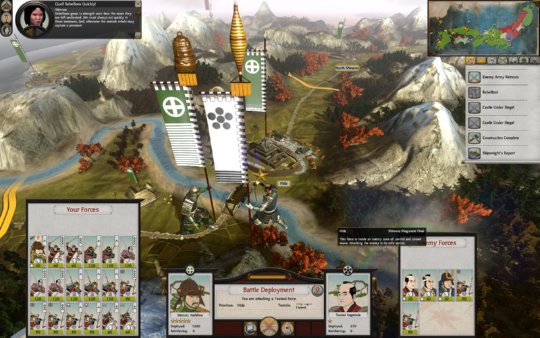
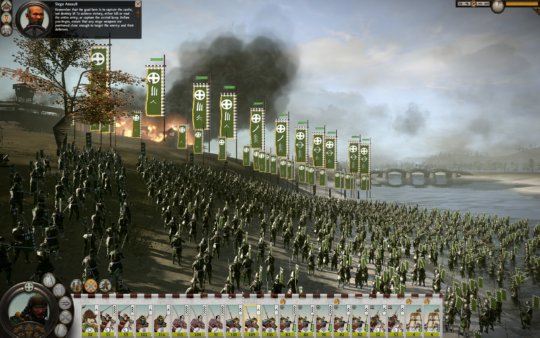
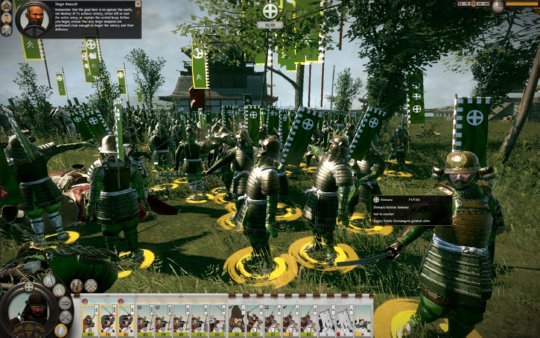
The atmosphere is remarkably deep for a strategy game. There is usually a certain detachment associated with playing strategy. In first person shooters you see the arrows or tracer rounds flying right out you whereas in strategy you order around little figures and sit back and watch the results. That doesn’t mean the games don’t have atmosphere though. A good strategy will create an atmosphere of contemplation during turns and a tension or at least increased tempo during the battle sections. Shogun 2 does an excellent job of this by having beautiful maps that look like more like historical documents than a video game with a comforting wood wind and string musical accompaniment which is followed by the sound of weapons clashing and drums and gongs beating to usher in combat. The maps can be replaced with remarkably close views of the figures where you can tell the detail in their masks or the type of footwear they use as you usher them into troop movements and in some cases certain death to draw enemies into a trap. The arrows descend like a cloud of locusts upon your troops and they scream and fall or scatter in hopes of survival. So the game allows for a atmosphere of detachment on taxation, construction and troop recruitment movements and then makes it seem very intimate during the battle scenes. This game does an amazing job of creating the atmosphere of the generals and the troops alike.


Game Play:

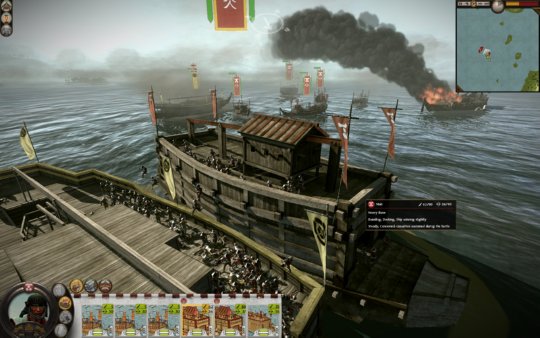
The game is designed as a turn based strategy in which you control economic, political and military power of your expanding clan influence through techniques and philosophy based off Sun Tzu’s The Art of War. You alternate between map movements and adjustments of taxes, construction expansion and other forms of development to actual troop movements on the battlefield that can be adjusted to be a bird’s eye wide view down to watch a single figure in a column traverse the field. Poor political management of a territory can result in a rebellion in which the army finds themselves outnumbered by attacking rebels. There are multiple game campaign length choices as well as multiple choices of which clan to play, each has a specialty that gives them a different advantage and requires a different play strategy. During the standard campaigns you witness the generic movements of the other clans as they work toward their own domination of the lands through their turns. There is also an option to play true historical campaigns in which you are given the resources, factions and terrain of the actual battle and given the opportunity to change the battle’s outcome. Multiplayer has a few types of ways to battle, co-op, opponent campaign battle or avatar battle, in which you are on a map, try to expand to a new territory and the online system will find a random player who is also trying to expand a territory and the two of you battle, whoever wins gets the spot on their map and the process is repeated with each attempt at expansion. There is also a local server option if you just want to challenge your friends (or co-workers) to clan combat. Playing others may be welcome sometimes because the AI can be a very challenging and hard to glitch opponent.
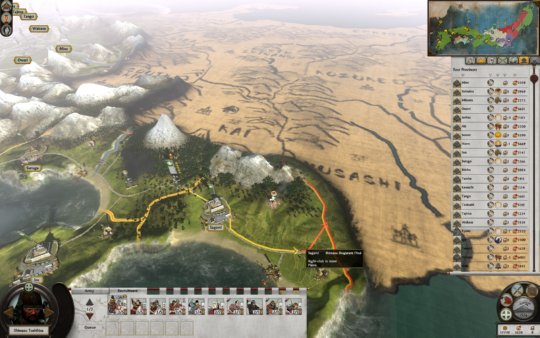
One of the greatest, and most daunting for the casual gamer, parts of the game play is the depth of development you work at in your clan. If you concentrate too much on building your armies, food supplies may suffer or your towns may build beyond the control of your standing forces. There are a lot of details to keep track of that once you get used to are very manageable, but you need to make sure you manage them every turn and save often in case somehow you neglect something and suddenly you find yourself fighting the rebels in your borders as well as the invading armies, and all because you didn’t upgrade your irrigation system or left taxes a bit too high.


Graphics/Audio:

The graphics are beautifully done, during the routine management screens you look at maps that could be print screened and hung on the wall as art. The graphics are not neglected in the close up sections of the troop movements. It would have been very easy to make all the troops of one type to look alike, but they vary in the way the dress, the way their faces look – some even have traditional war masks while others don’t even have shoes on their dirty feet. They shift from foot to foot, look at each other and scream and shout as the charge or are being charged. The music is amazingly clean digital sound and the clash of weapons or sounds of destruction are so realistic that sometimes they make a person flinch, especially if you had the sound up to immerse yourself in the music. The sound is clean enough to understand the voice actors even through their thickly accented voices. Graphically every aspect of the game is amazing and the sound draws you in.


Playtime/Cost:

New the game will run about $50 which when you consider the game has four game difficulty levels, multiple game lengths, multiple clans to play, and multiple modes to play including online PLUS this game has very in depth play we are talking about a game that in theory someone could play over and over and over and never get tired of. A person is actually more likely to have historical overload before playing every possible aspect of the game completely through.

Last Call:

I wouldn’t be surprised if this winds up being a strong contender for many ‘Strategy Game of the Year’ awards. Its mixture of leadership, map and in battle game play combine to make an amazingly well rounded game that appeals to anyone with a desire to test their strategic abilities or better understand the warfare of a much different time and culture. Just remember this isn’t the ‘old board game’ we used to play, this is akin to the History Channel coming to life.

*DISCLOSURE: A copy of this game was sent to us for the purpose of this review.

Deus Ex: Human Revolution Three Ways to Play Trailer

This latest trailer for Square Enix and Eidos Montreal’s upcoming Deus Ex: Human Revolution shows off the various ways a player can handle a situation. In it the protagonist, Adam Jensen, is tasked with breaking into a manufacturing company. Human Revolution is due out on August 23rd for the Xbox 360, PlayStation 3, and Windows PC platforms.

Deus Ex: Human Revolution Multiplayer Gameplay Video

Square Enix and Eidos Montreal have released a really cool, eight minute long multiplayer gameplay video for their upcoming Deus Ex: Human Revolution. The game is due out in August of this year for the PlayStation 3, Xbox 360, and Windows PC platforms. Human Revolution puts players into the cybernetically-enhanced boots of a security agent trying to uncover the truth behind a terrorist attack.

DCS: A-10C Warthog Review – PC

DCS: A-10C Warthog represents the revival of a genre in, for the most part, a kind of sleeper status of late – the flight simulator. With the downfall of companies like Microprose, Jane’s Combat Simulations, and Spectrum Holobyte the field of combat flight simulation has been somewhat bereft of winners – often falling to the hands of lesser-skilled, indie developers. Coupled with the fact that Microsoft ditched the ACES team responsible for their line of Microsoft Flight Simulator line of civil aviation simulation and things were looking pretty bleak for us armchair pilots. Enter: Eagle Dynamics, who turned many heads with their survey combat flight simulation, Lock-On: Modern Air Combat, back in 2003. Unfortunately for fans of the series, publisher support waned, leaving many bugs unfixed until the company teamed up with The Fighter Collection in order to proceed with their own line of flight simulators.

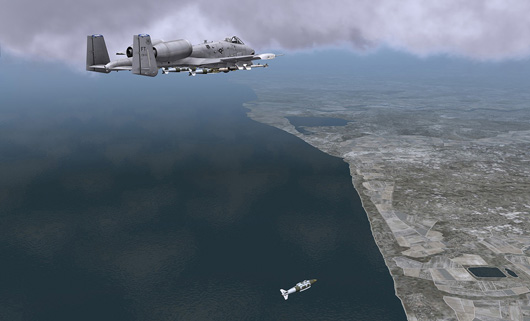
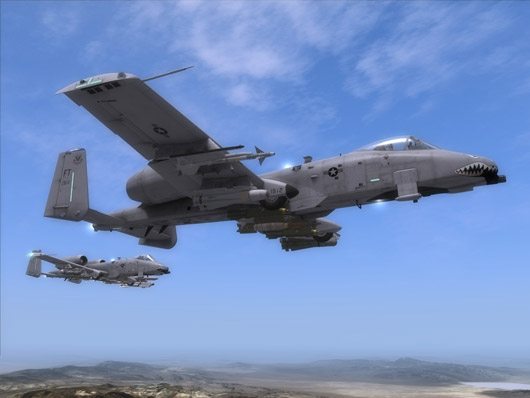
The latest in this line is the new DCS: A-10C Warthog, which simulates the US Air Force’s premiere close-air support aircraft, the A-10C Thunderbolt II, or ‘Warthog’. The game is laid out in similar fashion to their past products: there are training missions, single missions, campaigns, mission editor, and multiplayer options. With Warthog, Eagle Dynamics has provided players with the sorely-wanted option of creating dynamic, on-the-fly missions based on a given set of parameters. This allows players who are ‘iffy’ on their mission-creating skills to come up with new content should they get through all the campaigns and user-made missions to be found on the various Warthog community groups out there. Speaking of campaigns, there are several to choose from, each with their own objectives, end goals, and environmental conditions – all will challenge your skills on every level possible.

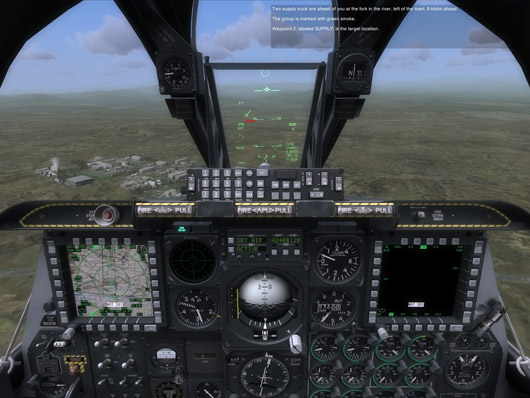
Missions can start both on the runway, engines primed and ready for takeoff, or on the ramp where you must go through a detailed pre-flight and start-up procedure before you can begin taxiing. Of course, all this realism comes at the price of a steep learning curve. Smartly on the part of Eagle Dynamics, there are several difficulty scaling options for the less sim-oriented. If you want the challenge, however, just about every switch, knob, and button can be operated via the virtual cockpit view and your mouse cursor. The amount of controls present is refreshing in an age of console-based, arcade flight games with no basis in reality whatsoever. In fact, after many hours with the simulator in full realism mode, I believe that if given an A-10C Warthog on the ramp in the same start-up conditions, I would have a fairly good idea of the proper order of switch operations to get it rolling – definitely a much better idea than Joe Schmo off the street.

With all of these controls, it is quite overwhelming for most people when they first get in the game’s virtual cockpit. Thankfully, there is a series of interactive training missions designed to get you flying and used to the various systems found on-board the aircraft. Players get a nice introduction to the aircraft in the first training mission, and then begin to progress into pre-flight ops and basic aircraft maneuvers. Then, the real fun begins as you have several training missions designed to teach the targeting and weapons systems.

The mission editor is a full-featured tool that will allow players to script out their own adventures in both single and multiplayer modes. That being laid out, there is still one glaring issue when creating a multiplayer mission: you cannot have two human players in the same flight. Apparently, this is part of the base coding of the game and can’t be altered. However, a tip for you mission-makers out there would be to create two flights, one for the player and one for the multiplayer client, and just mirror all the way-points, etc. From there you would just need to make sure your flight lead was responsible enough to pass on all relevant information to the rest of the flight. Taking this a step further is the campaign creator, which will string together sequences of your mission editor-created missions in order to create a full campaign! For the budding actors out there, you can even add your own audio files to missions!

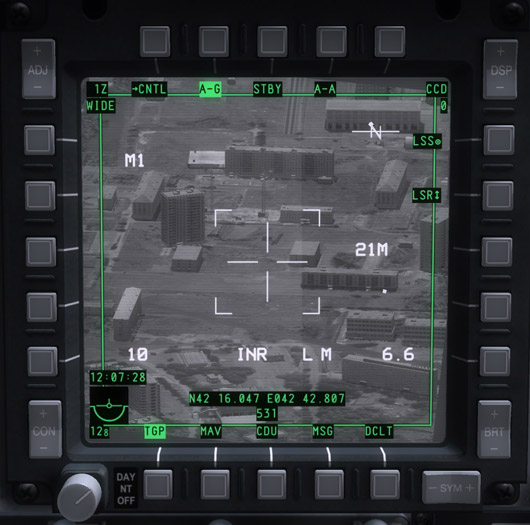
The simulation itself simply has too many aspects of brilliance to expound on. I could rattle on about the avionics, communications, and flight dynamics of Warthog all day but, in the end, I think it is better just to say that I have never seen such a realistic simulation available in the civilian market. Special kudos must be sent to Eagle Dynamics for their bang-up job simulating the LITENING targeting pod as well as the various functions of the two multi-function displays.

Peripherals will be key in effectively playing Warthog. Those of you with simple two-button joysticks will definitely need to upgrade to at least a setup with a throttle control – preferably a HOTAS (Hands On Throttle And Stick) setup. These are flight stick and throttle units which, in theory, move all relevant controls to the peripherals so you don’t have to switch back to the keyboard. There is no HOTAS setup that does this in full, so if you don’t have additional peripherals for USB programming, the keyboard will be your friend for a while to come. Gamers looking for a good entry-level HOTAS should take a gander at Thrustmaster’s Hotas X. It is inexpensive and will allow you some assignments for easier operation.

If you have a gaggle of cash lying about, you may want to look into the Thrustmaster HOTAS Warthog. The peripheral has direct plug and play compatibility with Warthog and is an exact replica of the stick and throttle found in the actual aircraft. Another good peripheral that won’t break your budget is Thrustmaster’s set of Cougar MFDs which will allow you to control your on-screen MFDs with a physical re-creation. I would also recommend NaturalPoint’s TrackIR head-tracking system, which will allow you to look about the cockpit without the use of the flight stick hat button.

One of the more awesome features of DCS: A-10C Warthog is the ability to coordinate strikes and CAS operations with JTACs (Joint Terminal Attack Controllers). These JTACs are troops or other scout platforms operating in the theater of battle who call out incoming enemy units for the player to take out, sometimes even lasing the target for them to use precision guided munitions. JTACs will even perform BDAs (Battle Damage Assessments) so you can measure your effectiveness on target.

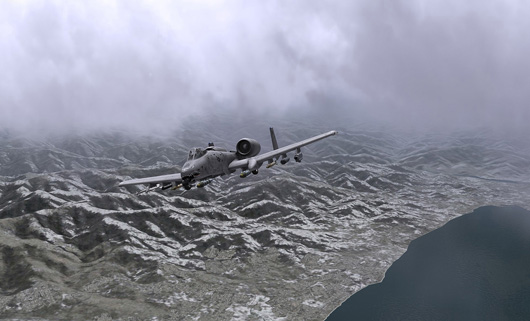
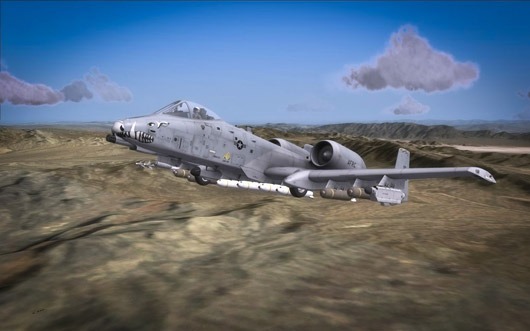
Visually, DCS A-10C Warthog features some breathtaking graphics both in the air and on the ground that can stress even the beefiest GPUs when fully maxed-out. Not to exclude anyone, there are a host of scaling options for graphics so that your PC can keep up no matter what you are running under the hood. The audio design of the game is also well-done, with all the appropriate warning sounds and indicator cues present. A nice touch that just gets my geeky juices flowing is the point during start-up that you close the canopy. There is this point where the audio transitions to primarily your in-cockpit sound, muffling out the outside world slightly. It provides a nice moment of immersion that I trust other players will experience as well.

In closing this review, I felt it a good idea to bounce some questions off of Matt Wagner, producer of the DCS series – especially to see if he would spill the proverbial beans on what platform they plan on simulating next!

Q) Why cant you assign a multiplayer client to be in the same flight as the primary player in the game’s mission editor?

A) MP is based on SP code in which player (client) much always be flight lead.

Q) Are you planning to move onto a completely new airframe after this or will you be creating DLC packs for Black Shark and/or A-10C?

A) Over the next year we have both DLC and a new aircraft development planned.

3) Any hints on what aircraft you guys are planning to simulate next?

A) The next DCS aircraft will be a fixed wing US fighter.

Q) When do you foresee Black Shark/A-10C compatibility in missions, etc, being implemented?

A) We plan to provide a compatibility for Black Shark that will allow it to fly online with A-10C sometime later this year. First we need to polish up A-10C a bit more.

Q) In your opinion, why should gamers out there who have never touched a flight simulator give DCS A-10C a chance?

A) The A-10C is a rather easy aircraft to fly and has lots of cool weapons like the 30mm cannon, guided missiles, GPS bombs, etc. We also included interactive training missions, improved graphics over Black Shark, expanded map area, many new AI units, and the ability to fly the most detailed and accurate modern jet sim EVER done for the PC. For those that don’t want to go full-hardcore, there are many options to scale back the difficulty and detail. For those that fly the A-10 in shooter games and would like to see how the REAL aircraft operates, this their chance.

I would like to thank Matt Wagner for taking the time to answer my questions as well as helping to produce such a wonderful combat aircraft simulation.

Overall, whether you are looking to take your first steps into combat flight simulation or are a battle-hardened desk jock, you can’t go wrong with DCS: A-10C Warthog. The game features rock-solid simulation that will allow you to get the feel for what it is like to sit in the cockpit of the venerable A-10C while not having to salute or enlist in the Air Force to do so – although, you may wish to thank your wife when she gives you the okay to begin construction of your home cockpit!

Tactics Ogre: Let Us Cling Together (PSP UMD)

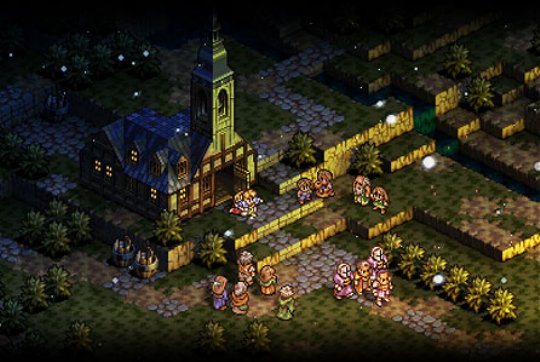
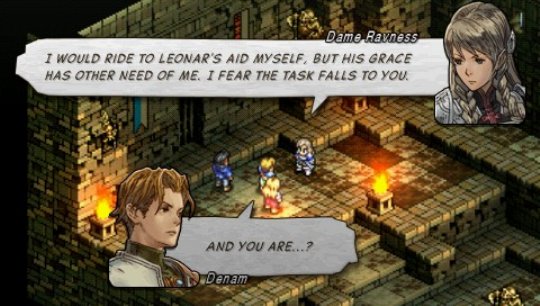
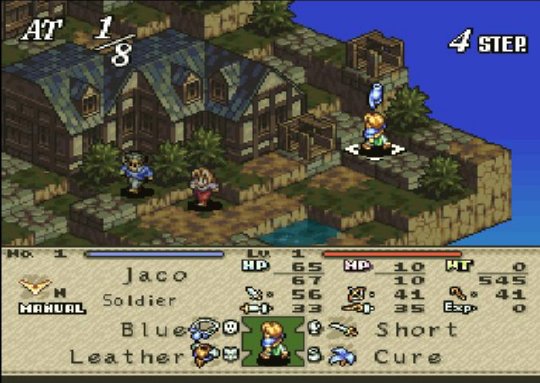
The original creator, director, character designer and composer of the series came together to re-imagine the series in a 3D updated graphics environment. The results are as good as a person could hope, the game pays some homage visually to it’s roots but at the same time is designed nicely into today’s graphics. The music is terrific and combines nicely to make an atmosphere that has a touch of nostalgia without any of the old school game’s graphics and play issues.

Gameplay:
Gameplay is excellent and while based upon the old system has been nicely updated to allow for dozens of characters, lots of decisions that branch the story in new directions and most of all, multiple possible endings. Each character you add to your team brings their own strengths weaknesses and learn-able skills and different characters can be chosen depending upon the battle. Different units have different ranges of attack and movement with varying weapons, the end result being that this game can be played using different strategies, different characters, multiple times with entirely different results and endings. When you level a character you don’t just level the character, you level every character of that class. Adding a new member to your party with the same class will come in at the advanced level and have opportunities for skill selection based on the level. So you don’t have to worry about leveling two wizards at the same time if the battle doesn’t call for two of them. If you decide to add another healer to the group you don’t have to level it from the start, they come in at the level you have reached for them.

For a game based on a portable game unit this is a massive amount of game, bordering on amazing. There are only a few shortfalls to mention, and in comparison they are minor and easily overlooked. Sometimes when aiming at an enemy for an attack the percentage chance for a strike will say 100% and you will miss. Also sometimes you will aim at a target and when you fire there will be a line of sight issue that causes you to miss regardless of your hit percentage. The last issue is a minor AI one where your AI may walk right past a bag of treasure instead of picking it up requiring you to sent one of your manual controlled character to pick it up. At this point you may be asking yourself wait… AI and manual? As part of the game’s choices you can choose for as many of your units to be controlled by AI as you want or control them manually. Add this to all the playing options and not only are the little issues eclipsed, but it really brings up the point again: this game is on a UMD.

Graphics/Audio:
Graphics look slightly low tech in places to make it nostalgic but are nice quality in most parts. Though sounding a lot like the music and sound effects of the old days, the audio is crisp, clear and nicely put together.


Playtime/Cost:

$39 dollars is what it costs new, cheaper if you pick up a used copy. Considering this has unlimited re-playability with multiple endings it is pretty darn hard to calculate how much playtime but it is easy to say it is worth the cost.

Last Call:
Should they have left a good series alone? Resoundingly no! This game is great! From a critical playing point of view which I have to approach it this game has few flaws, massive replay potential and a terrific game play system. Part of me wishes it was available on one of the larger platforms but to have a game with this much punch combined with old school homage on a portable platform is a terrific treat! I also think this format was passed on before it really had it’s time, that it is a shame that the UMD, which was able to provide a platform for such an amazing game, is slowly fading away.

*DISCLOSURE: A copy of this game was sent to us for the purpose of this review.
DC Universe Online Villain Safehouses Trailer

Sony Online Entertainment has released a new trailer for their upcoming MMO, DC Universe Online, showing off some of the villain safehouses that the game has to offer players who move towards the ‘dark side’ of the law.

Mortal Kombat Raiden Gameplay Trailer

WB Games and Netherrealm have released a new gameplay trailer for their upcoming Mortal Kombat, showing Raiden in action. There is lots of electricity shooting, bone-breaking goodness to behold, so get your viewing on below!

Homefront Review – PC

Homefront was a title I had been looking forward to ever since John Milius was attached as a writer. Milius, who for those of you that don’t know, co-wrote and directed the 1984 action flick, Red Dawn, in which a group of young people-turned freedom fighters resist an occupation of the United States by Soviet aggressors. Given that credit alone, Homefront should have been amazing. So, I redeemed the PC review code sent by the always friendly folks at THQ press relations and began my play.

First thing I noticed was that Homefront did not support the ultra widescreen resolution of 5760×1080. Most modern shooters have no issue with this resolution, even if the menu screens get a bit wonky but Homefront was having none of it. So, I selected 1920×1080 and set the visuals to their maximums. This is not a showstopping issue, by any means, but was bothersome at the time. Anyhow, time to join the resistance!

To sum up the very intricate tale of the United States’ decline and North Korea’s expansion, it can be simply said that due to a hodgepodge of catastrophes, the US was left severely weakened. Having to turn its back on the rest of the world, North Korea slowly began a series of expansive movements which greatly strengthened their position on the world stage. In a bold maneuver, the now united Korea launched a massive EMP attack on the crumbling United States which decimated the power grid on a nation-wide scale. As the country fell into anarchy, US forces attempted to keep order – that’s when the Koreans launched a full-scale invasion.

At the start of the game, the United States is largely occupied by Korean forces and the player is being sent to a prison camp to mine for ore. The resistance movement liberates you because of your history as a trained pilot and your adventure begins.

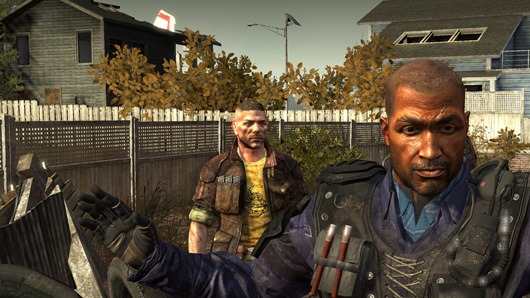
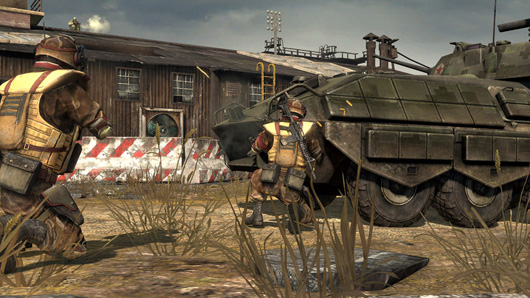
Visually, Homefront is a very attractive game, utilizing a modded Unreal Engine 3 for its visuals. It should be noted that the PC version of Homefront was not developed primarily by Kaos Studio but was outsourced to Canadian developer, Digital Extremes. Despite a strange ‘shimmer bug’ where non-interactive objects periodically flash, they did a great job with the game’s graphical elements. The PC version supports DirectX 11 and first-person cockpits.

The game audio is excellent, with the sounds of a large-scale conflict always looming around you. In some sequences, when you are in the wreckage of a city, the sounds are more intimate – maybe the grumbling of Korean forces as they harass civilians or even chat amongst themselves about the current situation or their ‘great leader’. Voice over work is very good, with a believable cast of actors providing some visceral performances.

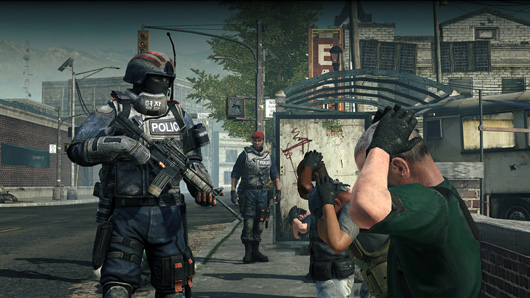
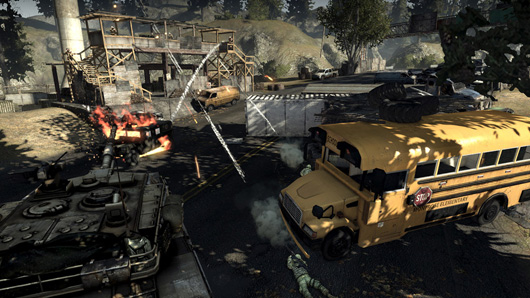
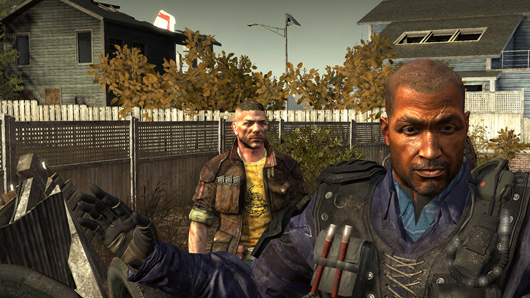
Homefront’s gameplay is of the contemporary FPS fare, being akin to Call of Duty: Black Ops in its frenetic pacing and sudden action elements. The player will usually be accompanied by a small team of resistance fighters and both friendly and enemy AI is responsive and adaptive. Unfortunately, the gameplay of Homefront on the PC does have some challenges. First, and foremost, is that the overall player controls feel wooden and unresponsive. It feels more like you are controlling Frankenstein’s monster than an agile human being. For the weapons-fans out there, you will note a surprisingly large number of armaments being carried by the game’s combatants – all of which can be wielded once dropped. You can carry two primary weapons at a time, so choose carefully as all weapons do not share a common ammo type.

By far, the single biggest issue with Homefront is the length of its singleplayer campaign. At the standard difficulty level, I passed it all in a scant THREE HOURS. This is simply unacceptable in a modern video game. Digital Extremes added a lot to the multiplayer modes, but this franchise was sold to me and a lot of other gamers on the promise of its campaign… Which comes up short, literally.

Despite the wooden controls, what story and narrative there is is actually fun. Combat tends to unfold quickly and has a lot of interesting set pieces to play with, like a TigerDirect.com store, Hooters, and even a White Castle. There is also a multitude of homages to John Milius’ previous film work in the game – one which cracked me up hard the first time I saw it. When in Utah amongst the crazy masses residing outside a large wall built by the Koreans, you encounter this farm complex. In the center of this complex you will find two farmers/soldiers pushing a ‘wheel of pain’ a la Conan! The Wolverines reference is much more apparent and on the nose.

Homefront’s story is full of mature situations and death – as it should be. It takes an unflinching look at an occupation by openly-hostile forces not at all concerned with the Geneva Convention. Parents are shot on the street in front of their crying children, Korean soldiers are tortured before being executed, and there is even a mass grave scenario. It is such a shame we only get three hours of play here. The climax at the end of the game is so awfully-setup as a segue into a sequel, it is jarring and leaves you feeling ripped off. If a game is meant to have a sequel, you need to leave fans feeling like they got their money’s worth enough in the first game to shell out even more cash for the follow-up!

Overall, Homefront is a fun game that should definitely be experienced… as a rental. Don’t pay $60 dollars for a three hour game – doing so is not fair to gamers at large as other game companies will soon follow suit unless there is enough backlash. Homefront is a tragedy – so much potential and great setup with so little to show for it. I am left confused and bewildered at the whole experience. I wanted to be in a resistance force against the Koreans. I was hoping to see some more tactical gameplay. I was hoping to see four more hours of game time!

In closing, kudos to THQ and John Milius for putting so much effort crafting an awesome game backstory. We hope that next time you give us a lot more game with which to explore it.

Live Action Prey 2 Trailer is Epic

This is the new trailer for the recently-announced Prey 2, which is due out in 2012 from Bethesda Softworks and Human Head Studios. The game puts players in the shoes of an air marshal sucked up into the alien spacecraft while on a flight.

Killzone 3 Review — PS3


What Was Cool

INTENSE ACTION:
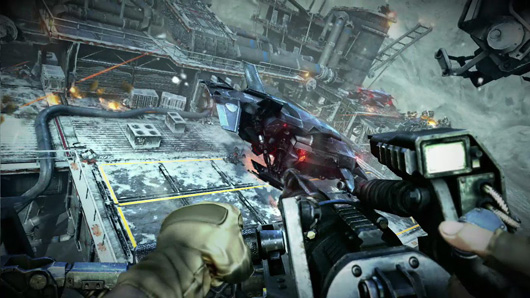
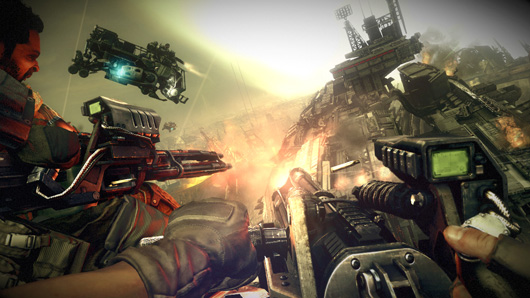
There is not a moment that goes by in Killzone 3 where you are not in some sort of danger. The gameplay has you on your toes every single step of the way. One of the best moments in the game is when you are up against this huge mech and destroying it is your only hope for survival. During this battle, people are around you screaming orders and the you can really feel the panic in their voices. It is moments like this that make the player feel like they are living the game.

VOICE ACTING:
More specifically, the voice acting of Malcolm McDowell. The character he portrays in Killzone 3 is the perfect character to hate with every fiber of your being. It has to be said that this character could be nominated for the biggest weasel in a video game award. Mr. McDowell’s voice acting brings a fine polish to an otherwise dull script, making me want to see more scenes featuring him.

MECH COMBAT:
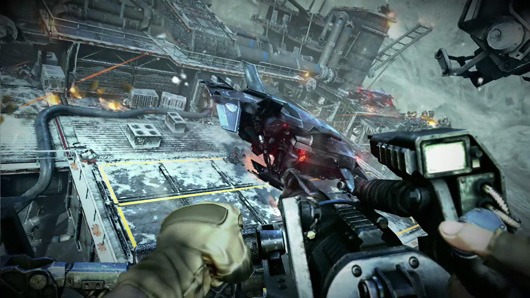
Who doesn’t like strapping into a giant mech to blow up everything around you? There are a couple moments in Killzone 3 that take you on a wild drive in the hulking exoskeletons. While there is always a set path to follow, the pure joy of blasting an enemy unit with your rockets is worth noting. There are a couple different kinds of vehicle combat levels in Killzone 3 and all of them add up to a fun time.

What Sucked

STORY:
If there is one word which describes the story of Killzone 3, it is ‘Confusing’. Killzone 3 starts you out at the end of the previous game but takes you through two different paths – after which you are left scratching your head. The feel of the story is very much a repeat of several other video games, save for it being set in space. While tried and true, this formulaic storyline end up making the game feel shorter than it is, as you pretty much can see what’s coming before it happens. Thankfully, despite the predictable script, the scripted in-game moments are filled with intensity and would be right at home on the big screen.

NOT REALLY A SEQUEL:
Killzone 3 felt more like an expansion during our play through. The gameplay mechanics felt the same and everything just felt middle of the road. With the series known as being a bit of a game changer in the FPS genre, it felt like Sony listened a bit too much to fan whims and wishes. Killzone 3 has really become just another generic FPS game out there with the same story line/different setting. It would have been better for the developer to put more assets into other aspects of the game rather than hyping the MOVE controls so much.

BUGS:
During my play time with Killzone 3 I encountered several nagging bugs. For example, every level had some weird audio glitch where script would be in the wrong place. The famous ‘stutter bug’ also returned, sometimes causing cut scenes and in game dialogue to repeat over and over. While these bugs were not a roadblock in playing the game, they did become quite annoying and should not have made it past QA.

Final Thoughts
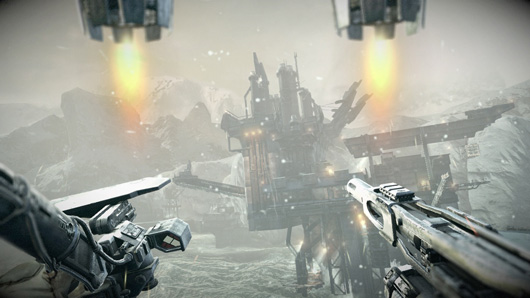
Killzone 3 is a middle of the road game. It offers a a fun 6 to 8 hours of play in a world that we feel like we have seen one too many times. There are some definite fun areas of the game but overall it just tows the line. Killzone 3 is worth buying if you want to spend a great deal of time on the multiplayer side of the field. If you are only interested in the single player experience, then this one is going to be a rental for you Shogunites.