Honestly, if I had a nickel for every time I woke up in an abandoned toy factory being chased by a possessed plushie or animatronic animal, I could probably buy my own amusement park by now. The “mascot horror” genre is absolutely bursting at the seams, isn’t it? It feels like every week there’s a new colorful nightmare trying to be the next Poppy Playtime.
Enter Rainbow Gate.
Released on January 30th by the Thailand-based 7EVIL Studio , this game promised to be a “survival horror” experience set in a twisted amusement park. I eagerly received a review code for it, hoping for a hidden gem from the Southeast Asian indie game scene. What I got was… complicated. It’s a mix of genuinely tense moments and some frustratingly modern problems that make you wonder where the industry is heading.
The Elephant in the Server Room
Let’s rip the band-aid off immediately. We have to talk about the AI.
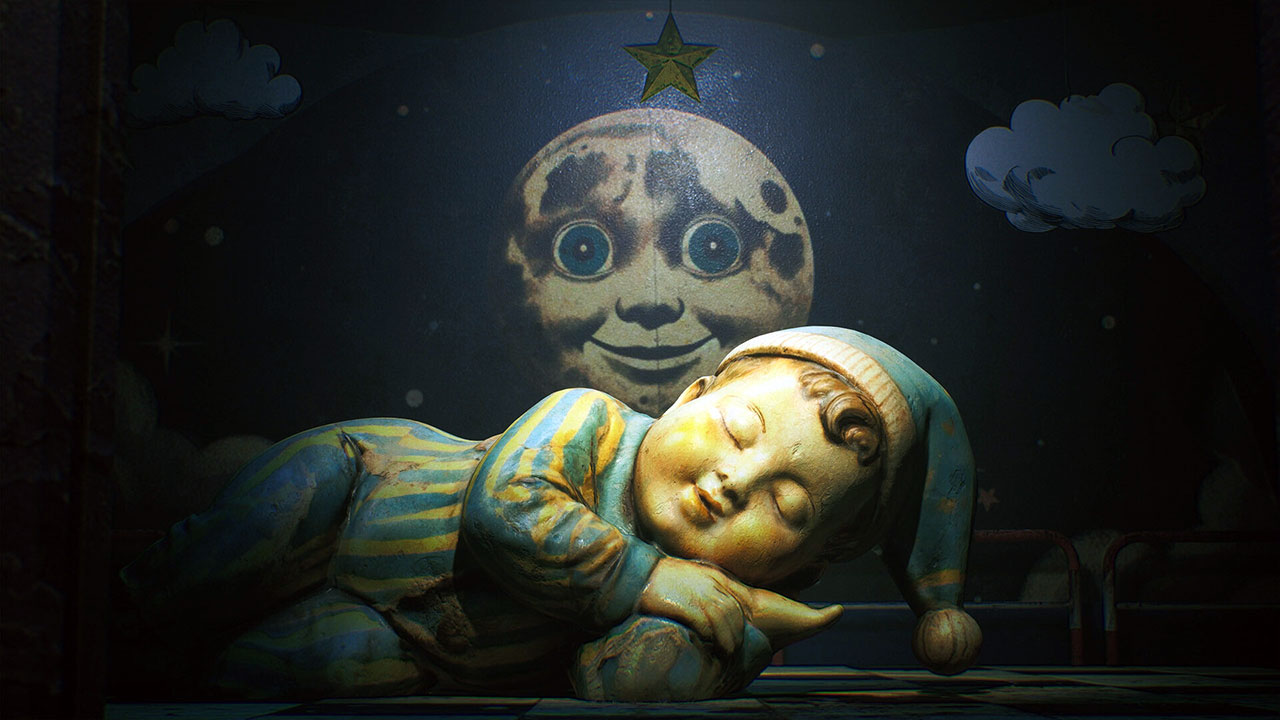
You know how sometimes a game feels like it has a human heart beating underneath the code? Rainbow Gate feels a bit different. On their Steam store page, the developers openly disclose that they used “AI-based tools” for textures, audio, and even in-game video elements because they are a small team with limited resources.
I respect this level of honesty and if a game uses AI, the developer should handle it the way 7EVIL Studio does. But in practice? It sometimes hits you like a wet fish.
There is a moment early on where you hear a character speak, and it’s not just bad acting. It is literally one of those text-to-speech voices you hear on TikTok scrolling at 3 AM. It instantly snapped me out of the immersion. I went from “scared detective” to “guy sitting in a chair” in a split second. The textures, too, have that weird, shimmering inconsistency where high-fidelity Unreal Engine lighting clashes with assets that look… hallucinated. It creates a visual friction that is unsettling. Although, to be fair, it did add to the game’s creepy factor.
Running, Not Hiding
Once you get past the “uncanny valley” of the assets, the actual game underneath is surprisingly competent, though a bit punishing.
The premise is straightforward: You’re a detective investigating a tragedy at the Rainbow Gate amusement park. But the gameplay loop throws a curveball. Unlike Outlast or Amnesia, where you spend half the game hyperventilating inside a school locker, Rainbow Gate doesn’t really let you hide in closets. The stealth here is all about breaking “Line of Sight”.
You have to physically put a pillar or a crate between you and the monster. It makes the gameplay frantic. You are constantly moving, circling tables, and praying the AI doesn’t flank you. And oh boy, do they flank you.
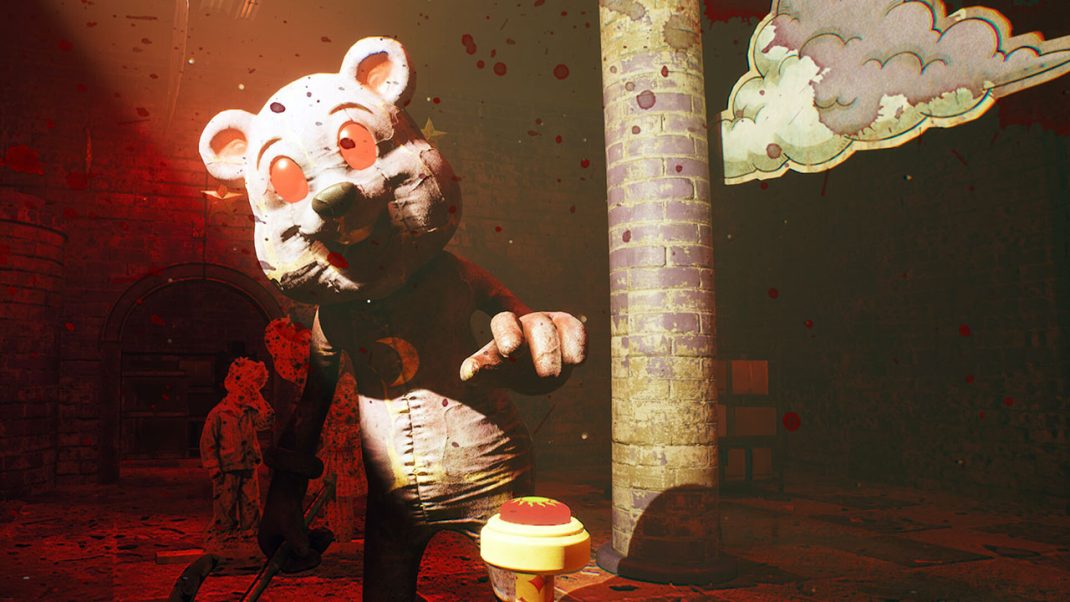
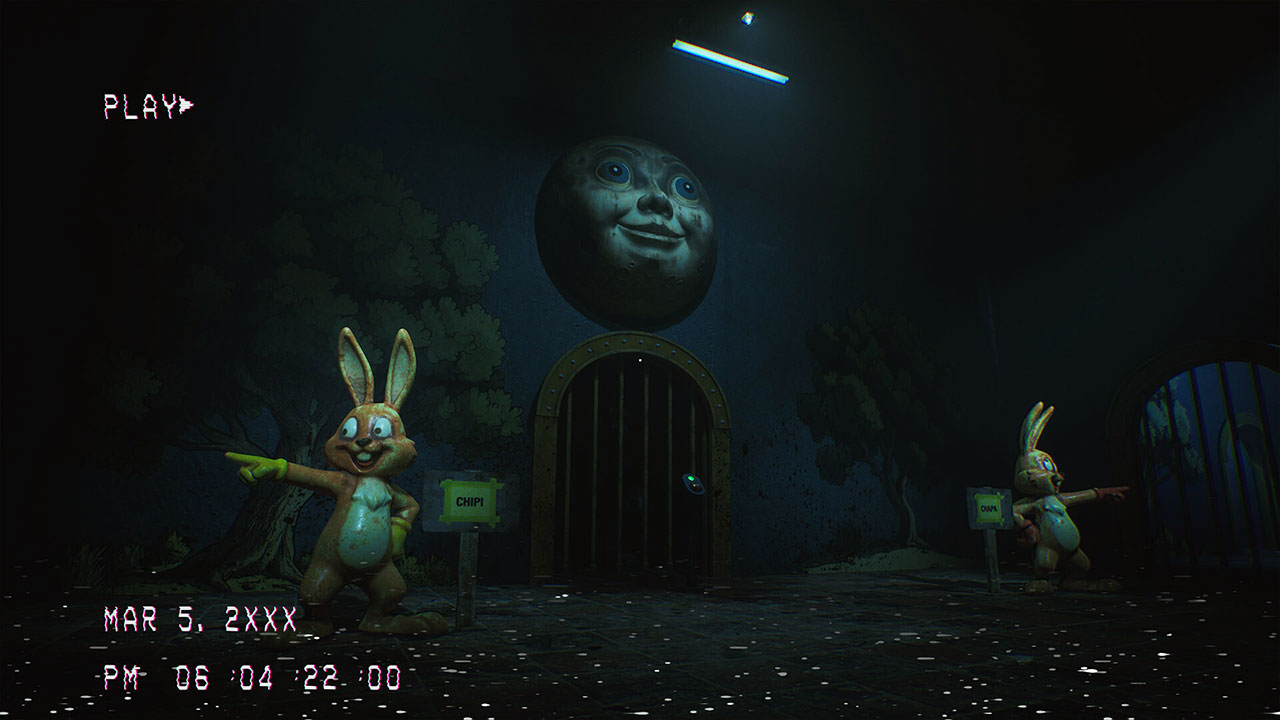
The animatronics are a motley crew. You’ve got a Wolf with knives for hands stalking the factory , and a “Duck Alexander” patrolling the water sections. But the real showstopper (and the source of my recent high blood pressure) is the Moon Bear.
The Bear and the Bugs
Let me tell you about the Honey Castle.
Midway through the game, you enter the domain of the Moon Bear. In the launch version, this section was a nightmare. The bear was faster than you, smarter than you, and seemingly powered by rocket fuel. It wasn’t scary; it was infuriating. I died probably twelve times trying to navigate that maze.
Thankfully, 7EVIL Studio seems to be listening. They dropped Patch 1.3 almost immediately, which nerfed the Moon Bear’s speed and adjusted the “Lullaby” mechanics to be more forgiving. It’s much more playable now, but it still shows the growing pains of a small studio trying to balance difficulty without a massive QA team.
Speaking of growing pains, did anyone else run into the S2 Key bug? I spent an hour thinking I was just stupid, unable to open a door in the Admin Office. Turns out, using the key was hard-freezing the game for everyone. They fixed it in Patch 1.5 , but man, hitting a progression blocker like that on day one is a tough pill to swallow.
Again, though, good on the dev team for being so responsive!
Puzzles and Atmosphere
When you aren’t running for your life, you’re solving puzzles. Most of them are what I call “Gate Puzzles” (find a code, find a key, find a valve). There is a “Blue Rabbit Code” that requires you to actually look at the environment and do some deduction, which I appreciated. It forces you to stop and engage with the world rather than just sprinting through it.
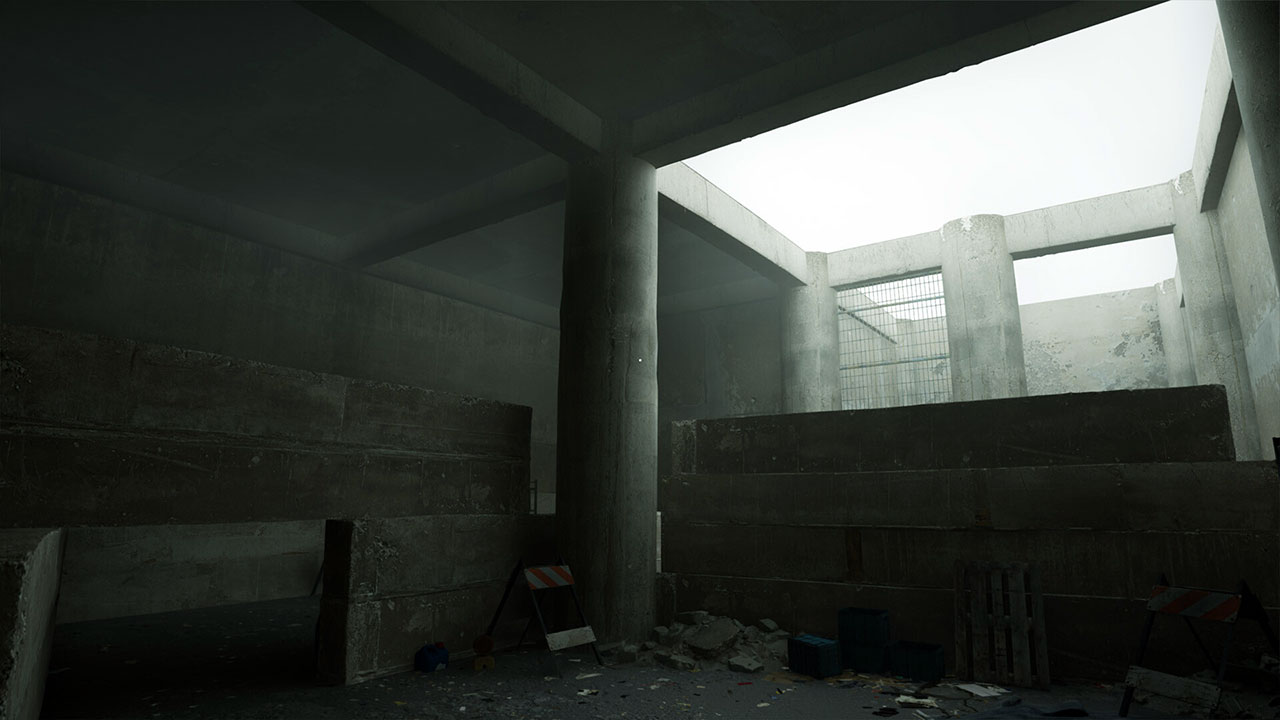
The atmosphere itself is a weird mix. The “Night Forest” at the beginning is genuinely creepy, setting a great tone. But then in the factory sections, it’s just… concrete. Endless grey concrete walls. For a game about a “Rainbow” amusement park, I wanted more color, more twisted whimsy. It feels like they nailed the industrial horror but forgot the “park” part of the amusement park in some areas.
There is also a “Tale” system where you collect cards and listen to stories about the sun and moon to solve puzzles. It tries to add some folklore depth, referencing the “Moon Bear” legend, but because of the AI voice acting, the lore delivery falls a little flat at times. It’s hard to care about the tragic history of the park when the narrator sounds like a GPS.
The Verdict
So, is Rainbow Gate worth your time and money?
Here’s the thing: If you are a die-hard mascot horror fan who has already played every chapter of Poppy Playtime and Garten of Banban, you will find spooky fun here. The chases are adrenaline-pumping, the UE5 lighting looks crisp when it works, and the developers are actively fixing bugs.
However, if you value immersion and artistic cohesion, the heavy reliance on Generative AI is going to be a hurdle. It leaves the game feeling a bit hollow.
Pros:
- Intense “Line of Sight” stealth mechanics.
- Quick developer response to bugs (RIP super-speed Moon Bear).
- Some genuinely creepy environments in the forest and “Voting Hall”.
- Sells for a reasonable $13.99
Cons:
- AI voice acting and textures break immersion.
- Optimization is rough.
- The “Concrete” aesthetic gets repetitive.